



Dailymaverick logo

Business Maverick

Business Maverick

‘Painful to witness’ — behind the jobs bloodbath at the Mail & Guardian

The Mail & Guardian has become the latest victim of the declining South African and global media industry — but insiders say the seeds of its demise were sown some time ago.
‘Painful to witness’ — behind the jobs bloodbath at the Mail & Guardian

In May, staff at the Mail & Guardian were served with Section 189 notices informing them that the publication was initiating a process of retrenchment.

The figures are stark. Out of a newsroom that employs just 25 permanent staff, approximately half now face losing their jobs. A total of 24 positions across editorial, administration and IT were identified as affected, with 12 redundancies anticipated.

The reasons provided in the notices were familiar to an industry under siege.

“The Covid-19 pandemic, power shortages, rising inflation and an already strained South African economy” were listed, alongside “rising costs for print materials and ink, alongside a marked reduction in advertising budgets, as advertisers increasingly turn to digital platforms to reach their audiences.”

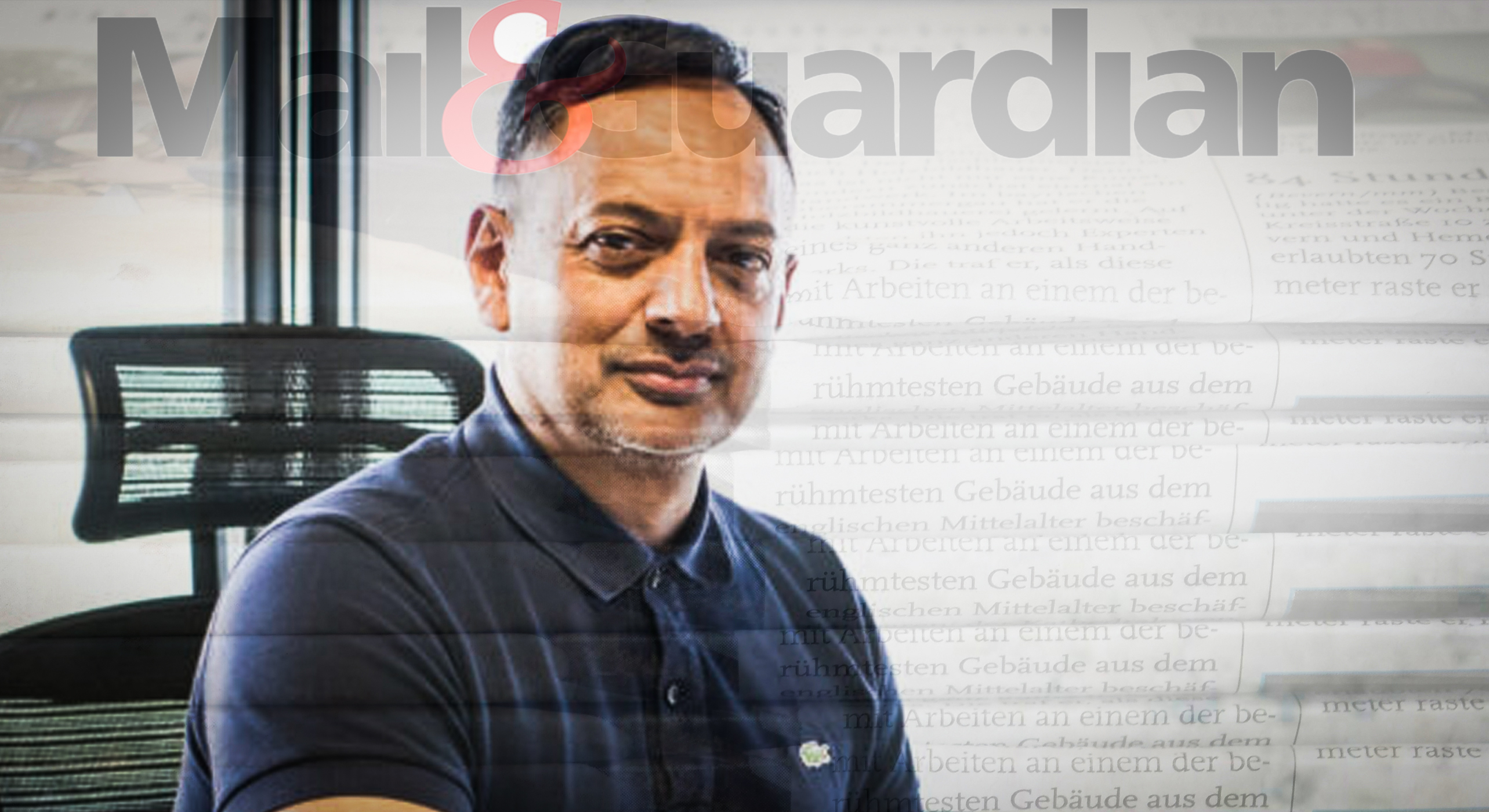
Mail & Guardian owner Hoosain Karjieker told Daily Maverick this week: “It is clear from the entire sector that we operate in, that the traditional print media business model has become a failed business model that requires a more dramatic intervention for the M&G to sustain itself in the future”.

But behind the cold language of economic pressure lies a possibly deeper malaise.

“There’s been a difficult climate for all media, but Mail & Guardian has been particularly poorly handled in recent years,” the newspaper’s co-founder, Anton Harber, told Daily Maverick.

“It’s been extremely painful to witness.”

Insiders who spoke to Daily Maverick this week on condition of anonymity because of the rapidly-diminishing size of a grudge-prone industry, painted the picture of a media operation that has been inching towards collapse for years.

M&G boasts a proud history


The Mail & Guardian has often seemed like a publication with nine lives. Its lineage stretches back to 1985 when it launched as the Weekly Mail, established by a group of journalists retrenched from anti-apartheid publications — mainly the Rand Daily Mail.

With Harber and Irwin Manoim as its first editors, the paper quickly became known for its tenacity, its independence, and its investigations. In 1995 it became the Mail & Guardian after British publisher The Guardian bought a majority stake, which it held until 2022.

Over the years, it established a reputation as one of South Africa’s most fearless investigative print titles, breaking major stories almost week on week, but with an unusual corresponding depth in fields like coverage of the arts.

It also led the continent in digital media innovation. At one point, the Mail & Guardian ran the first and biggest news website in Africa. But that early advantage was slowly and then swiftly eroded.

One insider remarked this week: “How that lead was squandered needs to be studied.”

The outlet’s digital strategy has been inconsistent, marked by the erection of a paywall that was later removed, and a growing reliance on sponsored content, both online and in print. Print circulation figures tell their own story: just 4,904 copies sold, according to the most recent figures, a collapse from the publication’s peak of 50,000 to 60,000 under one of its former editors, Ferial Haffajee.

More than the numbers, the human toll has become impossible to ignore. Staff morale was depleted by longstanding concerns about late or missed payments to freelancers and suppliers, something that has earned the publication a reputation for unreliability within media circles for at least a decade, and which has made it very difficult for the newspaper to hold on to talented collaborators.

Claims of a lack of transparency when it came to the true state of Mail & Guardian’s finances have also swirled — something Karjieker adamantly disputes.

“I am not aware of these claims,” he told Daily Maverick.

“More importantly, we have always been very transparent with staff with regard to our budgets, business plans and business strategy.”

In recent years, editors came and went relatively quickly, struggling to turn the ship around amid dwindling resources and inconsistent leadership.

The Mail & Guardian’s loss of its publishing partnership with amaBhungane in 2016 was another body blow. The relationship had guaranteed a stream of high-impact investigative work. When it ended, so too did a crucial source of circulation-boosting journalism.

The departure of the cartoonist Zapiro shortly afterwards symbolised a further loss of the paper’s cultural and editorial heft.

If the paper’s steady decline has felt at times like death by a thousand cuts, the departure of its longtime financial backer last year may prove the final wound.

In October 2024, the Media Development Investment Fund (MDIF), which had been the Mail & Guardian’s majority shareholder for 22 years, exited.

The reasons behind its departure are unclear; Karjieker referred Daily Maverick this week to a press statement from the MDIF at the time that does not greatly elucidate the matter.

“Though sad to be exiting such an iconic media company, we are pleased that ownership of the Mail & Guardian is passing into South African hands and that the transaction will bring new capital into the company to fuel development,” MDIF head Harlan Mandel was quoted as saying at the time.

Its shares were sold to former CEO Karjieker and director Thembisa Fakude.

Staff have reported concerns about the retrenchment process to come, with unease over whether settlements will be fully honoured given the paper’s questionable track record on payments.

The beginning of the end — or not the end at all?


Karjieker is adamant that it’s not over for the Mail & Guardian.

“Our vision will always be for the M&G to be a platform for high-quality, independent and credible journalism that underwrites the strength of our brand,” he says.

“The changes under way are designed to ensure its continuance for many more years to come.”

Asked if it was possible that Mail & Guardian would shutter its print operation and move fully digital, as a number of Media24 titles, including City Press, have recently done, Karjieker said it was possible, but not foreseen for 2025.

As journalists across South Africa absorb the latest grim news, there is little appetite for finger-pointing or schadenfreude. Almost every South African media house has endured rounds of retrenchments or restructuring in recent years.

“We operate in a failed market and it’s very easy to be a casualty, while it’s harder to invest in the things that will help us get out of it,” said Daily Maverick CEO Styli Charalambous.

“This is another example of why we need a new model to ensure the sustainability of media in South Africa. There has to be funding for media as a public good.” DM

Comments

Lawrence Sisitka Jun 6, 2025, 06:43 AM

Will be very sad to see the departure of the M&G, but that looks inevitable now :(

Peter Geddes Jun 6, 2025, 07:18 AM

Sad that it’s come to this. In the first years of the M&G, it was usually quite difficult to find an outlet to buy one’s copy, so I had to search for one. The apartheid government even banned one issue, but fortunately I had already bought mine before the ban was imposed.

André Pelser Jun 6, 2025, 08:07 AM

Seems like inability to adapt and compete, poor management. Lack of transparency and communication always had bad results. Like the Guardian in the UK, the public has lost patience with media staffed by pro-Socialist journalists who can't find fault with the Left and the populists that they backed and are now in power.

Sandra Gordon Jun 6, 2025, 08:43 AM

Some interesting points. A history of the newspaper will make interesting reading. Any scribes ready to take on the challenge?

superjase Jun 6, 2025, 09:21 AM

the guardian isn't going anywhere. it's trajectory has changed now that it is realising that digital-first is the way to go.

D'Esprit Dan Jun 6, 2025, 01:55 PM

The Guardian is doing fine and has expanded to include US and Australian editions (online). Every newspaper in the UK has seen circulation decline with the advent of online news and free news. The Daily Mail and Daily Mirror, right-wing tabloids in the UK, have seen year-on-year declines of 7% and 16% respectively, whilst even the conservative, austere and up-market FT has seen a decline of 3.6% year-on-year. Doesn't seem to be solely left-leaning newspapers finding it tricky.

Frik De Beer Jun 6, 2025, 09:04 AM

After the recent demise of Vrye Weekblad, the "grim news" about the future of DM is indeed grim.

Michael Smith Jun 6, 2025, 09:32 AM

I used to buy it religiously. Then, at some point around the time of the culture wars in 2016, I just stopped. It became so radically anti-white, anti-hetero, anti-centrist, that it was an absolute chore to read. In recent years, the quality of the arts journalism has also plummeted. A case study in alienating one's core audience out of a sense of ideological duty to the ghosts of one's humanities lecturers.

David Walker Jun 6, 2025, 01:32 PM

Absolutely Michael. Getting the Weekly Mail was one of my Friday highlights back in the 80's. But their blind, slavish support of the ANC and their never-ending nitpicking of the DA just turned me off.

Jan Pierewit Jun 6, 2025, 09:39 AM

This is sad news. In the dark days in the 1980s, and the 'State of Emergency', M&G was a holdfast. But the truth is, most of us who read the news have indeed gone digital. Even for things like crosswords. I remember fondly Garry Trudeau's brilliant Doonesbury cartoons in the M&G back then. But most of all the team that was led by Anton Harber, the fight for truth in a highly censored era. Wishing all strength to the journalists.

Jubilee 1516 Jun 6, 2025, 09:52 AM

As Vrye Weekblad too learned the hard way, PC is a lie. Woke is a lie. A campaign constantly based on tedious old white guilt, on selected half truths, or even selected truths, like Poplak’s and other’s completely biased reporting focusing on selected targets, does not tell the whole story, and will cost DM dearly too. The average reader, especially numerate ones, do want facts, but can easily sense when a constant barrage of attacks has been stripped of neutrality.

Mortimer Lee Jun 7, 2025, 12:10 AM

'Jubilee': Whom ... or what ... are "average numerate readers"???? Are those your kind of readers ... those who see the world only as woke or right??

Jubilee 1516 Jun 7, 2025, 10:14 AM

Those capable of making sensible judgment based on numbers, and more important, all relevant numbers, and stats etc. Those capable detecting the absence of numbers and stats required to do so.

Rae Earl Jun 6, 2025, 10:39 AM

It would be a huge loss if M&G were to disappear but it seems inevitable. SA is in dire need of publications like DM, Daily Friend, News 24, and, in particular AmaBhungane. Apart from outstanding journalism they're all involved in investigating the horrific corruption and waywardness of the ANC and many other intrinsically corrupt entities. Imagine if these publishing houses formed a body to replace an ever useless NPA and accessed the Zondo Commission report for action.

Alan Taurog Jun 6, 2025, 04:11 PM

Surely not News24 as it exists today??

William Stucke Jun 6, 2025, 06:43 PM

> The outlet’s digital strategy has been inconsistent, marked by the erection of a paywall that was later removed I had no idea it had been removed. Once I hit the paywall, I never bothered going back. A lesson to learn, there, Business Day? I buy the print edition from time to time, but as others have said, the Left-learning, Woke, anti-intellectual writing makes it hard work to read, and I seldom bother, even after I've bought it. Another lesson that DM flatly refuses to take in.

peterdncn Jun 7, 2025, 08:13 AM

It is also the result of social media. Even Digital newsletters, like this one, tend to be a day later than a social media report. "Meidas Touch" on You Tube covered the Trump/Musk breach as it happened. "The enforcer" does his research in his very up to the minute coverage of the Ukraine War. Also, covers Israel/Gaza issues.

graemebirddurban Jun 7, 2025, 08:40 AM

Sad news but huge kudos to our best ever source of high quality investigative journalism and cultural news for the longest of times. From Stefaans Brummer and Sam Sole taking on the apartheid regime and our corrupt ANC politicians with equal veracity to Shaun De Waal's movie reviews, which were a perfect antidote to the M&G's often depressing headlines. And never forgetting that legend of legends Paddy Harper, whose wit and humane style of writing was a gift that kept giving.

Marc Ve Jun 7, 2025, 09:49 AM

We don’t have a normal economy at present, the affected staff may struggle to find replacement employment. I have been through retrenchment myself, it’s hard to reconcile the cost cutting needs of SA corporates, in our artificially constrained economy, with the blow to your self esteem. It’s too easy to feel betrayed and take it personally. Best of luck to them.

Sally Goldman Jun 9, 2025, 11:46 AM

We bought M&G almost from day 1. Loved it: the journalism quality, investigative stories and its sheer bravery. But slowly, it shed its best journalists, produced sloppy writing/editing, frequent retractions of previous stories and more and more 'sensational' rather than investigative stories made up the bulk of the increasingly thin hard version. This was still at the time of us preferring hard copies to digital. The final nail was an appalling delivery service to our home. Viva DM instead.