


Dailymaverick logo

Maverick News

Maverick News

Wanted: A new government for Johannesburg’s great people

Johannesburg is increasingly governed by WhatsApp groups, and its citizens are so active that they demand accountability in remarkably resilient and sometimes obstinate ways.
Wanted: A new government for Johannesburg’s great people There’s no hustle like Joburg hustle. We may not have regular electricity, water, a functioning road network, or even streetlights, but that doesn’t stop the city from growing. There’s always something new starting up or somewhere new to go, so you can fill a social calendar several times. Each day. And the people! Don’t even get me started on the level of style in this city, where each country on our continent has a community. It’s just lovely. (See this piece on Braamfontein’s plans, or this humdinger on five must-sees in the city by Bridget Hilton-Barber for flavour.) But is it “a world-class African city” as the city government continues to call itself? Not so much. To make it all it can be, this city of great people needs a different way of being governed. There’s money. With a budget of R83-billion a year, we should expect more. It’s bigger than the national budgets of many African nations and certainly among the spending pies of much larger cities like Lagos and Cairo. In his State of the City Address, Mayor Dada Morero will paint a picture of how much he’s doing. Last year, the then mayor, Kabelo Gwamanda, (remember him?) promised many things. Every year since 2021, the State of the City Address has been delivered by a different mayor as coalition government political instability rocks Joburg. Joburg report card The report card shows some progress, but this is because of the city’s people rather than its government. Civil society has organised itself so well into organisations such as the Johannesburg Water Crisis Action Group and WaterCAN that improvements in water provision have been made as people have insisted on them. “We’re far away from where we used to be [in crisis],” says Dr Ferrial Adam of WaterCAN. There are improvements, but not enough is being spent on fixing 20 of the city’s broken reservoirs, says Adam, who is also concerned that a good water turnaround strategy for Johannesburg Water is not included in the city’s Integrated Development Plan, which is the budget blueprint. “There is (as yet) no major system improvement,” she says. The Jozi My Jozi movement mushroomed out of the business community, and its CEO, Bea Swanepoel, has created a small and dynamic team of can-do people who have done a great deal. They’ve fixed and lit up the Nelson Mandela Bridge that joins suburbs to the inner city, ramped up and cleaned entry points and exits to the city, and are working with the government on an ambitious plan to make the inner city a truly world-class African old town. The safety improvements stem from a partnership with the CCTV supplier Vumacam. The city is increasingly governed by WhatsApp groups, and its citizens are so active that they demand accountability in remarkably resilient and sometimes obstinate ways.

Urbicide

There is momentum now to write only the story of seeding improvement, but to do so would be to ignore the urbicide that successive administrations have visited during their stewardship. Joburg Outlier chart These charts from the Gauteng City-Region Observatory’s quality-of-life survey, released last year, show that services across Gauteng have declined precipitously. This is why the ANC lost power in its heartland province, earning support from only 34% of voters. The province and city also show that coalitions (in place since 2021) are no panacea and that what is needed is a method of co-governance with its people to make Johannesburg all it can be. An upcoming Daily Maverick data investigation in the city will show how its people are now plagued by endemic, multiday electricity cuts.

Power cuts led to a decline in ANC power

Mayor Morero delivers his speech in the beautiful Constance Bapela Chamber — the Metro Centre, to which it is attached, was abandoned by the city almost two years ago. [caption id="attachment_2708083" align="alignnone" width="960"]Metro Centre Inside Joburg's abandoned Metro Centre. (Photo: Supplied)[/caption] [caption id="attachment_2708082" align="alignnone" width="960"]Metro Centre Joburg's abandoned Metro Centre. (Photo: Supplied)[/caption] [caption id="attachment_2708080" align="alignnone" width="960"]Metro centre Abandoned Metro Centre, Johannesburg. (Photo: Supplied)[/caption] [caption id="attachment_2708079" align="alignnone" width="1280"]Metro centre Abandoned Metro Centre, Johannesburg. (Photo: Supplied)[/caption] In a sleight-of-hand by the Johannesburg Property Company, and after two fires not adequately explained to its people, thousands of staff left the building one day in 2023 and never returned. This is what it looks like now: plans abandoned, expensive furniture with nobody to use it, an entire beautiful library, dark and locked. Homeless people have started occupying the lower floors. The information centre adjacent to the building was gutted by fire long ago and never secured or repaired. Urbicide is the killing of a city, and when I visited the abandoned Metro Centre, it felt like an apt description. (Backstory: the Metro Centre was “decanted” of its people after the fire, pending a massive plan to rebuild a campus, probably by ANC cadres in property. It will take nine years and 11 months to build, during which time the same cadres will earn a fortune in rentals because they also own the buildings where the mayor and other officials now work. Here’s that story.) A city must have a Metro Centre, where its citizens get plans approved, get bills sorted out, access city services, chat to councillors, and attend residents’ meetings. It’s a spinal column, and without it, you kill a city. The Metro Centre tells you all you need to know about city government in Johannesburg.

Killing a night economy

There’s another death to mourn. The Marabi Club, a magnificent “speakeasy”, closes this weekend. It’s where I got engaged, and I have many happy memories of the place. This gorgeous jazz venue on the eastern flank of the inner city can’t sustain itself. There are virtually no working streetlights in Joburg, and the potholes and regular power and water cuts have seen 40 cultural venues in the inner city shut up shop. [caption id="attachment_2708200" align="alignnone" width="1280"] The Marabi Club. (Facebook)[/caption] [caption id="attachment_2708201" align="alignnone" width="1280"]Marabi club The Marabi Club. (Facebook)[/caption] The city’s night economy has always been a lifeblood of its culture. Marabi perfectly expressed it: the food, the jazz, the people, the venue — stylish with a Sophiatown vibe. “If you aren’t familiar, Marabi is an underground speakeasy, attached to Hallmark House (a beautiful hotel) and inspired by survivalist Marabi culture – a music-driven spirit as old as Johannesburg itself,” writes Laurice Taitz-Buntman, the urbanist and publisher of Johannesburg in your Pocket. Marabi is closing because these days Hallmark House runs at only 20% occupancy. Taitz-Buntman writes: “Johannesburg’s decline is not a natural disaster – it is man-made. Entrepreneurs invested passion and capital into revitalising districts like Maboneng and Braamfontein, but the official city government and tourism bodies have mostly remained absent, leaving basic services to fall apart. “Johannesburg is a city of two narratives: One of intense decline, destruction, dysfunction, and survival in a place where governance has all but disappeared. And another of vibrant creativity, deep human connection, and resilience.” Her message is that we have to support our cultural businesses and nightlife, and support the throbbing vein of zeal and entrepreneurship that defines Johannesburg. We can’t do that without a working government.

President Ramaphosa sends in a team

Two months ago, on 7 March, President Cyril Ramaphosa announced an intervention to arrest Johannesburg’s decline. The G20 comes to town in November, and Joburg is a wreck. It’s not a good look for the urbane President. Convened under Operation Vulindlela (OV) in the Presidency, it is an informal intervention rather than a Section 139 takeover of a collapsed municipality made in terms of the Constitution. There have been some changes in two months: the inner city is cleaner, as it’s the region where the experiment started. It’s come too late for Marabi and the other wonderful places that have closed. However, hope is an essential quality of being human, so I trust it will work. The plan is to stabilise city finances, ensure reliable water and electricity supply, restore human settlement planning (there are hundreds of informal settlements around Johannesburg, and homeless people are abandoned), and address the decay of cultural institutions like the Johannesburg Art Gallery and the Johannesburg Library, which recently partially reopened after an inexplicable four-year, R64-million closure. Whenever I chat with people from civil society and the metro government, they are hard at work in four clusters and eight workstreams, which is how Vulindlela operates to get things going. The well-regarded OV team in the Presidency is behind major fixes like Eskom and (possibly) at Transnet. All three levels of government work together to intervene. Morero was due to send his first progress report to Ramaphosa on 5 May — officials say the impact will be more visceral come June. We wait. DM

There’s no hustle like Joburg hustle. We may not have regular electricity, water, a functioning road network, or even streetlights, but that doesn’t stop the city from growing.

There’s always something new starting up or somewhere new to go, so you can fill a social calendar several times. Each day.

And the people! Don’t even get me started on the level of style in this city, where each country on our continent has a community. It’s just lovely. (See this piece on Braamfontein’s plans, or this humdinger on five must-sees in the city by Bridget Hilton-Barber for flavour.)

But is it “a world-class African city” as the city government continues to call itself? Not so much.

To make it all it can be, this city of great people needs a different way of being governed. There’s money. With a budget of R83-billion a year, we should expect more. It’s bigger than the national budgets of many African nations and certainly among the spending pies of much larger cities like Lagos and Cairo.

In his State of the City Address, Mayor Dada Morero will paint a picture of how much he’s doing. Last year, the then mayor, Kabelo Gwamanda, (remember him?) promised many things. Every year since 2021, the State of the City Address has been delivered by a different mayor as coalition government political instability rocks Joburg.

Joburg report card

The report card shows some progress, but this is because of the city’s people rather than its government. Civil society has organised itself so well into organisations such as the Johannesburg Water Crisis Action Group and WaterCAN that improvements in water provision have been made as people have insisted on them.

“We’re far away from where we used to be [in crisis],” says Dr Ferrial Adam of WaterCAN. There are improvements, but not enough is being spent on fixing 20 of the city’s broken reservoirs, says Adam, who is also concerned that a good water turnaround strategy for Johannesburg Water is not included in the city’s Integrated Development Plan, which is the budget blueprint. “There is (as yet) no major system improvement,” she says.


The Jozi My Jozi movement mushroomed out of the business community, and its CEO, Bea Swanepoel, has created a small and dynamic team of can-do people who have done a great deal.

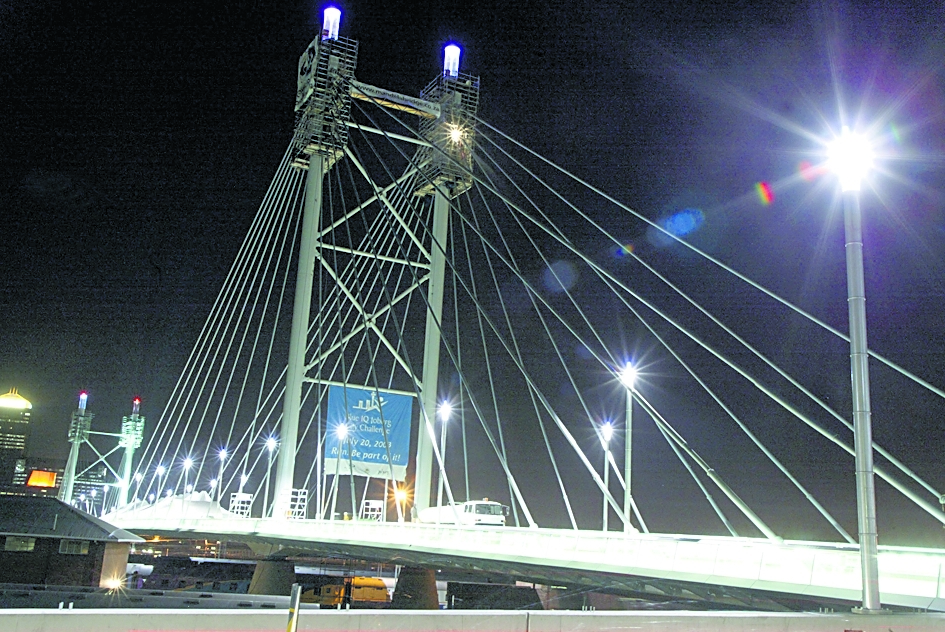
They’ve fixed and lit up the Nelson Mandela Bridge that joins suburbs to the inner city, ramped up and cleaned entry points and exits to the city, and are working with the government on an ambitious plan to make the inner city a truly world-class African old town.

The safety improvements stem from a partnership with the CCTV supplier Vumacam.

The city is increasingly governed by WhatsApp groups, and its citizens are so active that they demand accountability in remarkably resilient and sometimes obstinate ways.

Urbicide


There is momentum now to write only the story of seeding improvement, but to do so would be to ignore the urbicide that successive administrations have visited during their stewardship.

Joburg

Outlier chart

These charts from the Gauteng City-Region Observatory’s quality-of-life survey, released last year, show that services across Gauteng have declined precipitously.

This is why the ANC lost power in its heartland province, earning support from only 34% of voters. The province and city also show that coalitions (in place since 2021) are no panacea and that what is needed is a method of co-governance with its people to make Johannesburg all it can be.

An upcoming Daily Maverick data investigation in the city will show how its people are now plagued by endemic, multiday electricity cuts.

Power cuts led to a decline in ANC power


Mayor Morero delivers his speech in the beautiful Constance Bapela Chamber — the Metro Centre, to which it is attached, was abandoned by the city almost two years ago.

Metro Centre Inside Joburg's abandoned Metro Centre. (Photo: Supplied)


Metro Centre Joburg's abandoned Metro Centre. (Photo: Supplied)
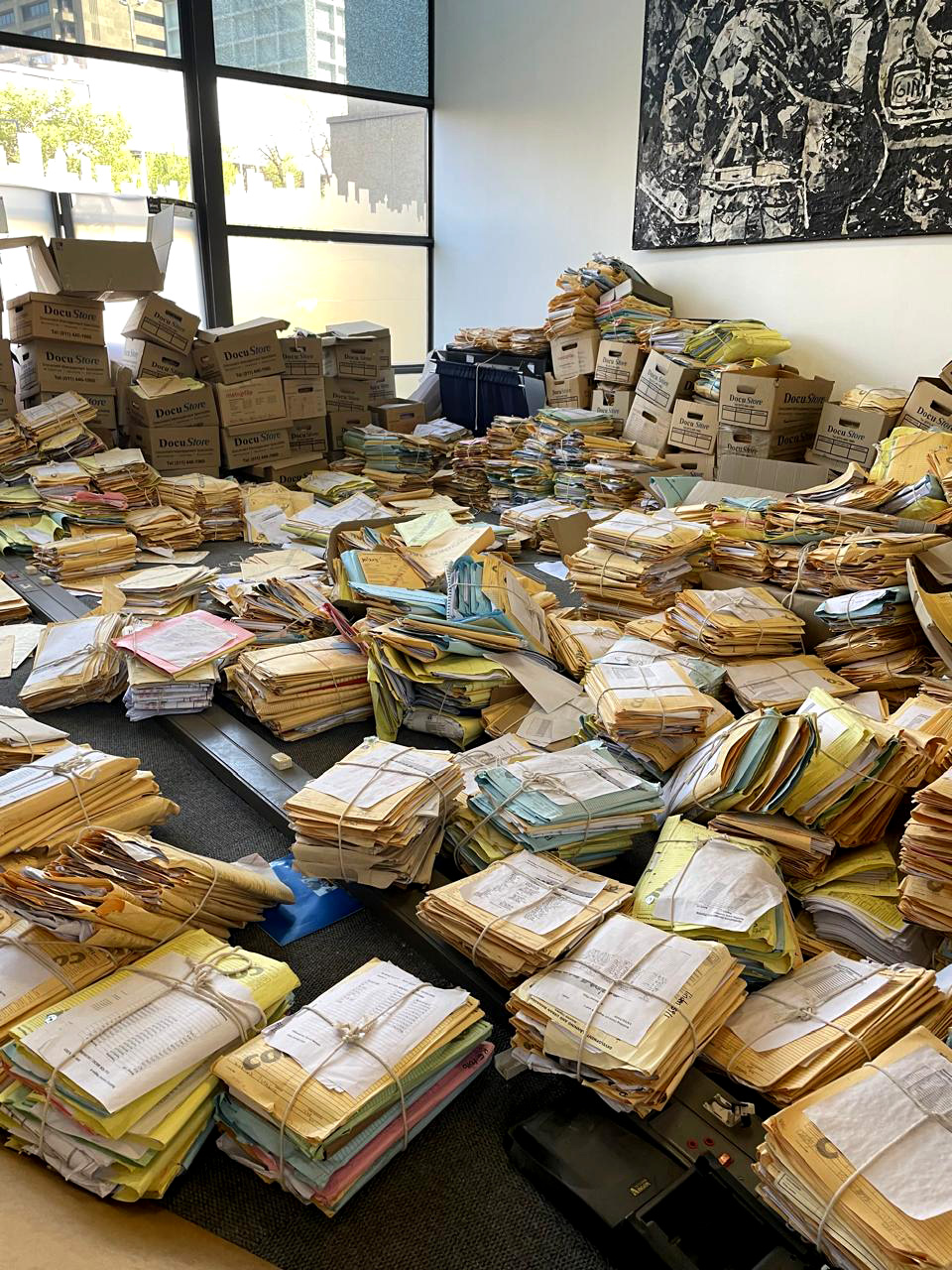


Metro centre Abandoned Metro Centre, Johannesburg. (Photo: Supplied)


Metro centre Abandoned Metro Centre, Johannesburg. (Photo: Supplied)


In a sleight-of-hand by the Johannesburg Property Company, and after two fires not adequately explained to its people, thousands of staff left the building one day in 2023 and never returned.

This is what it looks like now: plans abandoned, expensive furniture with nobody to use it, an entire beautiful library, dark and locked. Homeless people have started occupying the lower floors. The information centre adjacent to the building was gutted by fire long ago and never secured or repaired.

Urbicide is the killing of a city, and when I visited the abandoned Metro Centre, it felt like an apt description. (Backstory: the Metro Centre was “decanted” of its people after the fire, pending a massive plan to rebuild a campus, probably by ANC cadres in property. It will take nine years and 11 months to build, during which time the same cadres will earn a fortune in rentals because they also own the buildings where the mayor and other officials now work. Here’s that story.)

A city must have a Metro Centre, where its citizens get plans approved, get bills sorted out, access city services, chat to councillors, and attend residents’ meetings. It’s a spinal column, and without it, you kill a city. The Metro Centre tells you all you need to know about city government in Johannesburg.

Killing a night economy


There’s another death to mourn. The Marabi Club, a magnificent “speakeasy”, closes this weekend. It’s where I got engaged, and I have many happy memories of the place. This gorgeous jazz venue on the eastern flank of the inner city can’t sustain itself. There are virtually no working streetlights in Joburg, and the potholes and regular power and water cuts have seen 40 cultural venues in the inner city shut up shop.

The Marabi Club. (Facebook)


Marabi club The Marabi Club. (Facebook)


The city’s night economy has always been a lifeblood of its culture. Marabi perfectly expressed it: the food, the jazz, the people, the venue — stylish with a Sophiatown vibe.

“If you aren’t familiar, Marabi is an underground speakeasy, attached to Hallmark House (a beautiful hotel) and inspired by survivalist Marabi culture – a music-driven spirit as old as Johannesburg itself,” writes Laurice Taitz-Buntman, the urbanist and publisher of Johannesburg in your Pocket.

Marabi is closing because these days Hallmark House runs at only 20% occupancy.

Taitz-Buntman writes: “Johannesburg’s decline is not a natural disaster – it is man-made. Entrepreneurs invested passion and capital into revitalising districts like Maboneng and Braamfontein, but the official city government and tourism bodies have mostly remained absent, leaving basic services to fall apart.

“Johannesburg is a city of two narratives: One of intense decline, destruction, dysfunction, and survival in a place where governance has all but disappeared. And another of vibrant creativity, deep human connection, and resilience.”

Her message is that we have to support our cultural businesses and nightlife, and support the throbbing vein of zeal and entrepreneurship that defines Johannesburg. We can’t do that without a working government.

President Ramaphosa sends in a team


Two months ago, on 7 March, President Cyril Ramaphosa announced an intervention to arrest Johannesburg’s decline. The G20 comes to town in November, and Joburg is a wreck. It’s not a good look for the urbane President.

Convened under Operation Vulindlela (OV) in the Presidency, it is an informal intervention rather than a Section 139 takeover of a collapsed municipality made in terms of the Constitution.

There have been some changes in two months: the inner city is cleaner, as it’s the region where the experiment started. It’s come too late for Marabi and the other wonderful places that have closed. However, hope is an essential quality of being human, so I trust it will work.

The plan is to stabilise city finances, ensure reliable water and electricity supply, restore human settlement planning (there are hundreds of informal settlements around Johannesburg, and homeless people are abandoned), and address the decay of cultural institutions like the Johannesburg Art Gallery and the Johannesburg Library, which recently partially reopened after an inexplicable four-year, R64-million closure.

Whenever I chat with people from civil society and the metro government, they are hard at work in four clusters and eight workstreams, which is how Vulindlela operates to get things going.

The well-regarded OV team in the Presidency is behind major fixes like Eskom and (possibly) at Transnet. All three levels of government work together to intervene. Morero was due to send his first progress report to Ramaphosa on 5 May — officials say the impact will be more visceral come June.

We wait. DM


Comments

Dennis Bailey May 7, 2025, 06:43 AM

Yep, never more evident that we get what we vote for. The people of Joburg voted for this shambles and the ANC has delivered.

Ashley Stone May 7, 2025, 08:38 AM

The destruction and waste is unbelievable. Voters,really?

Arnold O Managra May 7, 2025, 06:50 AM

No need to wait for a new Joburg government. Just vote for a new one, and encourage others to do so. Hint - There is one political party with a decent track record of local administration.

Fernando Moreira May 7, 2025, 07:15 AM

It's crying out for a DA government! But the left and the media can't stomach that scenario. Just use the AGs reports on municipalities as a guide on who one should consider when you vote! The opposite is the disaster that unfolds in plain sight Vote Da

Gerrie van der Merwe May 7, 2025, 08:08 AM

Wow. How many times have I read that Joburg is in the process to renew itself? Think it is time to say "Good buy Joburg. Lets move to a another city where there are actual service delivery.

Mark Hammick May 7, 2025, 08:10 AM

The sheep keep voting for the wolves

D'Esprit Dan May 7, 2025, 08:43 AM

The fact that President Sleepy has actually appointed a task team to put sticking plasters on Jozi so his G20 buddies don't have to see the filth and decline, will tell you everything you need to know about Joburg, and Panyaza Lesufi's ANC in the province: corrupt to the core, useless cadres plundering the city whilst giving the middle finger to residents. How dare the city spend a fortune on radio ads telling me to pay my city bills (I do, for now) when they provide no services? Disgusting.

Louise Wilkins May 7, 2025, 08:53 AM

Wow, Jhb has really gone to the dogs. Why on earth do people keep voting for the anc?

megapode May 7, 2025, 02:12 PM

They don't. It's been years since the ANC (or anybody else) got a majority in council. But coalitions get stitched together, & some of the partners will change sides if they get a better deal. The author touches on one of the problems: The Mayor's office has had a revolving door since 2021. So assuming the current mayor intends to try to fulfill all the fine things expressed in the IDP, it's likely they won't see the year out. We need stability & we need action to go with the fine words.

Rae Earl May 7, 2025, 09:08 AM

South Africa was a productive and prosperous country until the ANC kicked Thabo Mbeki out and installed the traitorous and corrupt Jacob Zuma. In 9 short years he gave new meaning to the words unemployment and poverty, both of which have escalated unchecked since then. Cyril Ramaphosa displaced Zuma in a blaze of optimism, renewal, and a bright future. He did nothing but worsen a bad situation. Want to know why Joburg has no chance? Simple, the same wrecking crew is running it to this day.

Gavin Hillyard May 8, 2025, 01:22 PM

SA's decline started well before 2009. To be successful we need a good education system. Prof Bengu started the rot, firing experienced teachers for "transformation". Then we had the disastrous "Outcomes, based education" system and dumbing down pass marks. The ANC government plundered an efficient and profitable ESKOM and ignored calls by them to build more capacity. Mbeki's betrayal of the people of Zimbabwean, supporting election fraud by ZANU/PF, is part cause of the chaos there today.

Martin Neethling May 7, 2025, 09:37 AM

It takes a certain type of craven indifference to choreograph an urbicide event as the one visited on the Metro Centre. Under way at the Joburg Library and Gallery. It’s baked into ANC thinking. A flicker of worry from our President about the incoming G20 did nothing to galvanise officials. If you don’t care, or don’t know how, or if you think ‘Transformation’ matters more, or if you think the DA is the problem, you get Joburg.

Jan Pierewit May 7, 2025, 10:26 AM

All strength to Jbg civil society. I am glad to be a Capetonian.

Paddy Ross May 7, 2025, 10:41 AM

Ferial's love of Josi is evident and the 'green shoots' that she describes are laudable but the more civic society does of what the metropolitan governance should be doing, the more the corrupt cadres will be free to steal. The answer is obvious as many of the comments above point out. Ferial, please inform those of us that are interested "Why do you have antibodies against the DA?" Please don't mention personalities but stick to policies and AG annual reports.

Patterson Alan John May 7, 2025, 11:00 AM

This article is typical of a drowning man clutching at straws. No-one in their right mind would give Jozi a snowball's hope in Hell. The Absolutely No Concern party should change their flag to a crane with a wrecking ball. That would be more indicative of what the ANC stands for.

Gavin Hillyard May 8, 2025, 01:28 PM

Calling Zuma a human wrecking ball is what got Max du Preez (pale native) fired from the Cape Times. What he said at the time of Zuma was as true then as it is now regarding the ANC. If a party had had the objective of ruining a country, no-one could have done a better job than the ANC. Vote DA and this all goes away.

Una West May 8, 2025, 03:08 PM

Don't forget, the Cape Times was "captured"

Michael Stewart Reynhardt May 7, 2025, 11:59 AM

By contrast, Cape Town is inviting people into the city center. Delightful inner city restaurants, wine bars, coffee shops, and interesting little shops exist. While on holiday there, my wife and I could walk down Bree Street, Loop Street, and into Long Street at eight in the evening, and due to working street lights and ever-present did not feel uneasy.

Roodepoort Rocker May 7, 2025, 01:05 PM

I lived in Gauteng my entire life. JHB is falling apart. Moved to small fishing village in WC 18 months ago. Everything works. Reported problem with electricity a month ago at 18:30. Call answered on 2nd ring, 15 mins later bakkie arrives, checks pole, realise they need truck to hoist them up. Another 20 mins and truck arrives with big light and wind howling. Lights on by 20:00. JHB municipality is beyond useless and that is why DA is not part of it.

Roodepoort Rocker May 7, 2025, 01:05 PM

I lived in Gauteng my entire life. JHB is falling apart. Moved to small fishing village in WC 18 months ago. Everything works. Reported problem with electricity a month ago at 18:30. Call answered on 2nd ring, 15 mins later bakkie arrives, checks pole, realise they need truck to hoist them up. Another 20 mins and truck arrives with big light and wind howling. Lights on by 20:00. JHB municipality is beyond useless and that is why DA is not part of it.

D'Esprit Dan May 7, 2025, 01:43 PM

You can say that again! Oh. You did!

Pieter van de Venter May 7, 2025, 12:43 PM

And since the ANC, EFF and ActionSA has taken over the capital, Tshwane is also going to the dogs. While it was Pretoria, it was a vibrant, growing and well working city for 145 years but since the entity governing it became Tshwane, the decline has been steady and as with bankruptcy, now it is rapid. It is easier to report the streetlights that are working and the streets with no potholes. Even the main road (Old Johburg) is falling apart.

Mark Penwarden May 7, 2025, 01:14 PM

You need only look at the mass exodus of JHB residents (who can afford to leave) to other parts of the country. I had family with me over December and they all expressed delight and surprise at the lack of potholes, working traffic lights and garbage around our streets. It's really sad.

David Crossley May 8, 2025, 02:56 PM

So Cape Town's credit rating has been upgraded! Gosh! I wonder why?! Could it be that the city is well governed and well managed? I wonder which political party governs there?! Food for thought.

Una West May 8, 2025, 02:59 PM

Don't worry, CR has a Crisis Team and the mayor has announced a "Bomb Squad" to deal with the mess. I'd have thought ordering employees to do their jobs, especially the elected ones would take care of the problems rather than appointing even more chiefs! "You're fired" needs to be heard more often.

A Rosebank Ratepayer May 8, 2025, 03:46 PM

Most of the comments and the article focus on symptoms and only vaguely touch on causes. The landlords benefiting from the vacant metro centre should be analysed and named (N&S) where necessary. The metro centre facilities managers who let it collapse should be N&S. JHB could be turned around quite quickly but if all this euphemistic pussyfooting by such a wide variety of stakeholders is going to continue, this appalling, shameful situation is going to continue forever.