

Dailymaverick logo

Business Maverick

Business Maverick

How South Africans fought and won against the devastating 36% Eskom increase bid

Speaking at the National Energy Regulator’s announcement that Eskom will get only a 12.7% increase in the 2025/2026 financial year, Nersa chairperson Thembani Bukula recounted how ordinary South Africans came out in droves to convince them to rule against the 36% increase originally applied for by the power utility.
How South Africans fought and won against the devastating 36% Eskom increase bid They came in tears, with heartfelt pleas, frustration and laughter. They arrived in groups, with sheaths of handwritten petitions and signatures and with questions that often provoked giggles: Is Eskom employing Cuban engineers? How many corrupt cadres are in Eskom? After months of presentations, South Africans won the fight. Eskom submitted three separate revenue applications (for generation, the National Transmission Company of South Africa [NTCSA] and distribution), National Energy Regulator (Nersa) chairperson Thembani Bukula, said. [caption id="attachment_2566898" align="alignnone" width="1806"]durban protest Durban residents protest against Eskom’s proposed tariff hike outside the Nersa public hearing on 21 November 2024. (Photo: Gallo Images / Eliah July)[/caption] Eskom requested R445,563-million, R495,355-million and R536,778-million for the 2025/26, 2026/27 and 2027/28 financial years, respectively. Based on Eskom’s application, the proposed standard tariff increases were projected at 36.15%, 11.81% and 9.1% for the three years. After publication of the Eskom application, Bukula said, they had received more than 1,200 written responses from a diverse range of stakeholders, including civil society groups, community organisations, non-government organisations, business associations, political organisations, environmental activists, local government, trade unions, intensive energy users, members of the public and other stakeholders. In heartbreaking evidence, commissioners were told how women had to chop wood in Kwazakhele, Nelson Mandela Bay as they couldn’t afford to cook with electricity. “Throughout this process, we received valuable insights and feedback on several key themes, including affordability, Eskom’s performance, the impact of negotiated price agreements, municipal debt and the need for better consultation by Eskom and municipalities,” Bukula said. The approved tariffs are:
  • 2025/26 financial year - revenues of R385-million, which translates into a 12.74% increase;
  • 2026/27 financial year -  revenues of R410-million, a 5.36% increase; and
  • 2027/28 financial year - revenues of R437-million, a 6.19% increase.
“This decision is not taken lightly,” Bukula continued. “The energy regulator recognises the challenges consumers face and the importance of ensuring that electricity remains affordable while securing Eskom’s financial sustainability. “Our challenge has been and remains to regulate the energy industry in a manner that balances the interests of energy producers on the one hand and those of consumers on the other. This is never an easy task, for inevitably, it is influenced by the greater economic environment, both locally and internationally, and as directed by the policy environment of the government.” Nelson Mandela Bay Business Chamber CEO Denise van Huyssteen, representing the bulk of the automotive and manufacturing industry in the metro, said they were relieved that the increase was 12.7% and not the requested 36%. “However, this is almost double the inflation rate and will drive inflation in other areas such as food and fuel, and will increase the overall cost of operating businesses in the country,” Van Huysteen said. “While there has been good progress in stabilising electricity supply, with no load shedding taking place over a 10-month period, Eskom still has significant sustainability challenges which it needs to address. “Key among these is that municipalities owe the power utility over R90-billion, and electricity supply at a municipal level has been inefficient due to vandalism, illegal tampering, incorrect billing and various other issues. This in turn has resulted in a lack of investment, at a municipal level, in the maintenance and upgrading of electricity infrastructure,” she said. According to an answer provided to Parliament in December, defaulting municipalities owed Eskom R107-billion at that time. The chamber had sent David Mertens to fight their cause at Nersa. He began his representation by saying: “I am here to fight for jobs.” Mertens is widely regarded as an expert in electricity tariffs and had managed previously to bring down municipal electricity increases, saving R600-million. Labour unions supported businesses in their fight against the 36% tariff hike. In Durban, such a large crowd arrived at the Nersa hearings at the Royal Hotel that the venue had to be switched. Local groups, such as the eThekwini Ratepayers Protest Movement, ward councillors and environmental groups turned up. Those who could not initially be accommodated outside the venue, including shack dweller organisation Abahlali BaseMjondolo and the Durban South Service Centre for the elderly, protested outside. In Cape Town, people also arrived in droves to fight against the increase. Read more: ‘Bleeding us dry’ — Capetonians slam ‘unacceptable’ Eskom tariff hike as public hearings start Sandra Damonse, a representative of faith-based organisations for Ward 9 in Bellville South, said the increase would make a bad situation worse. “We are from a poor community and we can’t keep up with this big (electricity price) hike. I am fighting here, I haven’t got great-grandchildren yet but I’m fighting for my great-great-great-grandchildren so that they can have a better life.” In most provinces, apprehensive women arrived in groups. Joan Asia from Rocklands, Gauteng, said electricity was an essential need. “When I get my pension I have to choose between buying food and electricity. I have my two grandchildren living with me. They need the electricity for their assignments and schoolwork. I sometimes have to choose if I can buy my medication. We opted to use gas. We have switched off the geyser and cook water on the stove to bath. Every increase means less food and more stress,” she said. Pensioners came to testify, but also to read representations from their friends who couldn’t make it to the hearings. When speakers’ passion became too much to be captured in English, in the Free State, farmers switched to Afrikaans. Hannes de Wet from Agri-Northern Cape told the commissioners: “I am from the Northern Cape, we only speak English in self-defence.” Recounting evidence of families that would have had to choose between food and electricity if the increase had been approved and also how businesses feared that a 36% price increase would push them towards retrenching people, after months of hearings and plenty of translation, Bukula had a message for South Africans: “We heard you,” he said. DM

They came in tears, with heartfelt pleas, frustration and laughter. They arrived in groups, with sheaths of handwritten petitions and signatures and with questions that often provoked giggles: Is Eskom employing Cuban engineers? How many corrupt cadres are in Eskom?

After months of presentations, South Africans won the fight.

Eskom submitted three separate revenue applications (for generation, the National Transmission Company of South Africa [NTCSA] and distribution), National Energy Regulator (Nersa) chairperson Thembani Bukula, said.

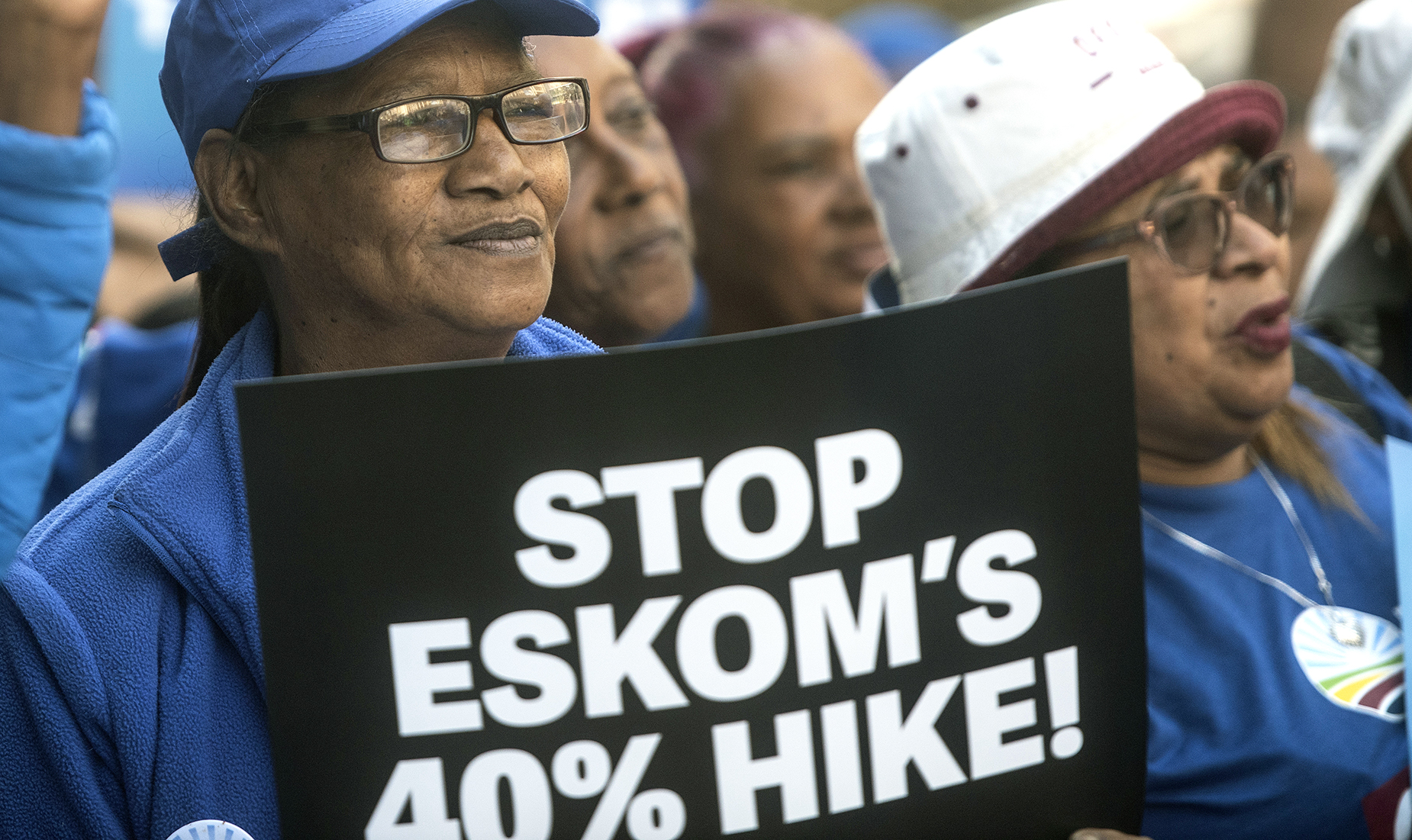
durban protest Durban residents protest against Eskom’s proposed tariff hike outside the Nersa public hearing on 21 November 2024. (Photo: Gallo Images / Eliah July)


Eskom requested R445,563-million, R495,355-million and R536,778-million for the 2025/26, 2026/27 and 2027/28 financial years, respectively. Based on Eskom’s application, the proposed standard tariff increases were projected at 36.15%, 11.81% and 9.1% for the three years.

After publication of the Eskom application, Bukula said, they had received more than 1,200 written responses from a diverse range of stakeholders, including civil society groups, community organisations, non-government organisations, business associations, political organisations, environmental activists, local government, trade unions, intensive energy users, members of the public and other stakeholders.

In heartbreaking evidence, commissioners were told how women had to chop wood in Kwazakhele, Nelson Mandela Bay as they couldn’t afford to cook with electricity.

“Throughout this process, we received valuable insights and feedback on several key themes, including affordability, Eskom’s performance, the impact of negotiated price agreements, municipal debt and the need for better consultation by Eskom and municipalities,” Bukula said.

The approved tariffs are:

  • 2025/26 financial year - revenues of R385-million, which translates into a 12.74% increase;

  • 2026/27 financial year -  revenues of R410-million, a 5.36% increase; and

  • 2027/28 financial year - revenues of R437-million, a 6.19% increase.


“This decision is not taken lightly,” Bukula continued. “The energy regulator recognises the challenges consumers face and the importance of ensuring that electricity remains affordable while securing Eskom’s financial sustainability.

“Our challenge has been and remains to regulate the energy industry in a manner that balances the interests of energy producers on the one hand and those of consumers on the other. This is never an easy task, for inevitably, it is influenced by the greater economic environment, both locally and internationally, and as directed by the policy environment of the government.”

Nelson Mandela Bay Business Chamber CEO Denise van Huyssteen, representing the bulk of the automotive and manufacturing industry in the metro, said they were relieved that the increase was 12.7% and not the requested 36%.

“However, this is almost double the inflation rate and will drive inflation in other areas such as food and fuel, and will increase the overall cost of operating businesses in the country,” Van Huysteen said.

“While there has been good progress in stabilising electricity supply, with no load shedding taking place over a 10-month period, Eskom still has significant sustainability challenges which it needs to address.

“Key among these is that municipalities owe the power utility over R90-billion, and electricity supply at a municipal level has been inefficient due to vandalism, illegal tampering, incorrect billing and various other issues. This in turn has resulted in a lack of investment, at a municipal level, in the maintenance and upgrading of electricity infrastructure,” she said.

According to an answer provided to Parliament in December, defaulting municipalities owed Eskom R107-billion at that time.

The chamber had sent David Mertens to fight their cause at Nersa. He began his representation by saying: “I am here to fight for jobs.” Mertens is widely regarded as an expert in electricity tariffs and had managed previously to bring down municipal electricity increases, saving R600-million.

Labour unions supported businesses in their fight against the 36% tariff hike.

In Durban, such a large crowd arrived at the Nersa hearings at the Royal Hotel that the venue had to be switched.

Local groups, such as the eThekwini Ratepayers Protest Movement, ward councillors and environmental groups turned up. Those who could not initially be accommodated outside the venue, including shack dweller organisation Abahlali BaseMjondolo and the Durban South Service Centre for the elderly, protested outside.

In Cape Town, people also arrived in droves to fight against the increase.

Read more: ‘Bleeding us dry’ — Capetonians slam ‘unacceptable’ Eskom tariff hike as public hearings start

Sandra Damonse, a representative of faith-based organisations for Ward 9 in Bellville South, said the increase would make a bad situation worse.

“We are from a poor community and we can’t keep up with this big (electricity price) hike. I am fighting here, I haven’t got great-grandchildren yet but I’m fighting for my great-great-great-grandchildren so that they can have a better life.”

In most provinces, apprehensive women arrived in groups.

Joan Asia from Rocklands, Gauteng, said electricity was an essential need. “When I get my pension I have to choose between buying food and electricity. I have my two grandchildren living with me. They need the electricity for their assignments and schoolwork. I sometimes have to choose if I can buy my medication. We opted to use gas. We have switched off the geyser and cook water on the stove to bath. Every increase means less food and more stress,” she said.

Pensioners came to testify, but also to read representations from their friends who couldn’t make it to the hearings.

When speakers’ passion became too much to be captured in English, in the Free State, farmers switched to Afrikaans. Hannes de Wet from Agri-Northern Cape told the commissioners: “I am from the Northern Cape, we only speak English in self-defence.”

Recounting evidence of families that would have had to choose between food and electricity if the increase had been approved and also how businesses feared that a 36% price increase would push them towards retrenching people, after months of hearings and plenty of translation, Bukula had a message for South Africans: “We heard you,” he said. DM

Comments

Fanie Rajesh Ngabiso Jan 30, 2025, 11:31 PM

I do hope the decision was based on a strategic plan and not due simply to public pressure. If not then Nersa have failed us all.

Willem Boshoff Jan 31, 2025, 09:10 AM

Eskom still has R500bn debt and that will have to be paid. People with means are migrating to solar. The paying customer base is shrinking. Elec increases well above inflation for the next 3 years at least. years of mismanagement has a price; the pain is still coming - Nersa is just spreading it.

Fanie Rajesh Ngabiso Jan 31, 2025, 02:28 PM

As long as there is a clear and public plan. Saving money is one thing but causing South African power failures by doing so is quite another.

Kevin Venter Jan 31, 2025, 03:34 AM

Not sure I would call this a win when the tariff is still going up by 12.7% Granted it is better than 36% but yet another increase to pay for issues stemming from corruption and maladministration is unacceptable! I am surprised that the citizens havent yet started to revolt.

in Jan 31, 2025, 07:27 AM

Correct. 12.7% is a whopping 3x the inflation rate, so this is the very furthest thing from a so-called victory that one can get. You and I will also see our taxes squandered on yet another taxpayer bailout and the fundamentalist hawks of the SARB will keep interest rates high. Pay, we will pay.

Malcolm McManus Jan 31, 2025, 11:32 AM

True. And the compound increase factor from all the previous crazy increases. Just wonder why we export electricity to neighboring countries and they get to pay less than South Africans. Then there's huge consumers like BHP Billiton who get billions in subsidies.

in Jan 31, 2025, 06:35 AM

Eskom has a R22 billion rand loss each year, according to energy expert, Chris Yelland. 1.8m households are stealing from Eskom by using leaked smart meter codes, sold to the public by crooked Eskom employees at lower prices. Stealing. It's just who they are. Eskom & 1.8m criminal households.

User Jan 31, 2025, 07:28 AM

And the 43000 workforce at an average of R530 000 per annum.

Malcolm McManus Jan 31, 2025, 11:35 AM

BHP Billiton Richards Bay employs about 450 people and get about 3 billion Rand in electricity subsidies every here. Not a massive employer. But those subsidies amount for a sizeable portion of the R22 billion loss.

in Jan 31, 2025, 12:59 PM

According to Chris Yelland, this particular R22bn loss is solely due to a scam that has been running for years, involving Eksdom employees. There are apparently weaknesses in its internal systems allowing crooked employees to generate electricity PINs, which are sold to equally crooked households.

Just Another Day Jan 31, 2025, 06:43 AM

The ANC cadres that were proven to be corrupt and inept can pay the difference as they were the cause of the problem in the first place.

Wendy Dewberry Jan 31, 2025, 07:17 AM

It would seem that people would be better off deciding where to put their energy (excuse the pun) if they knew that there is a fatal trajectory for eskom based on increasing cost to the public as more people rely on off-grid solutions. The poor will be left fighting this inert behemoth in the end.

bushboyvos Jan 31, 2025, 07:28 AM

A win? At nearly 3 times the inflation rate! Puleeze! The Eskom parasites continue scuttling, breeding and proliferating in glee.

tshiggo Jan 31, 2025, 07:44 AM

Where individuals are caught stealing electricity, don't simply fine them, give them a criminal record. Annual grants handed to municipalities by Treasury must be paid to Eskom directly. Right size Eskom through retrenchment and get the staff compliment in line with international norms.

Jane Crankshaw Jan 31, 2025, 08:17 AM

Hear hear!

louw.nic Jan 31, 2025, 12:57 PM

Any individual caught stealing electricity must be barred for life from Sassa grants and employment in any government role (national, prov, local).

Rama Chandra Feb 3, 2025, 10:19 AM

Has criminalising the very poor been effective anywhere? And if it is criminal syndicates stealing electricity, then it is even less effective. Fining is also ineffective, but perhaps try out putting an ankle tracker on them.

Rob Alexander Jan 31, 2025, 08:22 AM

A win? What rubbish. 12% is triple current CPI.

dalamba127 Jan 31, 2025, 09:48 AM

And that's before municipalities add their top-up fees.

Jane Crankshaw Jan 31, 2025, 08:23 AM

Eskom was negotiating from an extreme position at 36% increase - they're thrilled at the accepted 12.6% increase benchmark ( 3 times more than inflation). And we the public have to pretend its a win for us! Seriously?

Dragon Slayer Jan 31, 2025, 08:54 AM

The dominos' are falling. Anyone that can has or is pivoting to solar - hence the end of load shedding. The burden is now on those that can't pivot and often can't pay while the vicious circle of illegal connections and municipal gouging flourishes. Viva populist politics!

Dragon Slayer Jan 31, 2025, 08:54 AM

The dominos' are falling. Anyone that can has or is pivoting to solar - hence the end of load shedding. The burden is now on those that can't pivot and often can't pay while the vicious circle of illegal connections and municipal gouging flourishes. Viva populist politics!

Hidden Name Jan 31, 2025, 09:02 AM

A 12.7% increase is not a victory - its at minimum twice the inflation rate and is going to seriously harm a lot of people living right on the edge. ANC is pro-poor my flipping eye! And responsibility for this mess lies directly at their feet - more than a ten fold increase in the last decade.

chr Jan 31, 2025, 09:22 AM

Still much more than the inflation rate! Those that could pay are being milked for those that does not pay.

Les Thorpe Jan 31, 2025, 09:38 AM

E-scam probably wanted a 15% increase and knew that any requested % increase would be adjusted downwards by NERSA (under public outrage). So they simply requested a much higher increase, viz. 36%, which would give NERSA the opportunity to review and revise downwards (to 12,7% in this instance).

Matthew Lloyd Jan 31, 2025, 09:50 AM

Perhaps I don't understand how this works, but if during scheduled load shedding, an unscupulous user could bypass a prepaid meter with a load bearing cable and a switch, allowing the user the ability to switch between 'free' electricity and paid. If so, we have many consumers free loading.

fraser.heesom Jan 31, 2025, 10:19 AM

Which out of touch fool thought the south african people can afford a 36% tariff increase?? which total fool thinks theyve fought for the people of this country with a 13.6 plus 5% already increase??? The inflation rate is under 5% when you have stupid people in charge this is what happens

Jubilee 1516 Jan 31, 2025, 10:22 AM

12,7% is bizarrely high. Unacceptable given the causes are non-payers, cable theft and an Eskom capacity still 30% lower than it was in 1994, not capable of servicing new, big clients. Eskom's infrastructure "on the streets" is also failing while good payers have left. Not much to celebrate here.

petroscali Jan 31, 2025, 11:57 AM

Breaks my heart that Eskom execs feel for nothing other than keeping themselves going. Bring on the decentralized energy distribution revolution...maybe it's better than the fat cats feeding.

Sydney Kaye Jan 31, 2025, 02:43 PM

So now they will impliment load shedding until they get their own way. As far as the municipal debt it may as well be written off and will be cleared by a bail out one way or another. Either to Eskom or to the municipalities , it amounts to the same thing.

perasmus36 Jan 31, 2025, 04:59 PM

Requested a 36.15% tarrif increase. Granted 12.7%. Less than 24 hrs later we are back to loadshedding. Too much of a coincidence in my opinion. Just saying......

Johan Buys Feb 1, 2025, 08:49 AM

Implementing loadshedding the day after Nersa : blackmail + economic sabotage = charge them with Treason.

onceoffaddre Jan 31, 2025, 05:09 PM

They probably wanted a 10% increase but knew you geniuses would say it was above inflation so they made an outlandish announcement... 37% increase... and you fought for 12%. They win. Sometimes you only THINK you've won. Anyway...

Richard Blake Jan 31, 2025, 06:50 PM

Won what? Eskom did not even deserve this increase. Eskom has overcharged consumers by R1,3 trillion over 15 years, and that money went straight into the pockets of the ANC. Wake up South Africa.

Kenneth Nesbitt Feb 1, 2025, 08:35 AM

Complete and total mismanagement via Cadre deployment, I recollect talking with a local qualified Eskom engineer who resigned due to sheer frustration with inefficient management.

Catharina.h Feb 1, 2025, 04:17 PM

Can someone kindly explain "The Win" here?

Luan Sml Feb 1, 2025, 05:28 PM

A pyrrhic victory at best, but definitely no win! Paying customer base will shrink, more users will bypass the system, ANC bailouts with taxpayer funds… but the ship sails on merrily dispensing platitudes and largesse with the iceberg ahead! ?

sheldondave7 Feb 1, 2025, 10:14 PM

Did we really win this battle. My feeling is that eskom "budgeted" for a 15 - 18% increase. Applied for the 36% increase, knowing they wouldn't get and are relatively happy with what they got. A d next year will make a new exorbitant request!?

Lian van den Heever Feb 2, 2025, 06:29 PM

ESKOM , please explain the reasoning behind your increase request. We must even reject NERSA ‘s increase .

A Concerned Citizen Feb 2, 2025, 10:19 PM

No mention of the fact other than the logos in each photo that the DA organized all these marches? Why, DM? Tell me which party is ACTUALLY for the people…

Rama Chandra Feb 3, 2025, 10:10 AM

Supplying power sub-cost is a terrible plan, and subsidising people through low energy costs is also a terrible plan. They should have raised the tariff and instituted a basic income grant to everyone simultaneously. There would be no "net cost", but it would allow effective future decision-making