



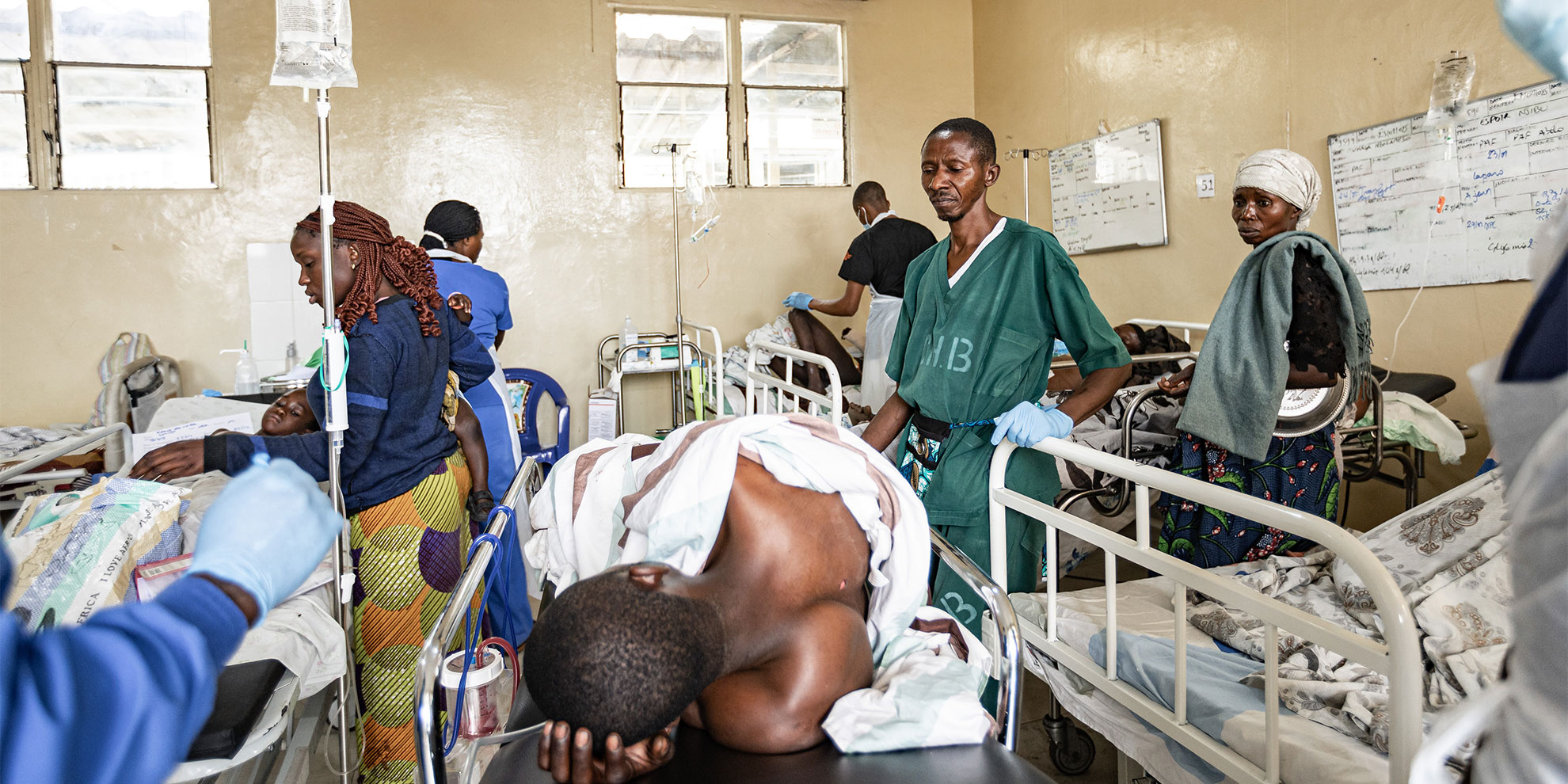
 The SA National Defence Force is preparing to send reinforcements from South Africa to the eastern Democratic Republic of the Congo (DRC), said military sources, after nine South African soldiers were killed and several injured in fighting there on Thursday, 23 January and Friday, 24 January.
Parliament has called for a probe into the combat readiness of the force and whether it has adequate air and other support after its heavy losses.
The SANDF announced on Saturday that nine soldiers had died and an unnamed number were wounded in successfully repelling a full-scale attack on them by Rwandan-backed M23 rebels who have laid siege to the provincial capital, Goma.
“Due to the heroic resistance put up by our gallant fighters,” the M23 had not only been halted but had been pushed back, said the SANDF.
It said seven of those killed were members of the Southern African Development Community (SADC) Mission in DRC (SAMIDRC) while two were members of the UN peacekeeping mission in DRC, Monusco. Their mission is to neutralise armed rebel groups like M23 which have been terrorising civilians in eastern DRC for decades.
Malawian media reported that three Malawian soldiers who had been part of SAMIDRC were also killed in the same action. Tanzania also has troops in SAMIDRC and there have been unconfirmed reports that it too lost troops in the battle.
Military sources told Daily Maverick the battle was not over and the remaining SANDF soldiers in their base in the town of Sake, 23km northwest of Goma, were still under attack by the M23 on Sunday.
Earlier in the weekend the SA base at Sake was reported to be surrounded and running out of ammunition with little chance of resupply or extraction because the M23 forces were able to easily shoot down resupply helicopters with surface-to-air missiles (SAMs).
However, DRC forces then took the village of Mubambiro, which relieved the siege on Sake.
Late on Sunday afternoon, Darren Olivier, a defence expert at the Africa Defence Review, told Daily Maverick: “To the best of my knowledge, the situation around the main SANDF base near Sake is relatively calm, and the ammunition situation has also stabilised.
“At least one resupply flight for SANDF forces landed at Goma this morning and the troops were able to repel attacks on and near the base. However, the broader situation around Sake and Goma remains extremely uncertain and precarious, and the risk is far from over.”
Other military sources told Daily Maverick that the SANDF was preparing to urgently send another infantry battalion and a paratroop quick response force from SA to the eastern DRC to reinforce its forces on the ground there.
“There are strong indications that South Africa may send reinforcements to the area, but at this stage I would not like to comment or speculate on the exact numbers or type of reinforcements, given the sensitivity of the situation,” said Olivier.
The SANDF was slow to confirm the widespread speculation about the deaths of the troops in the DRC last week, prompting Democratic Alliance (DA) defence spokesperson Chris Hattingh to say: “South Africans must rely on DRC sources to be informed of casualties. The embarrassing silence undermines trust in the military.”
Meanwhile, Parliament’s joint standing committee on defence acknowledged the gallantry of the SANDF soldiers, but added: “The loss of nine members of the SANDF is serious and requires investigation to prevent recurrence.
“Some of the issues that must be looked into include the combat preparedness, defence intelligence capabilities and specifically the availability of combat support equipment, including air support and ammunition,” said Malusi Gigaba, the committee’s co-chairperson.
In Gaborone, the SADC secretariat said: “SADC unequivocally condemns this act of aggression by the M23 operating in the Eastern DRC… Such actions undermine the sovereignty, territorial integrity and peace and security of the DRC and the SADC region.
“The pursuit of territorial expansion by M23 only exacerbates the already existing dire humanitarian and security situation in the Eastern DRC which has left thousands of people dead and forced millions in North Kivu, particularly women, children, the elderly and persons with disabilities to flee their homes.”
It added that the M23 attack violated both the Nairobi peace process and the ceasefire of July 2024 brokered by Angolan President João Lourenço. It demanded from M23 an unconditional withdrawal from all occupied positions.
SADC called on the international community, including the United Nations, to also denounce “these unlawful actions by the M23”, while in New York on Sunday the UN Security Council held an urgent session on the M23 attacks, called for by Kinshasa.
Daily Maverick asked Chrispin Phiri, the spokesperson for International Relations and Cooperation Minister Ronald Lamola, whether Pretoria would formally protest to Rwanda about its contribution to the death of the nine SA soldiers.
“The government of South Africa acts on the situation in eastern DRC on the basis of various security and political assessments in consultation with the UN and SADC,” he replied.
The SA National Defence Force is preparing to send reinforcements from South Africa to the eastern Democratic Republic of the Congo (DRC), said military sources, after nine South African soldiers were killed and several injured in fighting there on Thursday, 23 January and Friday, 24 January.
Parliament has called for a probe into the combat readiness of the force and whether it has adequate air and other support after its heavy losses.
The SANDF announced on Saturday that nine soldiers had died and an unnamed number were wounded in successfully repelling a full-scale attack on them by Rwandan-backed M23 rebels who have laid siege to the provincial capital, Goma.
“Due to the heroic resistance put up by our gallant fighters,” the M23 had not only been halted but had been pushed back, said the SANDF.
It said seven of those killed were members of the Southern African Development Community (SADC) Mission in DRC (SAMIDRC) while two were members of the UN peacekeeping mission in DRC, Monusco. Their mission is to neutralise armed rebel groups like M23 which have been terrorising civilians in eastern DRC for decades.
Malawian media reported that three Malawian soldiers who had been part of SAMIDRC were also killed in the same action. Tanzania also has troops in SAMIDRC and there have been unconfirmed reports that it too lost troops in the battle.
Military sources told Daily Maverick the battle was not over and the remaining SANDF soldiers in their base in the town of Sake, 23km northwest of Goma, were still under attack by the M23 on Sunday.
Earlier in the weekend the SA base at Sake was reported to be surrounded and running out of ammunition with little chance of resupply or extraction because the M23 forces were able to easily shoot down resupply helicopters with surface-to-air missiles (SAMs).
However, DRC forces then took the village of Mubambiro, which relieved the siege on Sake.
Late on Sunday afternoon, Darren Olivier, a defence expert at the Africa Defence Review, told Daily Maverick: “To the best of my knowledge, the situation around the main SANDF base near Sake is relatively calm, and the ammunition situation has also stabilised.
“At least one resupply flight for SANDF forces landed at Goma this morning and the troops were able to repel attacks on and near the base. However, the broader situation around Sake and Goma remains extremely uncertain and precarious, and the risk is far from over.”
Other military sources told Daily Maverick that the SANDF was preparing to urgently send another infantry battalion and a paratroop quick response force from SA to the eastern DRC to reinforce its forces on the ground there.
“There are strong indications that South Africa may send reinforcements to the area, but at this stage I would not like to comment or speculate on the exact numbers or type of reinforcements, given the sensitivity of the situation,” said Olivier.
The SANDF was slow to confirm the widespread speculation about the deaths of the troops in the DRC last week, prompting Democratic Alliance (DA) defence spokesperson Chris Hattingh to say: “South Africans must rely on DRC sources to be informed of casualties. The embarrassing silence undermines trust in the military.”
Meanwhile, Parliament’s joint standing committee on defence acknowledged the gallantry of the SANDF soldiers, but added: “The loss of nine members of the SANDF is serious and requires investigation to prevent recurrence.
“Some of the issues that must be looked into include the combat preparedness, defence intelligence capabilities and specifically the availability of combat support equipment, including air support and ammunition,” said Malusi Gigaba, the committee’s co-chairperson.
In Gaborone, the SADC secretariat said: “SADC unequivocally condemns this act of aggression by the M23 operating in the Eastern DRC… Such actions undermine the sovereignty, territorial integrity and peace and security of the DRC and the SADC region.
“The pursuit of territorial expansion by M23 only exacerbates the already existing dire humanitarian and security situation in the Eastern DRC which has left thousands of people dead and forced millions in North Kivu, particularly women, children, the elderly and persons with disabilities to flee their homes.”
It added that the M23 attack violated both the Nairobi peace process and the ceasefire of July 2024 brokered by Angolan President João Lourenço. It demanded from M23 an unconditional withdrawal from all occupied positions.
SADC called on the international community, including the United Nations, to also denounce “these unlawful actions by the M23”, while in New York on Sunday the UN Security Council held an urgent session on the M23 attacks, called for by Kinshasa.
Daily Maverick asked Chrispin Phiri, the spokesperson for International Relations and Cooperation Minister Ronald Lamola, whether Pretoria would formally protest to Rwanda about its contribution to the death of the nine SA soldiers.
“The government of South Africa acts on the situation in eastern DRC on the basis of various security and political assessments in consultation with the UN and SADC,” he replied.

The SA National Defence Force is preparing to send reinforcements from South Africa to the eastern Democratic Republic of the Congo (DRC), said military sources, after nine South African soldiers were killed and several injured in fighting there on Thursday, 23 January and Friday, 24 January.
Parliament has called for a probe into the combat readiness of the force and whether it has adequate air and other support after its heavy losses.
The SANDF announced on Saturday that nine soldiers had died and an unnamed number were wounded in successfully repelling a full-scale attack on them by Rwandan-backed M23 rebels who have laid siege to the provincial capital, Goma.
“Due to the heroic resistance put up by our gallant fighters,” the M23 had not only been halted but had been pushed back, said the SANDF.
It said seven of those killed were members of the Southern African Development Community (SADC) Mission in DRC (SAMIDRC) while two were members of the UN peacekeeping mission in DRC, Monusco. Their mission is to neutralise armed rebel groups like M23 which have been terrorising civilians in eastern DRC for decades.
Malawian media reported that three Malawian soldiers who had been part of SAMIDRC were also killed in the same action. Tanzania also has troops in SAMIDRC and there have been unconfirmed reports that it too lost troops in the battle.
Military sources told Daily Maverick the battle was not over and the remaining SANDF soldiers in their base in the town of Sake, 23km northwest of Goma, were still under attack by the M23 on Sunday.
Earlier in the weekend the SA base at Sake was reported to be surrounded and running out of ammunition with little chance of resupply or extraction because the M23 forces were able to easily shoot down resupply helicopters with surface-to-air missiles (SAMs).
However, DRC forces then took the village of Mubambiro, which relieved the siege on Sake.
Late on Sunday afternoon, Darren Olivier, a defence expert at the Africa Defence Review, told Daily Maverick: “To the best of my knowledge, the situation around the main SANDF base near Sake is relatively calm, and the ammunition situation has also stabilised.
“At least one resupply flight for SANDF forces landed at Goma this morning and the troops were able to repel attacks on and near the base. However, the broader situation around Sake and Goma remains extremely uncertain and precarious, and the risk is far from over.”
Other military sources told Daily Maverick that the SANDF was preparing to urgently send another infantry battalion and a paratroop quick response force from SA to the eastern DRC to reinforce its forces on the ground there.
“There are strong indications that South Africa may send reinforcements to the area, but at this stage I would not like to comment or speculate on the exact numbers or type of reinforcements, given the sensitivity of the situation,” said Olivier.
The SANDF was slow to confirm the widespread speculation about the deaths of the troops in the DRC last week, prompting Democratic Alliance (DA) defence spokesperson Chris Hattingh to say: “South Africans must rely on DRC sources to be informed of casualties. The embarrassing silence undermines trust in the military.”
Meanwhile, Parliament’s joint standing committee on defence acknowledged the gallantry of the SANDF soldiers, but added: “The loss of nine members of the SANDF is serious and requires investigation to prevent recurrence.
“Some of the issues that must be looked into include the combat preparedness, defence intelligence capabilities and specifically the availability of combat support equipment, including air support and ammunition,” said Malusi Gigaba, the committee’s co-chairperson.
In Gaborone, the SADC secretariat said: “SADC unequivocally condemns this act of aggression by the M23 operating in the Eastern DRC… Such actions undermine the sovereignty, territorial integrity and peace and security of the DRC and the SADC region.
“The pursuit of territorial expansion by M23 only exacerbates the already existing dire humanitarian and security situation in the Eastern DRC which has left thousands of people dead and forced millions in North Kivu, particularly women, children, the elderly and persons with disabilities to flee their homes.”
It added that the M23 attack violated both the Nairobi peace process and the ceasefire of July 2024 brokered by Angolan President João Lourenço. It demanded from M23 an unconditional withdrawal from all occupied positions.
SADC called on the international community, including the United Nations, to also denounce “these unlawful actions by the M23”, while in New York on Sunday the UN Security Council held an urgent session on the M23 attacks, called for by Kinshasa.
Daily Maverick asked Chrispin Phiri, the spokesperson for International Relations and Cooperation Minister Ronald Lamola, whether Pretoria would formally protest to Rwanda about its contribution to the death of the nine SA soldiers.
“The government of South Africa acts on the situation in eastern DRC on the basis of various security and political assessments in consultation with the UN and SADC,” he replied.
A war without borders
The current deployment of the SANDF as part of SAMIDRC is not the first time South Africa’s military has confronted the Rwandan-backed M23 rebels. Yet the stakes today are exponentially higher, with the conflict threatening to destabilise the entire Great Lakes region.
M23 — named after the defunct 23 March 2009 peace agreement that its founders accused Kinshasa of violating — re-emerged in late 2021 after nearly a decade of dormancy. The group, predominantly composed of Congolese Tutsis, has long been accused of receiving covert support from Rwanda, which argues its involvement is a defensive response to Kinshasa’s alleged harbouring of Hutu génocidaires linked to the 1994 Rwandan genocide.
This narrative, dismissed by the DRC and UN investigators, masks a deeper struggle over control of eastern DRC’s mineral wealth, including cobalt, copper and coltan, which are critical to global tech supply chains.
Marisa Lourenço, an independent risk analyst, pointed out the inevitability of conflict in this resource-rich region: “The area around Goma has been in a state of conflict for decades, and this is unlikely to change, especially considering what is at stake: access to minerals that are in huge demand across the globe.
“No rebel group is going to give up attempts to access this, especially when there is so much to gain, like access to land, power, and the possibility of nationhood for groups within the Great Lakes region displaced decades ago.”
South Africa’s initial involvement in the conflict dates to 2013 when SANDF troops joined the UN’s Force Intervention Brigade to quash M23’s first uprising. The operation succeeded temporarily, but the rebels regrouped with enhanced tactics and weaponry. By 2023, M23 had seized key mining towns like Rubaya, a major coltan hub, crippling Kinshasa’s revenue streams and emboldening M23’s territorial ambitions.
Criticism of the SANDF’s current SAMIDRC deployment has focused on logistical shortfalls. Military analysts and SANDF insiders, speaking on condition of anonymity, have highlighted chronic shortages of ammunition, air support and functional armoured vehicles.
“We’re fighting a 21st-century war with 20th-century tools,” one officer told The East African in January 2025, as M23 closed in on Goma. These concerns were starkly validated during the 24–25 January clashes near Sake, where SANDF casualties mounted amid heavy artillery fire.
The rebels’ advance coincides with a critical juncture in international diplomacy. As M23 consolidates territorial gains, Kinshasa is racing to rally global allies ahead of a United Nations Security Council session in March where Kinshasa will push for sanctions against Rwanda and increased peacekeeping support.
Analysts speculate that M23’s current offensive aims to seize Goma before the session. Lourenço cautions that while sanctions “would bolster the DRC’s political profile within the Great Lakes, strengthening [DRC] President Felix Tshisekedi’s influence within the subregion and the AU more broadly”, they were unlikely to cripple Rwanda’s influence.
She noted that Rwandan President Paul Kagame’s regime, though facing reputational damage in Western circles, had mitigated risks by cultivating economic ties with Middle Eastern states, which prioritise investment over political intervention.
The battle for Goma
South Africa has about 1,200 personnel deployed as part of SAMIDRC, including infantry, mechanised units, special forces and Rooivalk attack helicopters. This multinational intervention, focused on North Kivu province, has become a flashpoint in a conflict that blends ethnic strife, resource exploitation and regional power plays.
“Peacekeeping efforts, like SAMIDRC and Monusco, have been instrumental in supporting the Congolese army to keep the city of Goma safer than other parts of eastern DRC … but are hamstrung by lack of logistical support in the case of [SAMIDRC] and a general lack of support from the government (though this is reversing) in the case of the latter,” Lourenço notes of the structural constraints of SAMIDRC’s impact.
Reports from social media and SANDF insiders, noted by defence analysts as early as Wednesday, 22 January, indicated that M23 rebels had begun advancing toward Goma. Videos showed columns of fighters equipped with modernised Fast-style helmets and pixelated woodland camouflage patterns identical to those used by the Rwanda Defence Force (RDF).
Geolocated footage from Sake and Minova, analysed by the Congo Research Group, reinforced UN allegations of Kigali’s material backing of the rebels.
“The allegations of Rwandan support for M23 are all but confirmed,” Lourenço states. “The UN reported on this as far back as 2013, and has become more vocal on the matter since 2022… There is also documented photographic evidence of RDF soldiers fighting alongside M23 rebels.”
 Screenshots from a video reportedly taken in Minova in Eastern Kivu on 22 January allegedly show M23 members celebrating. The uniform pattern (left) and Ops-Core style Fast helmet (right) with rails and night vision mount both appear to match modern RDF apparel (below). (Photo: Supplied / X)

#DRCongo ??: #M23 rebels seized control of the town of Minova, cutting the last remaining road to the #NorthKivu capital of #Goma. Residents look on confused and worried as the rebels celebrate their victory.
For those wondering how a marginal rebel group can have such good… pic.twitter.com/utoTiGxZjB
— Thomas van Linge (@ThomasVLinge) January 22, 2025
On Thursday, 23 January, clashes erupted near Sake, the last major town before Goma. SANDF forces mobilised between Sake and Goma, engaging in fierce urban combat that culminated in a full-scale rebel assault on Friday, 24 January. The SANDF confirmed nine fatalities in a statement on 25 January, attributing the losses to “intense artillery and close-quarter engagements”.
@darren_olivier @deanwingrin More @SANDF_ZA footage allegedly from recent encounters with M23. pic.twitter.com/fYXQjEIqT6
— WhistlingTroopie ?????? (@PigeonsTinHat) January 26, 2025
Footage supposedly from the recent conflict between the SANDF and M23 shows South African forces firing heavy machine guns and an anti-aircraft weapon, geolocated by Daily Maverick to their base outside Sake during combat.
The DRC, which has long held that Kigali is the covert hand behind M23’s conduct, escalated its rhetoric, with military spokesperson General Sylvain Ekenge stating during a press conference at the weekend: “What Rwanda does not know is that the war has not yet begun … and it will begin.”
The timing of the clashes overlapped with a pre-planned visit by the South African defence minister, Angie Motshekga, who toured frontline bases from 22–25 January to assess troop welfare under her “soldier first” policy. Her return to Pretoria coincided with news of the casualties, drawing criticism from opposition leaders.
“The minister’s public assurances about SANDF readiness ring hollow when soldiers lack basic equipment,” said former DA MP and defence spokesperson Kobus Marais, now an independent analyst.
Lourenço warned that “further SANDF casualties would likely cause more criticism back home in South Africa, where the government has already come under fire for leading the SAMIDRC mission in the first place.
“More casualties could also drive popular frustration towards the mission among local populations in eastern DRC, which in turn could eventually see Kinshasa voice discontent at SAMIDRC’s presence. This is unlikely though — South Africa is an important ally to the DRC. And any withdrawal earlier than the stipulated date of December 2025 is unlikely.”
The killing by M23 of the North Kivu military governor, Major General Peter Cirimwami, on 23 January marked a turning point, triggering Tshisekedi’s emergency return from Davos and an urgent meeting with top defence officials.
News24 reported that two Ilyushin 72 Cargo flights departed from Waterkloof Air Force Base to resupply the embattled SANDF soldiers. Daily Maverick can confirm that on Friday and Sunday, an Ilyushin 72 flown by New Way Cargo Airlines, often used by the SANDF, left Waterkloof on headings consistent with Goma, probably to perform this resupply.
 (Supplied: AirNav)
Meanwhile, Kinshasa rejected a Turkish offer last week to mediate, insisting on an “African solution” through the AU-led Luanda Process.
“Rwanda’s sabotage is derailing peace,” said DRC Deputy Foreign Minister Gracia Yamba Kazadi, echoing Tshisekedi’s refusal to negotiate with M23. Rwanda’s foreign minister, Olivier Nduhungirehe, countered that Kinshasa’s “reckless obstinacy” undermined dialogue.
The DRC’s Ministry of Foreign Affairs on Saturday formally notified the embassy of Rwanda in Kinshasa of the decision to recall its diplomats stationed in Rwanda. This move is effective immediately, with a 48-hour deadline for the cessation of all diplomatic and consular activities – a sign of the conflict escalating further.
A history of violence
South Africa and the DRC have been historically — and often antagonistically — intertwined since the latter’s independence from Belgium in 1960. The DRC, then Zaire, emerged under Patrice Lumumba, a socialist pan-Africanist whose vision of sovereignty clashed with Cold War geopolitics. Lumumba’s 1961 assassination, orchestrated with CIA and Belgian involvement, installed the Western-backed dictator Mobutu Sese Seko, whose 32-year kleptocratic reign drained the country’s resources.
Mobutu’s downfall in 1997 was precipitated by his harbouring of Hutu extremists who fled Rwanda after the 1994 genocide. Rwanda’s Paul Kagame, then a rebel commander, supported the coalition that ousted Mobutu, sparking the First Congo War — a conflict that drew in regional armies and ignited proxy battles over land and ethnicity.
South Africa’s post-apartheid government under Nelson Mandela maintained a policy of non-interference toward Mobutu, despite his atrocities. Mandela privately condemned the regime but prioritised regional stability, a stance that shifted in the 2000s when South African corporations like MTN and Standard Bank expanded into the DRC’s mineral-rich east. This economic entanglement, however, coincided with the eruption of the M23 rebellion in 2012, drawing Pretoria into a conflict mirroring Cold War-era fractures.
Today, the DRC’s vast mineral reserves — essential to the global green energy transition — remain both a curse and a prize. M23’s resurgence underscores the unresolved tensions between regional powers, resource exploitation and the human cost of perpetual conflict.
“Soldiers deserve more than silence. Their sacrifices demand immediate acknowledgement,” said SA National Defence Union Secretary Pikkie Greef on Saturday, as public frustration grew over the SANDF’s opaque communication.
Lourenço offered a bleak prognosis: “Minerals are a lucrative business, and so is war. In eastern DRC, both are present, and therein lies the barrier towards any possibility for sustainable peace in the region. Policy responses are limited, because Kinshasa has limited control over the eastern parts of the country.”
With the DA calling for a full withdrawal and the SAMIDRC mission’s legacy under scrutiny, South Africa’s role in the DRC risks becoming another chapter in a history of violence with no end in sight. DM