


Dailymaverick logo

Maverick News

Maverick News

Big Brother’s beach watch — drones and CCTV spark privacy concerns in Cape Town

The City of Cape Town is using long-range, high-definition CCTV and drones at beaches to identify offenders who consume alcohol. Critics have decried this as an invasion of privacy.
Big Brother’s beach watch — drones and CCTV spark privacy concerns in Cape Town Despite the illegality of consuming alcohol on public beaches in SA, many take the risk anyway, often hiding alcohol in water bottles and cooler boxes or burying it in the sand when law enforcement patrols the beaches. To curb this, the City of Cape Town is using long-range, high-definition CCTV and drones at beaches to identify offenders. The Mayoral Committee member for safety and security, JP Smith, said the city had deployed drones and CCTV to identify offenders at beaches over the past two festive seasons. “From kilometres away, invisible to the human eye, we zoom in and identify offenders, who think they are one step ahead of the law,” said Smith. [caption id="attachment_2501361" align="alignnone" width="2038"]Cape Town emergency call centre JP Smith JP Smith. (Photo: Jaco Marais / Gallo Images / Network24 )[/caption]

Balancing safety and privacy

However, Heidi Swart, a surveillance researcher, said the public should be notified that drone monitoring was happening. She said the use of high-definition, omnipresent cameras allowed officials to monitor individuals daily over a long period and learn their behaviour patterns. In addition to gathering data about people’s lives, the city was monitoring people in states of undress. “Who gets to see that data? Are you comfortable with some man sitting in a room somewhere looking at your half-naked body?” asked Swart. “Every single little bit of information about you is yours. So when they’re capturing you on film, that’s your data. But of course, you have no control over it. You don’t even know how long [and] who’s looking at it. You’re completely reliant on the honesty and the integrity of whoever owns this camera, is taking this footage and is storing this footage. “Is that surveillance really necessary? Because you’re only allowed to collect data if it’s absolutely necessary. And I would argue it’s not,” she said. “The vast majority of people are not criminals, [and] are not drinking on the beach,” she said.

Legal frameworks  

Swart said there needed to be a specific legal framework for CCTV cameras within the Protection of Personal Information Act to regulate this kind of surveillance. “There’s all sorts of legislation for who can fly drones, where they can fly and at what time. [But] that has nothing to do with privacy. That’s something separate,” she said. Brandon Joubert, a video surveillance expert and director of Gensix Technology, said if a drone zooms in and focuses on details of a person that a normal onlooker could not observe, this could be deemed a search and an invasion of the person’s reasonable expectation of privacy. South Africa’s Constitution guarantees the right to not be searched without consent or legal justification. “The average citizen does not expect high-resolution, magnified examination of any part of their person or possessions without consent or justification which would meet the threshold required to enforce a physical search of a person,” he said. Joubert said the distribution of video footage from a drone associating an individual with criminal activity before the matter has been heard in court could be a contravention of the South African Police Service Act. “The city should make the effort to inform and create an overriding awareness amongst users of the beach that surveillance drones are in deployment, what the purpose is and what the capacity is,” said Joubert. He said that in a crime-ridden society such as South Africa, law-abiding citizens should welcome the deployment of drones if they do not exceed the ability of a normal human to observe them — except in legally justified cases.

Privacy concerns

Smith maintained that there were no public privacy concerns related to this technology on beaches, given the specific purpose for which the technology is used, the “secure manner” in which the footage was stored and accessed, and the fact that it was in a public space. When asked whether there were notices on beaches informing people about the surveillance measures, Smith said: “There is no legal obligation to notify the public regarding the operation of CCTV cameras in public spaces.” Regarding transparency in the city’s use of surveillance systems, he noted the following:
  • Overt camera usage: All cameras installed in public spaces by the city are overt and clearly visible to the general public. The city does not deploy covert cameras in public areas.
  • Notification requirements: While the city is committed to lawful and responsible surveillance practices, there is no legal obligation to notify the public about the operation of CCTV cameras in public spaces.
  • Purpose of surveillance: Cameras operated by the Safety and Security Directorate in public spaces are exclusively used for legitimate purposes, including crime prevention, crime detection and ensuring the safety of the public.
  • Viewing of footage: No footage is made available to third parties unless it is for investigation purposes or the good of the general public’s knowledge, media awareness or education purposes.
He said drones were only used to monitor public open spaces and city land and did not encroach on private residences. “The footage is securely stored and is only made available to authorised officers and managers, for official purposes, and is only used for the purpose it was captured for.” He said drones had been extremely effective for law enforcement as officers could be directed to offenders and guided to where alcohol had been hidden. This technology was being used in conjunction with and support of traditional policing methods. Together with the South African Police Service, the city had set up vehicle checkpoints at entry points to prominent beaches; officers searched vehicles and conducted foot patrols on beachfronts. Read more: Sun, sand and safety — essential guidelines for enjoying South Africa’s beaches this summer Smith said it was through the use of high-definition CCTV and drones circling high overhead that operators were able to identify beachgoers using creative ways to hide their alcohol, including burying it in the sand or decanting it into soft drink bottles. [caption id="attachment_2535237" align="alignnone" width="1319"] Alcohol confiscated from Cape Town beachgoers. (Photo: JP Smith on Facebook)[/caption] By Thursday, 2 January, the city had confiscated more than 6,000 bottles of alcohol, with each offender handed a receipt detailing the type and quantity, as well as a fine. Once the fine was settled, said Smith, offenders could present their receipt at the pound and have the impounded items returned. DM

Despite the illegality of consuming alcohol on public beaches in SA, many take the risk anyway, often hiding alcohol in water bottles and cooler boxes or burying it in the sand when law enforcement patrols the beaches.

To curb this, the City of Cape Town is using long-range, high-definition CCTV and drones at beaches to identify offenders.

The Mayoral Committee member for safety and security, JP Smith, said the city had deployed drones and CCTV to identify offenders at beaches over the past two festive seasons.

“From kilometres away, invisible to the human eye, we zoom in and identify offenders, who think they are one step ahead of the law,” said Smith.

Cape Town emergency call centre JP Smith JP Smith. (Photo: Jaco Marais / Gallo Images / Network24 )


Balancing safety and privacy


However, Heidi Swart, a surveillance researcher, said the public should be notified that drone monitoring was happening.

She said the use of high-definition, omnipresent cameras allowed officials to monitor individuals daily over a long period and learn their behaviour patterns.

In addition to gathering data about people’s lives, the city was monitoring people in states of undress.

“Who gets to see that data? Are you comfortable with some man sitting in a room somewhere looking at your half-naked body?” asked Swart.

“Every single little bit of information about you is yours. So when they’re capturing you on film, that’s your data. But of course, you have no control over it. You don’t even know how long [and] who’s looking at it. You’re completely reliant on the honesty and the integrity of whoever owns this camera, is taking this footage and is storing this footage.

“Is that surveillance really necessary? Because you’re only allowed to collect data if it’s absolutely necessary. And I would argue it’s not,” she said.

“The vast majority of people are not criminals, [and] are not drinking on the beach,” she said.

Legal frameworks  


Swart said there needed to be a specific legal framework for CCTV cameras within the Protection of Personal Information Act to regulate this kind of surveillance.

“There’s all sorts of legislation for who can fly drones, where they can fly and at what time. [But] that has nothing to do with privacy. That’s something separate,” she said.

Brandon Joubert, a video surveillance expert and director of Gensix Technology, said if a drone zooms in and focuses on details of a person that a normal onlooker could not observe, this could be deemed a search and an invasion of the person’s reasonable expectation of privacy.

South Africa’s Constitution guarantees the right to not be searched without consent or legal justification.

“The average citizen does not expect high-resolution, magnified examination of any part of their person or possessions without consent or justification which would meet the threshold required to enforce a physical search of a person,” he said.

Joubert said the distribution of video footage from a drone associating an individual with criminal activity before the matter has been heard in court could be a contravention of the South African Police Service Act.

“The city should make the effort to inform and create an overriding awareness amongst users of the beach that surveillance drones are in deployment, what the purpose is and what the capacity is,” said Joubert.

He said that in a crime-ridden society such as South Africa, law-abiding citizens should welcome the deployment of drones if they do not exceed the ability of a normal human to observe them — except in legally justified cases.

Privacy concerns


Smith maintained that there were no public privacy concerns related to this technology on beaches, given the specific purpose for which the technology is used, the “secure manner” in which the footage was stored and accessed, and the fact that it was in a public space.

When asked whether there were notices on beaches informing people about the surveillance measures, Smith said: “There is no legal obligation to notify the public regarding the operation of CCTV cameras in public spaces.”

Regarding transparency in the city’s use of surveillance systems, he noted the following:

  • Overt camera usage: All cameras installed in public spaces by the city are overt and clearly visible to the general public. The city does not deploy covert cameras in public areas.

  • Notification requirements: While the city is committed to lawful and responsible surveillance practices, there is no legal obligation to notify the public about the operation of CCTV cameras in public spaces.

  • Purpose of surveillance: Cameras operated by the Safety and Security Directorate in public spaces are exclusively used for legitimate purposes, including crime prevention, crime detection and ensuring the safety of the public.

  • Viewing of footage: No footage is made available to third parties unless it is for investigation purposes or the good of the general public’s knowledge, media awareness or education purposes.


He said drones were only used to monitor public open spaces and city land and did not encroach on private residences.

“The footage is securely stored and is only made available to authorised officers and managers, for official purposes, and is only used for the purpose it was captured for.”

He said drones had been extremely effective for law enforcement as officers could be directed to offenders and guided to where alcohol had been hidden. This technology was being used in conjunction with and support of traditional policing methods.

Together with the South African Police Service, the city had set up vehicle checkpoints at entry points to prominent beaches; officers searched vehicles and conducted foot patrols on beachfronts.

Read more: Sun, sand and safety — essential guidelines for enjoying South Africa’s beaches this summer

Smith said it was through the use of high-definition CCTV and drones circling high overhead that operators were able to identify beachgoers using creative ways to hide their alcohol, including burying it in the sand or decanting it into soft drink bottles.

Alcohol confiscated from Cape Town beachgoers. (Photo: JP Smith on Facebook)


By Thursday, 2 January, the city had confiscated more than 6,000 bottles of alcohol, with each offender handed a receipt detailing the type and quantity, as well as a fine.

Once the fine was settled, said Smith, offenders could present their receipt at the pound and have the impounded items returned. DM

Comments

nicholasandrewmiles Jan 7, 2025, 01:01 PM

no problem. include violence, nsri support, traffic issues around the beaches. no problem. just put up a couple of signs saying drones,etc are being used to inform the public, then its their choice to use the beach or not. get bad guys, save lives. if you think that isnt important , you're wrong.

Fernando Moreira Jan 7, 2025, 01:23 PM

Great work,brilliant ,should be used everywhere , just put out a couple of signs in all languages !! Vote DA

Glyn Morgan Jan 7, 2025, 09:04 PM

Right!

elias.sideras-haddad Jan 8, 2025, 02:19 PM

Agreed!

skermink Jan 7, 2025, 01:56 PM

'“Who gets to see that data? Are you comfortable with some man sitting in a room somewhere looking at your half-naked body?” asked Swart." Stupid comment. If you want to display your body in a very public place you cannot choose who gets to look.

Johan Buys Jan 7, 2025, 03:09 PM

Exactly! A beach is a public space. There is ample legal basis that nobody can have an expectation of privacy in a public space.

Brandon Joubert Jan 9, 2025, 02:22 PM

You are quite wrong - there is ample legal basis in fact that everybody has a reasonable expectation of privacy in a public space.

Mr. Fair Jan 9, 2025, 03:01 PM

You are 100% wrong. Ask any professional photographer. You aren't even required to ask permission. If you are in public, you cannot, at all, somehow, magically expect privacy. If you're in a toilet, yes, if you're in your home, yes, if you're out in the open, no.

Brandon Joubert Jan 9, 2025, 03:40 PM

I think you demonstrate that it's time to exit the discussion. You claim that I am wrong in asserting that everybody has a reasonable expectation to privacy in a public space. How foolish it would be to engage in discussion with that kind of logic. Enjoy your day.

Mr. Fair Jan 9, 2025, 04:26 PM

I'm gobsmacked. The two words are right there, opposite words; "private", "public", and you are saying that they are essentially the same? You expect privacy in public? And you sell surveillance cameras for a living, and don't respond to whether this is an article or a veiled advert? Weird.

Teresa K Jan 7, 2025, 10:16 PM

100%

Graeme de Villiers Jan 8, 2025, 03:03 PM

Brilliant response! Nail on the head!

Mr. Fair Jan 8, 2025, 03:24 PM

Precisely! What on earth are you doing in public being half naked, expecting privacy or some set of (bordering on sexist) self-created rules?

onceoffaddre Jan 7, 2025, 02:02 PM

Articles like this use the "many people say" framing to kick off the spin. "Critics have decried this as an invasion of privacy"... what about the many supporters? South Africa is already a hellscape of crime. We need every available camera helping keep this place safe!

Pieter van de Venter Jan 7, 2025, 02:09 PM

There are far too many and too much individual rights and too little responsibility. In public places, the rights of groups should be far more important than the individuals. We done - Keep an eye on all those that refuse to listen and behave.

Brandon Joubert Jan 9, 2025, 02:25 PM

You are 100% correct. There is legal basis that justifies targeting an individual with invasive procedures where the interest or the safety of the group justifies that. And legal principles that prevent that without such justification.

Mr. Fair Jan 9, 2025, 03:02 PM

Those laws don't apply to images of you in a public space. Intercepting digital comms yes, searching you, yes, taking an image of you where the public can see you, no.

fio Jan 7, 2025, 02:21 PM

is it better to allow people to drink on the beach and swim in an inebriated state, and then drown? And people on the beach are already in a state of undress. I think the DA/COCT did a fantastic job! Thank you for protecting the public and for making it safer for all. Well done JP Smith!!

in Jan 7, 2025, 03:58 PM

The article above is a prime example of the anti-DA drivel that unfortunately blights the pages of the Daily Soros.

Mikeandelean Jan 8, 2025, 07:02 AM

I agree. Cape Town under the DA are streets ahead of any other city in SA, because we have proactive officials such as JP Smith

in Jan 7, 2025, 02:25 PM

Privacy concerns? Really? Many beachgoers VOLUNTARILY wear skimpy costumes and sun their near naked selves in full view of everybody on the beach. What difference does it make if the lecher lying on the towel next to you perves at you, as opposed to somebody in a drone control room?

JessieJade Jan 7, 2025, 03:18 PM

yeah there's a word for that matt. Consent.

in Jan 7, 2025, 03:54 PM

Again, people voluntarily dress in skimpy swimsuits, and then voluntarily go onto a public beach, where literally every single other person, can see their near-naked bodies. In what POSSIBLE way is this not implicit consent? How can it POSSIBLY be worse for a guy in a control room to look at you?

Fanie Rajesh Ngabiso Jan 7, 2025, 05:17 PM

Exactly. Stop crime. As long as private spaces are excluded, people can just follow the message we tell our children: Don't say or display anything you are not prepared to share with the world.

superjase Jan 8, 2025, 10:30 AM

imagine having an intimate encounter with someone. now imagine them filming it. now imagine them filming it without your consent. just because you allow someone to look doesn't mean you are comfortable with them filming. even in public.

Mr. Fair Jan 8, 2025, 01:05 PM

Then don't have intimate encounters in public if you aren't comfortable with it being seen. Does it matter whether it's seen in person or on a screen? Does it matter how many times it is seen (recorded and then seen)? No. I repeat the key word here: Public. No consent required in PUBLIC.

Mr. Fair Jan 8, 2025, 03:42 PM

You, and the only member of the public referenced in this article (a sign it's biased), have your own definition of what privacy in a public space means. You can't make it up and expect the other 9 billion people to respect it. We have simple, rational laws. In public? No expectation of privacy.

R S Jan 7, 2025, 02:32 PM

I'm not concerned if someone is watching in a public space. We already have helicopters flying regularly overhead, at least some of which I assume are security/police. Now if I decide to strip down in my back yard and someone decides to watch I could understand why someone might be upset.

in Jan 7, 2025, 03:56 PM

Absolutely. In Gauteng, there are many of those Vumatel CCTV cameras, that watch people's every move on public streets. A beach is public, just like a street. How does a drone camera differ? The seventeenth-rate woke drivel above is just the backward, daily DA-bashing from the Daily Soros.

Paul Caiger Jan 7, 2025, 02:45 PM

Heidi Swart, a surveillance researcher ?! The whole article based on this one individual's comments. I suggest they spend news years day barefoot on any beach in SA . I think their opinion would change especially after cutting their foot on a broken bottle . This is SA not the bloody Isle of Capri

in Jan 7, 2025, 03:57 PM

The drivel above is the worst kind of manufactured outrage. If Ms Swart were to walk on many streets in Gauteng, Vumatel cameras would watch her. Not that a Daily Soros hack is capable of logic, but where's her outrage about this?

William Kelly Jan 7, 2025, 08:48 PM

Give us your real name and I'd be more interested in your comments. Her concerns about the watchers are well documented in these pages, Vumacam among them. For the record I am dead set against being monitored and recorded because I know where this leads. History is a great teacher.

Mr. Fair Jan 9, 2025, 09:34 AM

Say your house is robbed, there are cameras recording the public roads around it, which have caught the faces and number plates of those involved, you would accept the robbers' complaints about their privacy, and for it not to be used as evidence? Because it also records you checking your postbox?

Brandon Joubert Jan 9, 2025, 01:49 PM

the robbers would not have any expectation that those details be kept private since they are publicly visible. However - should people start looking through your car windows to determine if you are the robbers, that's another story altogether.

Mr. Fair Jan 9, 2025, 02:55 PM

Nope. How can you reasonably say "I expect privacy, while in public, behind transparent windows"? If a photograph of you is sold, that's another story, you need a model release etc. But anyone, in a public space, can expect to be photographed. The two words are mutually exclusive: Private/Public.

Vince.bri Jan 7, 2025, 02:49 PM

Keep up the good work!! I would rather spend my time on a beach were I know big brother is watching!! Instead of a beach we're you going to get mugged or worse!!

rouxenator Jan 7, 2025, 03:13 PM

I don't drink (or smoke) but this is extremely tempting. I want to use alcohol containers and pee in on the beach.

alastairmgf Jan 7, 2025, 03:26 PM

All strength to your arm. Great initiative. It is a public place and therefore the authorities are perfectly entitled to monitor it in any way they like. No different from cameras on poles.

craig.bishop Jan 7, 2025, 04:04 PM

A 30+ year old man broke his neck jumping off the rocks by the catwalk at Fish Hoek last week. He was drunk. He refused to acknowledge the repeated pleas of the lifeguard not to jump. He died. What's that about privacy?

D'Esprit Dan Jan 8, 2025, 03:07 PM

Not sure, but he does qualify for a Darwin Award.

Rod MacLeod Jan 7, 2025, 04:08 PM

"Are you comfortable with some man sitting in a room somewhere looking at your half-naked body?” asked Swart. As a "surveillance researcher" she should know better - most control room camera monitors are women. Presumably she may be happier knowing it's women looking, not men?

Les Thorpe Jan 7, 2025, 04:36 PM

Remember that in S.A., the law is biased towards the perp. So how dare CoCT's surveillance agency "spy" on beach muggers, thieves, drunks, etc.

Just another Comment Jan 7, 2025, 04:45 PM

Really, JP? This is really becoming a nanny state.

Mikeandelean Jan 8, 2025, 07:09 AM

I would far rather we become a "nanny state" then live in lawlessness and chaos, where some continue to make life difficult for those of us who are law abiding. It seems that many South Africans are incapable of following the rule of law and need assistance in that regard.

superjase Jan 8, 2025, 10:43 AM

you're welcome to move to china, north korea, or russia. this is a tough one with a slippery slope. it's worth discussing things related to surveillance in an article like this one. i appreciate this article because now i know more about how i am being watched that i didn't before.

Ritey roo roo Jan 8, 2025, 02:34 PM

oh please, how old are you. just look around you, there are cameras everywhere, and have been for some time

D'Esprit Dan Jan 8, 2025, 08:41 PM

Responsible use of surveillance is so far removed from North Korea etc it's not the same argument. I think you're a wee bit over the top here.

D'Esprit Dan Jan 8, 2025, 08:38 PM

CCTV is commonplace in South Africa in public spaces. As it is in many countries. If it helps reduce crime, I'm all for it.

Just another Comment Jan 7, 2025, 04:48 PM

Are they going to do the same at Sandy Bay? Lol! Voyeurism at its best.

Mr. Fair Jan 9, 2025, 09:39 AM

It would be legal for them to. Sandy Bay is accepted informally as a nudist beach, but it is still a public area, and going naked there is at your own risk. I've been, and if there is footage of me getting sunburn, I accept it, because anyone who goes isn't fussed about the natural human body

Pierre Rossouw Jan 7, 2025, 05:02 PM

A beach is a public place. Expect to be seen and observed. If video observations are "published" then take action against the publisher. Otherwise, you have no real case. Test it in court if you wish.

louise.roderick Jan 8, 2025, 05:14 PM

What if someone at the beach surreptitiously films you in your skimpy bikini and you are unaware and he uses the clip as part of his porn collection. How will you ever know?

D'Esprit Dan Jan 8, 2025, 08:43 PM

He can do that with his mobile phone lying next to you on the beach - and that's far more likely than a controlled CCTV/drone operation.

Mr. Fair Jan 8, 2025, 08:49 PM

If you're wearing something in public so skimpy as to excite, it's your own doing. Does it harm anyone? If you don't like the idea, don't go out in public in skimpy duds! Your point is not about law-enforcement cameras, it's your entitlement, wanting to show off, & control who sees, in public.

Mr. Fair Jan 9, 2025, 09:52 AM

How does it harm you if that happens? Some people get excited by feet - do you worry about wearing plakkies? Would it harm you? Why care what anyone thinks of you? It has no effect on your life. In public, light is reflected off you. You can't control where it goes.

Glyn Morgan Jan 7, 2025, 05:03 PM

DM, your choice of subject is scrapping the barrel. When Cape Town does something worthwhile N24 and DM slate it. Just what does the media want? A slum on the beach? People drowning? Crime?

Matthew Quinton Jan 7, 2025, 05:52 PM

Charge for the beaches!! PLEASE!!! Clifton went from being a lovely clean serene beach to being an embarrassing mess in 4 years. Every nice beach in Europe charges an entry… same in Bali. Just charge an entry fee and have a set of rules. Civilization only sucks for savages.

alynadams Jan 8, 2025, 11:47 AM

If you're going to cast everyone without money as a savage, you can hardly be surprised when the poor eat you. Give a dog a bad name, etc. And if you think wealth means you CAN'T be a savage, you haven't been paying attention.

D'Esprit Dan Jan 8, 2025, 08:44 PM

Spot on!

Mr. Fair Jan 8, 2025, 01:10 PM

Wow, what a privileged, pointless, entitled, angry 'suggestion'. How on earth will charging money change anything? The only benefit might be if the money was used to clean the beach up each day, or to pay for more lifeguards etc. This is an article about security cameras - how is it related?

D'Esprit Dan Jan 8, 2025, 08:45 PM

100%

Mr. Fair Jan 9, 2025, 09:59 AM

There are already rules - laws. This surveillance should help to enforce them. Are you against them or not? Do you have children, live in Clifton, but are complaining about the population growing and people that aren't your kin visiting public beaches? Change happens. Deal.

Richard Blake Jan 7, 2025, 06:11 PM

Anyone who has an issue with making South Africa a safer place needs to have their head checked.

Mikeandelean Jan 8, 2025, 07:11 AM

Absolutely ?. Yet some comments on here leave me wondering ?

Ja Tre Jan 7, 2025, 08:14 PM

By no means condoning criminal behaviour, but we do need to have these discussions around surveillance and law enforcement. Consider that laws may not always be moral (e.g. restricted religious freedom); would all those commenting still be as comfortable with surveillance? We trust too easy...

superjase Jan 8, 2025, 11:38 AM

i couldn't agree more. for today, there may be good coming from it. but what about tomorrow? not one mention of 1984 in all the _cameras are great_ comments.

Ja Tre Jan 9, 2025, 10:21 AM

An example out of 1984: Facecrime - A facial expression that one makes which could indicate thoughtcrime. Do not be alarmed by the fact that facial recognition and advanced AI is already feeding us content based on facial cues.

Mr. Fair Jan 9, 2025, 10:46 AM

Mindcrime, thought police... but none of these are real crimes, so nothing can be done with expression. So what if AI puts you on a list because you look like you're plotting to overthrow the gvnmnt, nothing can be done. Smoking too much weed can cause schizophrenia and paranoia, just saying.

Ja Tre Jan 9, 2025, 11:50 AM

For one, it is incredibly rude to make assumptions about the state of my mental state or implying substance abuse purely because we disagree; it reflects on your ability to reason constructively. The comment relates to George Orwell's book, 1984. Its a good read if you haven't yet.

Mr. Fair Jan 9, 2025, 03:48 PM

I know the book well, I have read it many times, I even corrected you on it. It has no relevance in the subject of this article. You have irrationally expanded on legal monitoring, for the greater good of the public, by bringing a fictional dystopian story into it.

Mr. Fair Jan 8, 2025, 01:12 PM

No discussion needed. The law says "reasonable expectation of privacy"-obviously this does not apply when you are on a PUBLIC beach. The law is simple, clear, and works. If a camera looks into your back yard, you have a reasonable expectation of privacy. How would you like it changed?

Ja Tre Jan 9, 2025, 10:17 AM

The point of my comment is that there should at least be a critical debate about surveillance in general. To which extent are we willing to forsake our privacy. Government is effectively saying: "Please be reminded that we are keeping an eye on you, remember to not step out of line".

Mr. Fair Jan 9, 2025, 10:31 AM

That msg is exactly what we want criminals to hear, right? If you aren't doing wrong, then so what? If nobody is recording you where you can reasonably expect privacy, like in your home, then I don't understand why you use the word "privacy" where you obviously can't reasonably expect it.

Ja Tre Jan 9, 2025, 11:57 AM

Apologies for not being more clear, I was referring to the potential of eventual encroachment on our privacy as the application of surveillance becomes more entrenched, i.e. lets start the discussion so as to avoid undesirable consequence in the future; that is the point of my 1st comment.

Brandon Joubert Jan 9, 2025, 01:41 PM

In your esteemed legal expertise - could you define "reasonable expectation of privacy" and even what law says that ?

Brandon Joubert Jan 9, 2025, 01:45 PM

You have a reasonable expectation of privacy particurlarly in a public space. That means that I reasonably expect another person to see what I am doing in public. It is possible to go beyond that reasonable expectation.

Mr. Fair Jan 9, 2025, 02:51 PM

You contradict yourself. The law has been tested many times, and it is generally accepted that you might have a case if you are photographed somewhere that IS NOT public. In a public space, you cannot reasonably expect privacy - anyone can walk past and see you, and you know that.

Brandon Joubert Jan 9, 2025, 03:17 PM

You are very humerous. can you provide any case references testing excesses in the reasonable expectations of privacy. Try this - walk up to two people having a private conversation on a public park bench and start recording them.

Brandon Joubert Jan 9, 2025, 03:23 PM

So the question is - did you reasonably expect them to start filming you? Or did you reasonably expect someone to rob you at knifepoint ---

Mr. Fair Jan 9, 2025, 03:41 PM

You are bringing completely different scenarios into it, that have no relevance to the article - photographing people in public. Recording their conversation is another matter altogether. Btw, it's spelled pseudonym and humorous.

D'Esprit Dan Jan 8, 2025, 08:48 PM

There are CCTV cameras in so many public places already i really don't see what the fuss is about on beaches. Do you object if you're shown on TV at a sports event?

Ja Tre Jan 9, 2025, 10:12 AM

You are comparing apples with oranges. If you had understood my comment it is not about appearing on footage, it is about the application of the footage and who is in control of the footage.

Mr. Fair Jan 9, 2025, 10:34 AM

Who cares what happens to footage of you walking or suntanning, behaving perfectly legally, dressed as you would in public, knowing that people can see you? What could that footage possibly be used for that somehow offends you, and breaches any of your rights, in a public place?

Mr. Fair Jan 9, 2025, 10:37 AM

If that footage is used illegally, for example manipulated to extort money from you, that's a crime. But that can happen by anyone with a cellphone, which is everyone. I challenge you to define 'privacy' in this context and supply an example of how this could go wrong.

Ja Tre Jan 9, 2025, 12:05 PM

Consider all my comments as a whole: I am pointing to the danger of the use of surveillance by authorities to make assumptions of the commitment of a future crime, for surveillance to be used in questionable ways. Saying a discussion is needed goes beyond the application as per the article -

Ja Tre Jan 9, 2025, 12:11 PM

its about reading the article and then consider potential future implication/use. E.g. I lived in Iran and was working in my female colleague's hotel room; door open. CCTV in the corridor saw me enter. Within minutes staff ordered me out, gave us a warning.

Mr. Fair Jan 9, 2025, 12:37 PM

You still can't give any example of how footage of you in PUBLIC could possibly be used, now or in the future, that could encroach on any of your rights. In a hotel, in a country where Islamic rules about men being alone with women who aren't family, is completely unrelated.

Mr. Fair Jan 9, 2025, 12:31 PM

Ja Tre, are you actually the Mr. Joubert referenced in the article? A surveillance 'expert', who's company got free advertising here, and therefore has an interest in creating controversy, while ironically selling camera equipment that does exactly what Mr. Joubert is complaining about above?

Brandon Joubert Jan 9, 2025, 01:38 PM

I would be interested in you specifically pointing out what I am complaining about?

Mr. Fair Jan 9, 2025, 01:59 PM

Hello. My comment was aimed at "Ja Tre" the person complaining the most on here about legal surveillance in public. But while you're here, your input in the article is sceptical about it, while you sell surveillance cameras, care to elaborate?

Brandon Joubert Jan 9, 2025, 02:42 PM

Can you explain how my input is sceptical?

Mr. Fair Jan 9, 2025, 03:13 PM

It's right there in the article (advertisement?), where you question the legality of being monitored while on the p u b l i c beach.

Willem Boshoff Jan 7, 2025, 08:19 PM

Kudos to JP and his team. People going to the beach are not concerned about their privacy; they're concerned about their safety.

Johan Marais Jan 7, 2025, 08:21 PM

Only criminals will complain about "there rights". Law abiding folks would applaud this!

Eliot Powell Jan 7, 2025, 08:25 PM

Wow. Really, DM? Feels dangerously close to click bait, and frankly not up to your usual standards . . .

William Kelly Jan 7, 2025, 08:55 PM

As is usual. How many drunk people died on beaches this year? And how many shot in gang warfare? Using high tech surveillance against soft targets doesn't impress me one iota. Show me the murderers behind bars. The construction mafia. Are they invisible to drones? They certainly seem that way.

Jane Crankshaw Jan 8, 2025, 03:16 PM

This is a very valued comment - low hanging fruits and soft targets seem to be the focus for prosecution - rather spend tax and rate payers contributions on catching and prosecuting real criminals…

A Rosebank Ratepayer Jan 7, 2025, 09:30 PM

The tone of this article is questionable. Instead of it being cast in a positive light sharing what is being done about trying to make Cape Town’s unacceptably unsafe public spaces safe, it tries to portray the CCT’s efforts as some kind of Orwellian, sinister plot. Why?

Glyn Morgan Jan 8, 2025, 07:47 AM

Why? Why? Because Cape Town shows the non-DA towns up as substandard. Which they are......

Sbusiso Nkabinde Jan 8, 2025, 07:05 AM

Nah it's not as long as they inform the public about this security measures and all is well, we are tired of criminal activities and being terrorized by criminals in South Africa, one can't even take a decent morning walk without the fear of being robbed and killed

Sydney Kaye Jan 8, 2025, 07:59 AM

I see DM is kicking off the year with two articles featuring one of its favourite topics. Kicking the DA. Next up its other favourite topic. Knocking Israel and glorifying its enemies.

Mr. Fair Jan 8, 2025, 04:58 PM

Please quote a single sentence, and reference he article where it's enemies are glorified. Back up your claims, and prove you're being honest. I'll wait.

Robert Breyer Jan 8, 2025, 08:11 AM

@Kristin Engel and @Daily Maverick - with one-sided reporting like this, no wonder Trump got to be president. Not a single perspective from people or a person where the safety and security has improved as a result of this use of technology and the CofCTs actions. Sensational one-sided nonsense.

superjase Jan 8, 2025, 12:02 PM

? the article is ~1000 words. 55% is the city's perspective, 20% is legal opinion. the byline is 69% pro-city. the opening and closing is the city's perspective. yes, there is a clickbaity headline but this is standard practice in online reporting (see ny times, telegraph, guardian etc).

Mr. Fair Jan 8, 2025, 01:38 PM

Please show me the 20% legal opinion. Nobody involved, except the city's employees are in any way qualified in the law. It's just their opinion, in fact, clearly without knowing the laws around privacy.

paul4phelomanavhe Jan 8, 2025, 08:25 AM

I don't think there's anyone who wakes and go to the beach for some privacy... Even dress in swimwear.. besides the drone is no different from all the eyes seeing you at close range... This is a good initiative..may help solve crimes too..

Brandon Joubert Jan 9, 2025, 02:12 PM

How many woman do you know that would Be happy to engage you laying next to them and observing them with a telephoto lens, or filming them without their consent on a public beach? In both cases you have exceeded the reasonable expectation of privacy.

Mr. Fair Jan 9, 2025, 03:05 PM

Incorrect. Whether they are happy or not has no legal weight at all. They have decided to go out into a public space where they can be seen by any member of the public. Therefore, they cannot say they expect privacy, while out in public. The two words are opposites: Public/Private. It's that simple

Rob Wilson Jan 8, 2025, 08:51 AM

Grow up. We live in a gangster state and we need every bit of tech we can get to man the barricades against it. Have been very impressed by the visible policing, constantly changing speed camera deployment, and active roadblocks by provincial and municipal authorities along the garden route.

Mr. Fair Jan 8, 2025, 09:58 AM

What a load of self-righteous twaddle. As a photographer, I know the law well, and it's very clear. It all revolves around the phrase "reasonable expectation of privacy" - something that nobody can say they have while in a public, I repeat, public place.

Mr. Fair Jan 8, 2025, 10:30 AM

A few types of people who would complain, and write such trash: Someone doing things in public they don't wish others to see (e.g. cheating, breaking the law), someone who has done zero thinking or research into what "privacy" or the laws around it, someone who thinks they are superior to others.

Nick Griffon Jan 8, 2025, 10:33 AM

Rubbish. There are no privacy issues here. All major cities in 1st world countries have CCTV cameras everywhere you go. In taxis, in bars, in the street. If you do nothing wrong, you have nothing to worry about

Lynda Tyrer Jan 8, 2025, 10:39 AM

So whats wrong, only the guilty would be the ones complaining when you are out in public you have no privacy.

Mr. Fair Jan 8, 2025, 10:44 AM

Heidi Swart a surveillance researcher? It implies she's trained in that field, but a google search (public information - I wonder if she's angry that people comment on public info about her too), says she's but a journalist (with a chip on her shoulder) who doesn't understand private/public.

andrew.farrer Jan 8, 2025, 11:23 AM

If JP Smith was given controll of ALL policing in Western Cape, crime would immediately drop 20% +, including gang violence.

Visual Engineering Jan 8, 2025, 11:47 AM

And another non-story-article. Is this the new journalistic direction of DM in 2025?

David Jeannot Jan 8, 2025, 05:01 PM

I volunteered as a lifeguard for many years on Cape Town's beaches and alcohol consumption was one of the biggest challenges we faced during the festive season. Technology in this instance can really make a difference when it comes to keeping the public safe.

robynheathfiel Jan 8, 2025, 07:57 PM

More anti-DA Daily Maverick drivel -designed to incite pearlclutching and outrage. For Pete's sake, report on some news that has more significant implications for SA. Like Isis on our border and lurking in our country. Or the state of the border for that matter.

D'Esprit Dan Jan 8, 2025, 08:33 PM

Seriously? Worried about lecherous men in control rooms? Does Heidi assume every man in SA is a perv? Pathetic. If South Africans were more law abiding it wouldn't be necessary, but we're not: objectively we give 2 fingers to the law every day, so live with it.

Brandon Joubert Jan 13, 2025, 12:26 PM

In essence most of the comments here call for the assumption that every citizen is under suspicion of being a potential criminal that warrants being searched. She has highlighted a valid concern as to how the footage is processed - albeit by exaggerating one element thereto.

Mr. Fair Jan 13, 2025, 01:07 PM

The assumption is yours - that looking at someone out in a public space is somehow searching them. Wrong. Again, you are twisting things to suit your (strange, since you sell surveillance equipment with telephoto lenses) narrative.

D'Esprit Dan Jan 8, 2025, 08:53 PM

A few years back we went to Port St John's for New Year's. 24 hour parties on the beach. Public fornication. Broken bottles, condoms, litter every morning on the beach. I'll never go back. It was disgusting. Cape Town should be applauded for keeping beaches decent for decent people.

William Stucke Jan 8, 2025, 09:45 PM

Good grief. More DA bashing by DM. Keep it up, and you'll lose all your subscribers.

nickhiltermann Jan 9, 2025, 10:00 AM

When I was a student I would put our vodka in water bottles to avoid detection. My poor Mum almost fell off her exercise bike when she went for her cold water only to receive a mouth full of neat vodka! As a father, I welcome the security measures. But experience tells me, kids will find a way.

Brandon Joubert Jan 9, 2025, 01:34 PM

@Mr Fair. We do not hide behind psuedonyms. It seems to me that you are the only one stirring up contentions for publicity. The article makes it clear that I and my company support the deployment of these drones. However we caution that there are certain legal considerations.

Mr. Fair Jan 9, 2025, 02:04 PM

Publicity? What could I possibly get from this? This article is designed to sow controversy where there is none. The law is clear, I know it well. It's basically an advert for you. Show me a SA law that is in play on a public beach that applies here other than our clear privacy ones?

Brandon Joubert Jan 9, 2025, 02:54 PM

Who knows what you might get - IMO the article seemed quite balanced. indeed the deployment has stirred up debate, indeed some people are over-reacting, some people support it, some people caution against abuse of it. Some people promote the total disregard of privacy protections.

Mr. Fair Jan 9, 2025, 03:15 PM

IYO, which is just that, your opinion. Research the law. Recording images of someone where they are out in public, and can expect to be seen by a member of the public, is perfectly legal. I promise you that you will have no case arguing otherwise in a court in SA.

Brandon Joubert Jan 9, 2025, 03:05 PM

Why would you exclude the "clear privacy ones" if the entire subject relates to privacy?? Let's see - would you accept the interception of telephone calls on a public beach? Or the use of LRAD to listen in on people's conversations in case they where plotting a crime.

Mr. Fair Jan 9, 2025, 03:26 PM

Of course not, those are covered in POPIA and other laws. It has nothing to do with images being recorded of you in public, which is what applies here.

Brandon Joubert Jan 9, 2025, 02:34 PM

@Mr Fair - I cannot find your response in which you suggest me being sceptical of the drones while selling CCTV Cameras - so i respond here. I promote and encourage the deployment of drones for crime prevention - at the same time I caution all my customers to be wary of legal constraints

Mr. Fair Jan 9, 2025, 03:07 PM

Honestly disclose the details of this article. Were you approached randomly, did you pay for or contribute then ask for this article to be published? It smacks of an advert. Also, to be wary of legalities is fine, but then KNOW what they are. How someone feels about it has no bearing on the law

Mr. Fair Jan 9, 2025, 03:20 PM

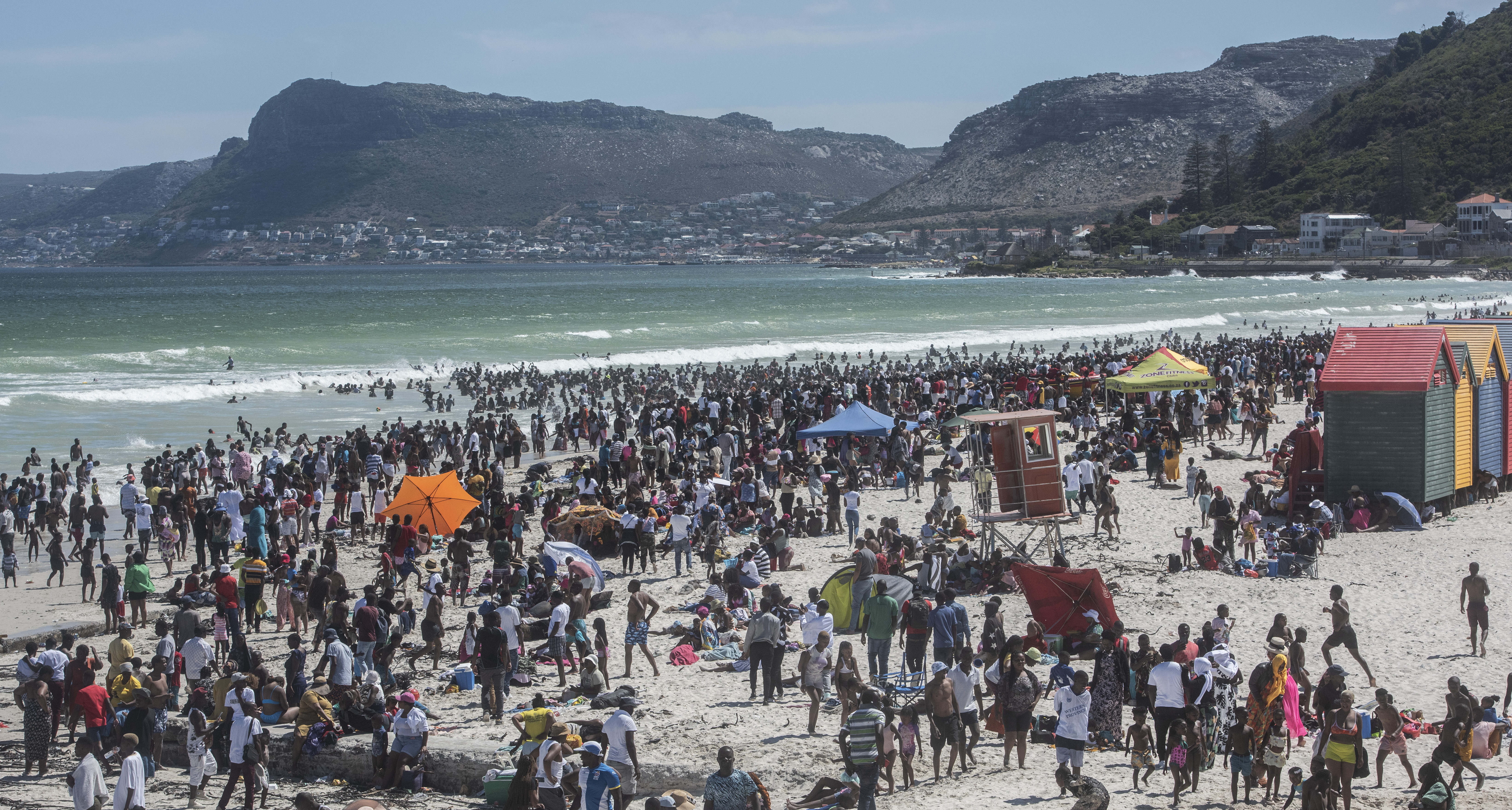
Just look at the photo at the top of this article. You imply that those people, in a public place, have any sort of legal privacy case because that photo was taken. Ask any lawyer or professional photographer, I was one for years.

Brandon Joubert Jan 10, 2025, 10:25 PM

The simple absurdity of most of these comments. A public Rest room is a public place - suggesting that simply because it's a public place all expectation of privacy is waived is ludicrous.

Mr. Fair Jan 11, 2025, 01:20 PM

The phrase that defines whether you can be photo'd has been repeated many times. I will, again, repeat it, since you obviously cannot grasp the simplicity of it. On a beach, you can reasonably expect the public to see you, so you can reasonably expect to be photographed. In a restroom, you cannot.

Mr. Fair Jan 11, 2025, 01:22 PM

All your examples are twisting this simple concept. You talk about listening into conversations, you talk about restrooms, where you CAN expect privacy (where it's located doesn't matter, it isn't out in public, it's enclosed). This article is about images, photographs, people looking at you.

Brandon Joubert Jan 13, 2025, 10:10 AM

South African law defines a search as a physical or visual examination to locate an item on a person or property; the US extends this to include information collection through surveillance.

Brandon Joubert Jan 13, 2025, 10:11 AM

Canadian courts have established that a reasonable expectation of privacy exists even in public, directly refuting the layperson's initial assumption that public space equates to a lack of privacy. This expectation is not tied to a place but rather to the context and the individual's reasonable

Brandon Joubert Jan 13, 2025, 10:12 AM

anticipation of privacy. The courts' interpretation contradicts the lay people's attempts to narrowly define privacy, which they began by excluding video and then expanded to include certain "private" public spaces,

Brandon Joubert Jan 13, 2025, 10:13 AM

like restrooms, demonstrating a context-dependent understanding of privacy. POPIA (the Protection of Personal Information Act) in South Africa strongly reinforces this, protecting personal information, including biometric data derived from photos and videos,

Brandon Joubert Jan 13, 2025, 10:13 AM

meaning such information should not be processed without consent or justification. Critically, POPIA defines "processing" very broadly, encompassing any operation performed on personal information, from capture and storage to analysis and dissemination.

Brandon Joubert Jan 13, 2025, 10:14 AM

Furthermore, the law protects any information that can be linked back to an identifiable living person, not just obvious identifiers, but anything that, when combined with other data, could reasonably identify an individual; this includes seemingly innocuous photos or videos and license plates

Brandon Joubert Jan 13, 2025, 10:14 AM

captured on camera. If there is a reasonable possibility that information can be tied to a person, that information is protected. The Act further considers biometric data, like that derived from facial recognition in

Brandon Joubert Jan 13, 2025, 10:15 AM

photos or videos that meet ISO/IEC 19794-5 standards, as particularly sensitive and subject to strict processing requirements. Therefore, simply being in public does not negate an individual's right against unwarranted searches or data collection and processing.

Brandon Joubert Jan 13, 2025, 10:15 AM

While surveillance for public safety is valid, the law must constrain excessive, unreasonable, and illegal data processing that infringes on individual privacy.

Brandon Joubert Jan 13, 2025, 10:19 AM

and now I am sure you will protest with ill informed opinion. As is your style in the hope of simply wearing out any respondent with tiresome repetition of you OP - and indeed you win, since you tire me.

Mr. Fair Jan 13, 2025, 01:17 PM

Summary: "I'm irrationally linking searching (i.e. in hidden places, e.g bags, pockets) with looking, or taking a photo of what's visible, not what's hidden. So I'm bringing unrelated laws into it. I assume an image of someone out in the open can be abused, but I can't give an example of how"

Mr. Fair Jan 13, 2025, 01:23 PM

Brandon, who contributed to this (but won't say if he paid for the advert), & sells the equipment he so strongly disagrees with the use of... says every photo of people out in the open (like the one at the top of this article) is illegal, or should be. Strange.

Brandon Joubert Jan 14, 2025, 08:59 PM

LOL True to cast! No individual in the title image is being targetted? as absurd as suggesting "I so strongly disagree with"- I am sure your motives are now quite clear.

Brandon Joubert Jan 14, 2025, 09:28 PM

I was randomly approached by email , due to the article regarding privacy that we had posted on our gensixtech web site some time prior to this. Requesting permission to reference our article. I must thank you though for the appreciated publicity. Regards

A Rosebank Ratepayer May 17, 2025, 06:17 AM

Fascinating debate between proponents of privileged woke cancel culture (PWCC) Heidi and Brandon, following their playbook to the tee, and proponents of common sense - everyone else. If one wants to see the outcome of H & C’s ideal society look at most of SA. PWCC provides great cover for corruption and disobeying the law with impunity.