


Dailymaverick logo

Our Burning Planet

This article is more than a year old

Our Burning Planet

Ramokgopa makes the case for small modular reactors and the resuscitation of SA’s nuclear industry

South Africa is reimagining its nuclear future with a focus on small modular reactors.
Ramokgopa makes the case for small modular reactors and the resuscitation of SA’s nuclear industry Nuclear energy is back on the table in South Africa, but it is not likely to look like the sort of large-scale, conventional plant-build programme that was mooted under the tainted nuclear procurement programme of the Jacob Zuma presidency. In a media briefing last week, Minister of Energy and Electricity Kgosientsho Ramokgopa stressed that nuclear energy would be a crucial part of South Africa’s energy mix and that activity was under way to re-energise the country’s nuclear capacities.  He was specifically referring to small modular reactors (SMRs), not conventional large reactors like the Koeberg Nuclear Power Station. Despite concerns about environmental impacts, high initial costs, regulatory hurdles and public scepticism, “what we have accepted is that SMRs are the future”, said Ramokgopa on 20 November. “There’s about 50 to 60 different SMR technologies that are at different stages of concept. I think it’s only the Chinese that are advanced. We know that we’ve got the capability and in fact, the genesis of the current generation of small modular reactors is the PBMR [pebble bed modular reactor]. We have sunk over 10 billion, 12 billion rands into that programme [and then] abandoned it for reasons that were explained at the time.” “We think that we need to exploit our skills, exploit the accumulated knowledge with regards to nuclear technology over a period of time and that’s the case we're making to Cabinet,” he said at the time. According to the International Atomic Energy Agency (IAEA), SMRs refer to small and medium reactors.  “Typically, they are defined as facilities with a power output of up to 700MW. SMRs represent an attractive option for countries with limited financial resources, small electricity grids, or for those which are looking for scalable and flexible nuclear installations,” the agency explains. [caption id="attachment_2480619" align="alignnone" width="1378"]nuclear (Source: A Vargas / IAEA)[/caption] Key to their appeal is their flexibility. The modular aspect of this design allows for additional modules in accordance with demand and is much less location-dependent than hydroelectric or fossil-fuelled power stations or even conventional water-cooled nuclear power stations. In the South African context, they are appealing for their relatively lower cost, faster deployment and safer designs compared with conventional nuclear power plants. 

South Africa’s turn to nuclear

Nuclear energy is getting renewed attention in South Africa as Ramokgopa’s department puts the finishing touches to the soon-to-be-published Integrated Resource Plan 2024 (IRP 2024).  The IRP is South Africa’s roadmap for electricity generation strategy, outlining how the country will meet its energy needs while balancing economic, environmental and social considerations. Nuclear energy, with its ability to generate uninterrupted, greenhouse gas emission-free electricity, is increasingly being looked to complement an increase in variable renewable energy generation. Read more: ‘Exponential renewables increase’ expected in SA’s revised energy blueprint South Africa has several favourable factors that would validate the pursuit of new nuclear energy. The fuel used in a nuclear power plant is uranium dioxide and South Africa is one of the top uranium-producing countries in the world. Uranium occurs naturally in the gold-bearing rocks of the Witwatersrand and the copper-bearing ores of the Phalaborwa complex, and is found in relatively smaller concentrations elsewhere in the country.  Important to note, especially as it relates to the country’s interrelated climate action and energy security ambitions, is that 1kg of uranium supplies the same amount of energy as almost three million kilograms of coal. Burning coal for electricity generation is the single-biggest cause of global warming worldwide and Eskom’s overwhelming dependence on this fossil fuel is largely why South Africa is one of the most carbon-intensive economies in the world per capita with all its attendant deleterious impacts.   Moreover, PBMRs are a specific type of SMR that, at one point, South African experts led the development of globally.  The development of PBMR technology in South Africa began in earnest in the late 1990s. The concept was inspired by earlier designs from Germany, particularly from research conducted at the Jülich Research Center.  According to the IAEA, the PBMR was identified by Eskom as a “leading option” for the installation of new generating capacity. Unlike Koeberg which uses two pressurised water reactors, PBMRs use “inert gases” such as helium to transfer heat away from the reactor core, which enhances efficiency and safety. The PBMR design also has inherent safety mechanisms that reduce reactor power automatically if temperatures rise too high, minimising the risk of overheating or meltdown. Put differently, a pebble bed modular reactor is “a steel pressure vessel which holds the enriched uranium dioxide fuel encapsulated in graphite spheres. The system is cooled with helium and heat is converted into electricity through a turbine.” These spherical fuel “pebbles” are machined to a uniform diameter of 60mm, each containing about 9g of uranium. The core of the reactor contains about 360,000 of these fuel spheres and the total uranium in one fuel load is 2.5 metric tonnes. The total mass of a fuel pebble is 210g. [caption id="attachment_2479725" align="alignnone" width="1821"]nuclear Source: PBMR[/caption] In 1999, Eskom established PBMR (Pty) Ltd to advance the technology, with significant investments from various stakeholders including British Nuclear Fuels and Westinghouse. By 2010, the South African government announced it would cease funding for the PBMR project due to a lack of viable customers or investors, leading to significant staff reductions and ultimately halting development efforts. As a result, by 2010, PBMR Ltd had effectively ceased operations. The project entered a phase of “care and maintenance” to protect its intellectual property, marking a significant setback for South Africa’s ambitions in advanced nuclear technology.

Opportunities for South Africa

Of late, SMRs are receiving much more attention in an increasingly energy-hungry, electrified and climate-conscious world and South Africa has not been blind to these developments. In the middle of November, the Nuclear Energy Corporation of South Africa (Necsa) said that it would sign memorandums of understanding with the China National Nuclear Corporation (CNNC) and Korea Electric Power Corporation (KEPCO).  Necsa told Daily Maverick that “KEPCO collaborations are on project development, construction, operation and maintenance, localisation, state-of-the-art nuclear technology, research and development on new nuclear plant technologies like small modular reactors” and that “a letter of intent signed with CNNC includes forming partnerships in research and development of fuel technologies for nuclear research and power reactors, localisation of some elements of fuel fabrication operations, supply of equipment and services for nuclear power plant and research reactor infrastructure ageing management and capacity building of personnel in the nuclear energy sector”.  At Wednesday’s briefing Ramokgopa said the memorandums were “important in the context of resuscitation of the nuclear programme in the country”. That resuscitation hasn’t been finalised yet. In a report tabled before Parliament’s portfolio committee on electricity and energy in September, it was noted that Necsa acknowledged that the transfer of the PBMR from Eskom to Necsa “has not been finalised yet” and that Necsa is “looking forward to resuscitating the technology and taking it forward”. “Necsa stated that one of their key strategies is positioning itself for energy generation with small modular reactors and the PBMR is one of those. However, according to Necsa, the country has lost some ground with this technology, and it would thus make more sense to identify a partner, to take this technology further – but this partner must not be prescriptive in what the country wants to do,” the report reads. At the briefing Ramakgopa said: “We know that the Americans are going full steam in relation to SMR technology. We’re beginning to see that a lot of tech companies are investing in companies that are exploring this SMR for purposes of powering their data centres. So that’s the future. So the future is clearly mapped out and the question about the role and place of SMR has been answered. “So we think that there is vast opportunity." “We see this not just [as] technology, but we see this as how we can be able to diversify the economy of our country, building on existing and known capabilities of the country.” Bertha Dlamini, founding president of African Women in Energy and Power, also shared her thoughts with Daily Maverick.  Asked what role she saw SMRs playing in South Africa’s energy mix, particularly in addressing challenges like energy poverty and grid instability, Dlamini explained that as South Africa accelerates the integration of renewable energy sources into its energy system, “it is crucial for Eskom and licensed municipalities responsible for electricity distribution to comprehend the significant role that small modular reactors can play in addressing the intermittency of these sources”.  Read more: SA’s grid transformation — Eskom’s R112bn plan for electricity ‘freeways’ as future generation heads to Cape provinces “SMRs offer several key advantages in this context: they possess load-following capabilities to compensate for fluctuations in renewable energy output, can be paired with renewables to create efficient hybrid energy systems, contribute to grid stability in the face of increasing electricity demand, aid in decarbonising the energy mix, and provide flexibility in terms of installation locations,” Dlamini said.  “By leveraging these attributes, SMRs can effectively complement renewable energy sources, ensuring a more reliable, stable and sustainable power supply for South Africa’s evolving energy landscape.” DM https://www.youtube.com/watch?v=REeWvTRUpMk

Nuclear energy is back on the table in South Africa, but it is not likely to look like the sort of large-scale, conventional plant-build programme that was mooted under the tainted nuclear procurement programme of the Jacob Zuma presidency.

In a media briefing last week, Minister of Energy and Electricity Kgosientsho Ramokgopa stressed that nuclear energy would be a crucial part of South Africa’s energy mix and that activity was under way to re-energise the country’s nuclear capacities. 

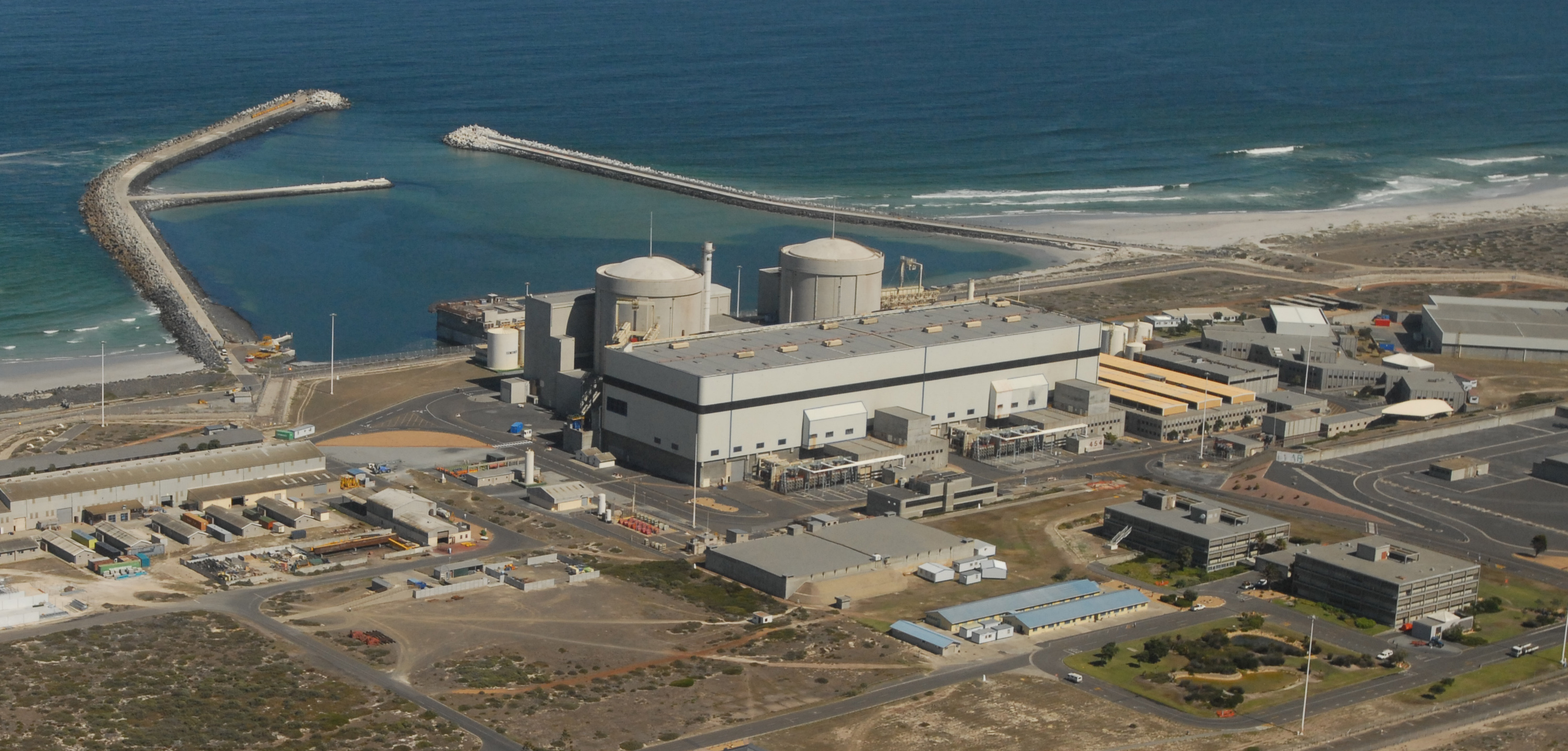
He was specifically referring to small modular reactors (SMRs), not conventional large reactors like the Koeberg Nuclear Power Station.

Despite concerns about environmental impacts, high initial costs, regulatory hurdles and public scepticism, “what we have accepted is that SMRs are the future”, said Ramokgopa on 20 November.

“There’s about 50 to 60 different SMR technologies that are at different stages of concept. I think it’s only the Chinese that are advanced. We know that we’ve got the capability and in fact, the genesis of the current generation of small modular reactors is the PBMR [pebble bed modular reactor]. We have sunk over 10 billion, 12 billion rands into that programme [and then] abandoned it for reasons that were explained at the time.”

“We think that we need to exploit our skills, exploit the accumulated knowledge with regards to nuclear technology over a period of time and that’s the case we're making to Cabinet,” he said at the time.

According to the International Atomic Energy Agency (IAEA), SMRs refer to small and medium reactors. 

“Typically, they are defined as facilities with a power output of up to 700MW. SMRs represent an attractive option for countries with limited financial resources, small electricity grids, or for those which are looking for scalable and flexible nuclear installations,” the agency explains.

nuclear (Source: A Vargas / IAEA)


Key to their appeal is their flexibility. The modular aspect of this design allows for additional modules in accordance with demand and is much less location-dependent than hydroelectric or fossil-fuelled power stations or even conventional water-cooled nuclear power stations.

In the South African context, they are appealing for their relatively lower cost, faster deployment and safer designs compared with conventional nuclear power plants. 

South Africa’s turn to nuclear


Nuclear energy is getting renewed attention in South Africa as Ramokgopa’s department puts the finishing touches to the soon-to-be-published Integrated Resource Plan 2024 (IRP 2024). 

The IRP is South Africa’s roadmap for electricity generation strategy, outlining how the country will meet its energy needs while balancing economic, environmental and social considerations. Nuclear energy, with its ability to generate uninterrupted, greenhouse gas emission-free electricity, is increasingly being looked to complement an increase in variable renewable energy generation.

Read more: ‘Exponential renewables increase’ expected in SA’s revised energy blueprint

South Africa has several favourable factors that would validate the pursuit of new nuclear energy. The fuel used in a nuclear power plant is uranium dioxide and South Africa is one of the top uranium-producing countries in the world. Uranium occurs naturally in the gold-bearing rocks of the Witwatersrand and the copper-bearing ores of the Phalaborwa complex, and is found in relatively smaller concentrations elsewhere in the country. 

Important to note, especially as it relates to the country’s interrelated climate action and energy security ambitions, is that 1kg of uranium supplies the same amount of energy as almost three million kilograms of coal.

Burning coal for electricity generation is the single-biggest cause of global warming worldwide and Eskom’s overwhelming dependence on this fossil fuel is largely why South Africa is one of the most carbon-intensive economies in the world per capita with all its attendant deleterious impacts.  

Moreover, PBMRs are a specific type of SMR that, at one point, South African experts led the development of globally. 

The development of PBMR technology in South Africa began in earnest in the late 1990s. The concept was inspired by earlier designs from Germany, particularly from research conducted at the Jülich Research Center. 

According to the IAEA, the PBMR was identified by Eskom as a “leading option” for the installation of new generating capacity. Unlike Koeberg which uses two pressurised water reactors, PBMRs use “inert gases” such as helium to transfer heat away from the reactor core, which enhances efficiency and safety. The PBMR design also has inherent safety mechanisms that reduce reactor power automatically if temperatures rise too high, minimising the risk of overheating or meltdown.

Put differently, a pebble bed modular reactor is “a steel pressure vessel which holds the enriched uranium dioxide fuel encapsulated in graphite spheres. The system is cooled with helium and heat is converted into electricity through a turbine.”

These spherical fuel “pebbles” are machined to a uniform diameter of 60mm, each containing about 9g of uranium. The core of the reactor contains about 360,000 of these fuel spheres and the total uranium in one fuel load is 2.5 metric tonnes. The total mass of a fuel pebble is 210g.

nuclear Source: PBMR


In 1999, Eskom established PBMR (Pty) Ltd to advance the technology, with significant investments from various stakeholders including British Nuclear Fuels and Westinghouse. By 2010, the South African government announced it would cease funding for the PBMR project due to a lack of viable customers or investors, leading to significant staff reductions and ultimately halting development efforts.

As a result, by 2010, PBMR Ltd had effectively ceased operations. The project entered a phase of “care and maintenance” to protect its intellectual property, marking a significant setback for South Africa’s ambitions in advanced nuclear technology.

Opportunities for South Africa


Of late, SMRs are receiving much more attention in an increasingly energy-hungry, electrified and climate-conscious world and South Africa has not been blind to these developments. In the middle of November, the Nuclear Energy Corporation of South Africa (Necsa) said that it would sign memorandums of understanding with the China National Nuclear Corporation (CNNC) and Korea Electric Power Corporation (KEPCO). 

Necsa told Daily Maverick that “KEPCO collaborations are on project development, construction, operation and maintenance, localisation, state-of-the-art nuclear technology, research and development on new nuclear plant technologies like small modular reactors” and that “a letter of intent signed with CNNC includes forming partnerships in research and development of fuel technologies for nuclear research and power reactors, localisation of some elements of fuel fabrication operations, supply of equipment and services for nuclear power plant and research reactor infrastructure ageing management and capacity building of personnel in the nuclear energy sector”. 

At Wednesday’s briefing Ramokgopa said the memorandums were “important in the context of resuscitation of the nuclear programme in the country”.

That resuscitation hasn’t been finalised yet.

In a report tabled before Parliament’s portfolio committee on electricity and energy in September, it was noted that Necsa acknowledged that the transfer of the PBMR from Eskom to Necsa “has not been finalised yet” and that Necsa is “looking forward to resuscitating the technology and taking it forward”.

“Necsa stated that one of their key strategies is positioning itself for energy generation with small modular reactors and the PBMR is one of those. However, according to Necsa, the country has lost some ground with this technology, and it would thus make more sense to identify a partner, to take this technology further – but this partner must not be prescriptive in what the country wants to do,” the report reads.

At the briefing Ramakgopa said: “We know that the Americans are going full steam in relation to SMR technology. We’re beginning to see that a lot of tech companies are investing in companies that are exploring this SMR for purposes of powering their data centres. So that’s the future. So the future is clearly mapped out and the question about the role and place of SMR has been answered.

“So we think that there is vast opportunity."

“We see this not just [as] technology, but we see this as how we can be able to diversify the economy of our country, building on existing and known capabilities of the country.”

Bertha Dlamini, founding president of African Women in Energy and Power, also shared her thoughts with Daily Maverick. 

Asked what role she saw SMRs playing in South Africa’s energy mix, particularly in addressing challenges like energy poverty and grid instability, Dlamini explained that as South Africa accelerates the integration of renewable energy sources into its energy system, “it is crucial for Eskom and licensed municipalities responsible for electricity distribution to comprehend the significant role that small modular reactors can play in addressing the intermittency of these sources”. 

Read more: SA’s grid transformation — Eskom’s R112bn plan for electricity ‘freeways’ as future generation heads to Cape provinces

“SMRs offer several key advantages in this context: they possess load-following capabilities to compensate for fluctuations in renewable energy output, can be paired with renewables to create efficient hybrid energy systems, contribute to grid stability in the face of increasing electricity demand, aid in decarbonising the energy mix, and provide flexibility in terms of installation locations,” Dlamini said. 

“By leveraging these attributes, SMRs can effectively complement renewable energy sources, ensuring a more reliable, stable and sustainable power supply for South Africa’s evolving energy landscape.” DM

https://www.youtube.com/watch?v=REeWvTRUpMk

Comments

Steve Davidson Nov 27, 2024, 02:28 PM

It makes a huge amount of sense to follow this up. The pebble bed story back in the nineties should have been taken further but there you go, it wasn't. Not sure that the Chinese are that far ahead, but there are certainly companies like Rolls Royce in the UK who have great experience.

andij8537 Nov 28, 2024, 01:19 AM

The Chinese already have commercial HTGR reactors that have passed all the safety critical tests... believe me, they are ahead. RR and others are still in the design stage that may or may not have been approved, but nothing has been built.

Steve Davidson Nov 28, 2024, 07:04 AM

Interesting. But like their cheap cars, I still wouldn't trust them. And don't forget RR have been making large nuclear submarine engines for donkeys' years so have the knowledge.

Johan Buys Nov 27, 2024, 02:40 PM

If small nuclear eventually proves itself, by all means we can pop 20 of them all over to help solve the transmission problem. But can we please wait and let the rich nations do the prototypes and only go this route once they are indeed virtually off-the-shelf?

David C Nov 27, 2024, 03:43 PM

The business case for SMR's has been overtaken by Renewables and Battery (ESS). In the timeframes to commission and build SMR's, advances in battery ESS tech will further drop the cost and footprint. SMR's only punted by those who will gain commercially from large Gov cheque books and kickbacks.

Biff Trotters Nov 27, 2024, 05:08 PM

For the last 6m, I have been saying this exact thing to all who would hear. Recently, PV and battery prices have been dropping so fast it's difficult to find a valid (Nov '24) comparison with other power sources. And cheap Grid-scale Sodium batteries are on their way to bend the needle more.

Fox Bravo.. Dec 2, 2024, 10:53 AM

only 20% of our energy needs is grid energy the rest is spent on manufacturing fertilisers (Ammonia), cement, steel and other industrial applications. Renewables simply cannot supply this base load power. I saw a large solar plant in Zim - they copped down indigenous trees to make way for that...

Biff Trotters Nov 27, 2024, 05:38 PM

Reply2. I need to qualify Reply1 - it applies to regions with high PV power potential, say above 4.5 - see globalsolaratlas. Everything west of Bloemfontein is >5.2. The Transmission Development Plan has no extra nuclear, but supports MASSIVE renewables expansion in the West. More Batteries Please!

Johan Buys Nov 27, 2024, 09:53 PM

Biff, before taxpayers sign up for R400b grid expansion, three independent global experts should weigh in. Even if town X has 1600h/year solar and say 10MW demand, they can put up 30MW of solar and 60MWh of storage to be: zero load on grid, no loadshed, and inject 10MW into the local HV grid.

andij8537 Nov 28, 2024, 01:24 AM

What is the cost per MWh for utility scale BESS currently and forecast 2030-2050? Current forecasts place the cheapest BESS at $85 000 per MWh in 2050 which makes PV + BESS more expensive than the chepaest Nuclear options coming from the east.

David C Nov 28, 2024, 06:51 AM

I can't find a study to support your number, but Solar +BESS is already 25% cheaper on a total cost of operate basis (design, build, run, maintain) then projected SMR's costs. That's before the +50% decrease in BESS costs over the next decade. SMR costs are guesses because they don't exist yet.

michele35 Nov 29, 2024, 02:46 PM

This coming from a nuclear sycophant. Check your zeros they do count. The only reason why SMRs are being punted overseas is because of their small footprint and not because of their cost. Check facts and numbers please

District Six Dec 2, 2024, 02:25 PM

SMRs are a future technology. It's tech-in-development. They can't help us right now. More renewables can help us in the immediate scenario. PV technology is not the only renewable energy available. The nuclear lobby gas-lighting us is not an energy technology we need.

Mark Benson Nov 28, 2024, 06:31 AM

Agree with David. While there may be niche use cases for SMR, it unfortunately doesn't seem cost competitive, its slow to roll out, hard to finance etc. South Africa has such good renewable resources, we should exploit that!

Nico Kuyper Nov 29, 2024, 08:51 AM

Marc, you're 100% right. SA is perfect for renewables, and we should fully embrace our solar/wind potential. The only problem with renewables is that it doesn't give a base load necessarily. These SMR's might be a solution to that problem, providing us with a base load along with our renewables.

District Six Dec 2, 2024, 02:41 PM

"Base load" is a term that is bandied about as a deal-breaker. In micro grids, and new-tec smart grids, base load is a much less significant factor than 20 years ago when Eskom was throwing this term about. Our high spike energy demands are mostly not night time when people are sleeping.

Harold Porter Nov 28, 2024, 06:44 AM

Isn't it difficult to maintain a national grid on renewables because of fluctuating supply? Also, renewables have a hefty environmental cost (Ironically) which might make SMRs better for the environment!

Roger Seldon Nov 27, 2024, 10:17 PM

The science behind SMR’s is fairly robust until the waste disposal end. Science shows it's a worse problem than large reactors. But all the hot noise about SMRs is coming from those with a lot to gain by rolling out the deployment plan before the waste problem is solved or proved impossible.

Harold Porter Nov 28, 2024, 06:42 AM

There's quite a disposal problem with the batteries associated with renewables too...

Stephen Price Nov 28, 2024, 09:03 AM

The dangers of nuclear waste disposal are also exaggerated. The waste disposal from Koeberg has not caused any problems for the 60 odd years it has been running. Concrete containers down a mine are perfectly adequate for the main danger, gamma radiation. In another 50 years we may have fusion.

Joe Soap Nov 28, 2024, 03:28 PM

The high level waste from Koeberg is still sitting at Koeberg waiting for a solution to the problem. Low level waste to Vaalputs inland of Kamieskroon in Namaqualand. The high level waste needs >250000 years before deemed safe. Some countries like Finland have developed sites deemed safe. But SA?

Joe Soap Nov 28, 2024, 05:25 PM

Whereas studies at Vaalputs (where material is buried relatively shallowly) showed a very dry climate with minimal erosion since ca. 100 million years, the arid nature is not guaranteed in the future recognising the curved ball of climate change.

District Six Dec 2, 2024, 02:44 PM

"The dangers of nuclear waste disposal are also exaggerated." How do we know this? Has the Namaqualand ground been tested for leaching radiation? This comment does not inspire confidence.

Garth Mason Nov 28, 2024, 07:09 AM

I was involved in writing a statement of interest for a leading construction company back in 2004 when the initial PBM call to construction companies came. Then everything went quiet, inexplicably. What a pity this course wasn’t followed then.

Stephen Price Nov 28, 2024, 07:33 AM

The dangers of power generation via nuclear fission have been vastly exaggerated. Modular reactors reduce these dangers further. Why rely on the Chinese and central government for them when we have our own workable models. The US space program will yield large amounts of helium from the moon.

L oopy Nov 28, 2024, 10:19 AM

Cannot believe the author promotes the idea that it is positive that SA produces uranium. It is irrelevant. The important fact is that all users of SMR's are going to be beholden to the producers of the fuel spheres. That gives China a lot of leverage and SA none.

Fox Bravo.. Nov 28, 2024, 11:27 AM

Yeah!! this is a great development. Nuclear and specifically smaller reactors that are built in a factory will be the future for consistent base load energy. The molten salt reactors and particularly those that can burn thorium or even nuclear waste are looking extremely promising.

andrew.farrer Nov 28, 2024, 03:47 PM

The BIG problem going back to nuclear power now is that all the experts we had in that field (who would possibly pose objections to anc's prefferred suppliers, have been forced out by the anc and replaced with their onw cadre idiots!

Nico Kuyper Nov 29, 2024, 08:43 AM

UAE, in cooperati0n with UAE, just opened the Barakah nuclear power plant in Abu Dhabi. Working with KEPCO surely is a smart choice. China I'm a bit unsure about. I strongly support SMR's, especially for South Africa. Finally, someone is using logic in eskom for a start. Well done Ramokgopa.

Nico Kuyper Nov 29, 2024, 09:17 AM

Sorry meant UAE in cooperation with South Korea

peter selwaski Nov 30, 2024, 01:00 AM

One great advantage of small nuclear reactors is that many of them can be assembled simultaneously. Building several large traditional reactors at the same time would be impossible.

Alex Lenferna Dec 5, 2024, 08:09 AM

It's sad to see a DM article written like a press statement from the nuclear industry, rather than critically examining the strengths & weaknesses of the technology. There are many issues with SMR, including it's relative infancy, prohibitive costs relative to other technologies, & safety.

Neil Overy Dec 10, 2024, 10:20 AM

Spot on Alex - this reads like a indsutry puff piece ... Everyone seems to forget that SMRs have been around since the 1960s. They failed then, they failed in the 1980s when they were hyped again, they will fail now - just ask the investors in NuScale or Ultra Safe Nuclear Corp or mPower ...