


Dailymaverick logo

Our Burning Planet

This article is more than a year old

Our Burning Planet

Citizen scientists and San trackers on the trail of our human origins along Southern Cape's stormy coast

Join Don Pinnock and a team of citizen scientists and Ju/’hoansi San trackers on an expedition along Africa's Cape South Coast to find ancient creatures of a drowned world and the origin of our species.
Citizen scientists and San trackers on the trail of our human origins along Southern Cape's stormy coast From the shores of what was once a vast (but now inundated) Paleo-Agulhas Plain to Blombos Cave where humans began experimenting with art, this three-part series explores how the first Homo sapiens survived a brutal Ice Age and thrived to become us. But can the team find a 100,000-year-old human footprint? Part 1: Citizen science, master trackers and deciphering the sands of time [caption id="attachment_2423716" align="alignnone" width="2560"]Aeolinate formations Strange aeolianite formations near Still Bay. (Photo: Don Pinnock)[/caption] Part 2: Blombos Cave and the birth of human intelligence [caption id="attachment_2456156" align="alignnone" width="1500"]Blombos Cave Expedition organiser Clive Thomson on the path to Blombos Cave. (Photo: Simon Sephton)[/caption] Part 3: An undisclosed coast and the search for the magical human footmark [caption id="attachment_2448250" align="alignnone" width="2560"]Ancient footprints, Jan De Fynck Jan De Fynck checks a trackway. (Photo: Don Pinnock)[/caption]    
From the shores of what was once a vast (but now inundated) Paleo-Agulhas Plain to Blombos Cave where humans began experimenting with art, this three-part series explores how the first Homo sapiens survived a brutal Ice Age and thrived to become us. But can the team find a 100,000-year-old human footprint?

Part 1: Citizen science, master trackers and deciphering the sands of time

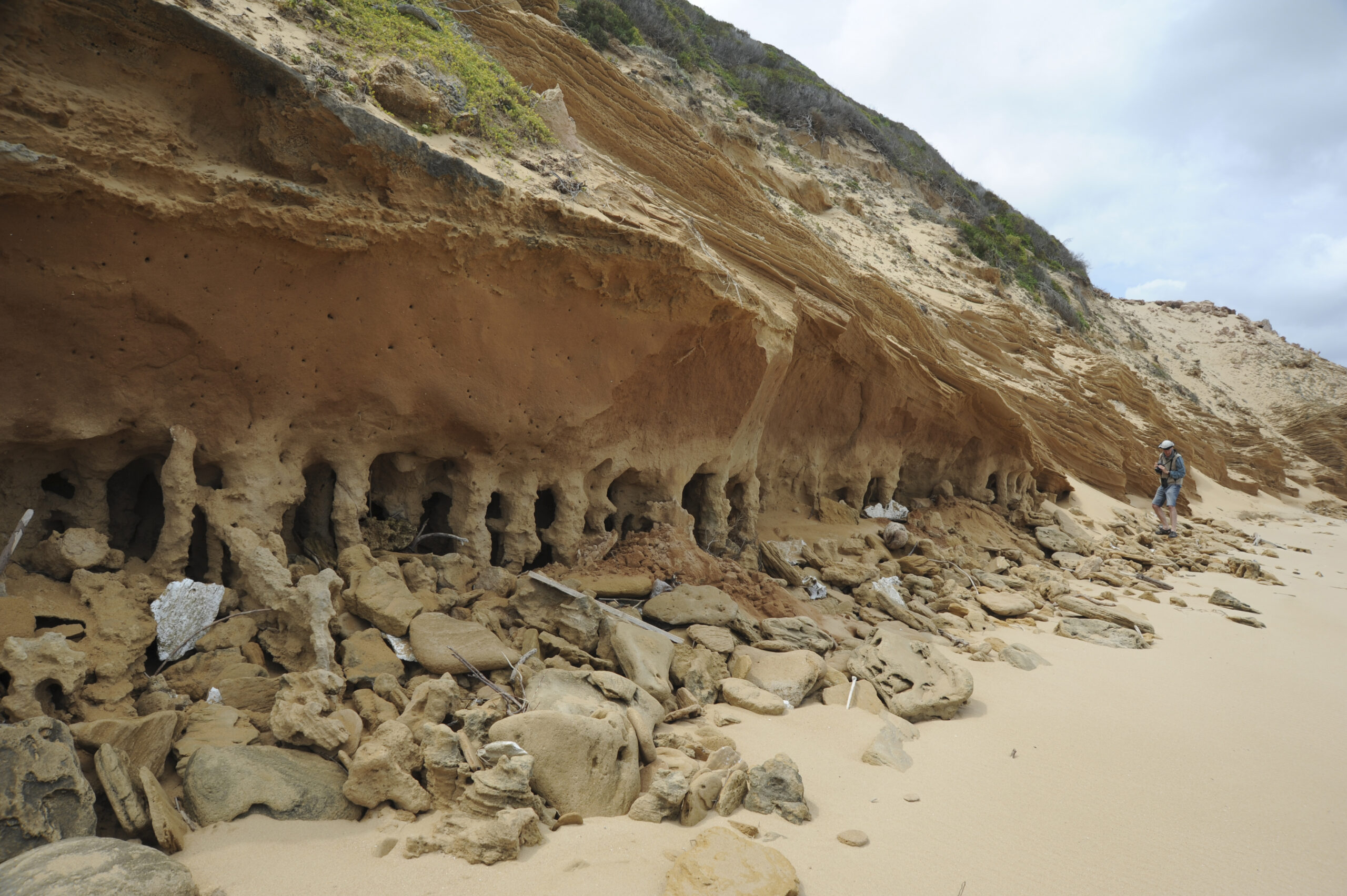
Aeolinate formations Strange aeolianite formations near Still Bay. (Photo: Don Pinnock)


Part 2: Blombos Cave and the birth of human intelligence

Blombos Cave Expedition organiser Clive Thomson on the path to Blombos Cave. (Photo: Simon Sephton)


Part 3: An undisclosed coast and the search for the magical human footmark

Ancient footprints, Jan De Fynck Jan De Fynck checks a trackway. (Photo: Don Pinnock)


Comments

petersen.michael16 Nov 14, 2024, 07:02 AM

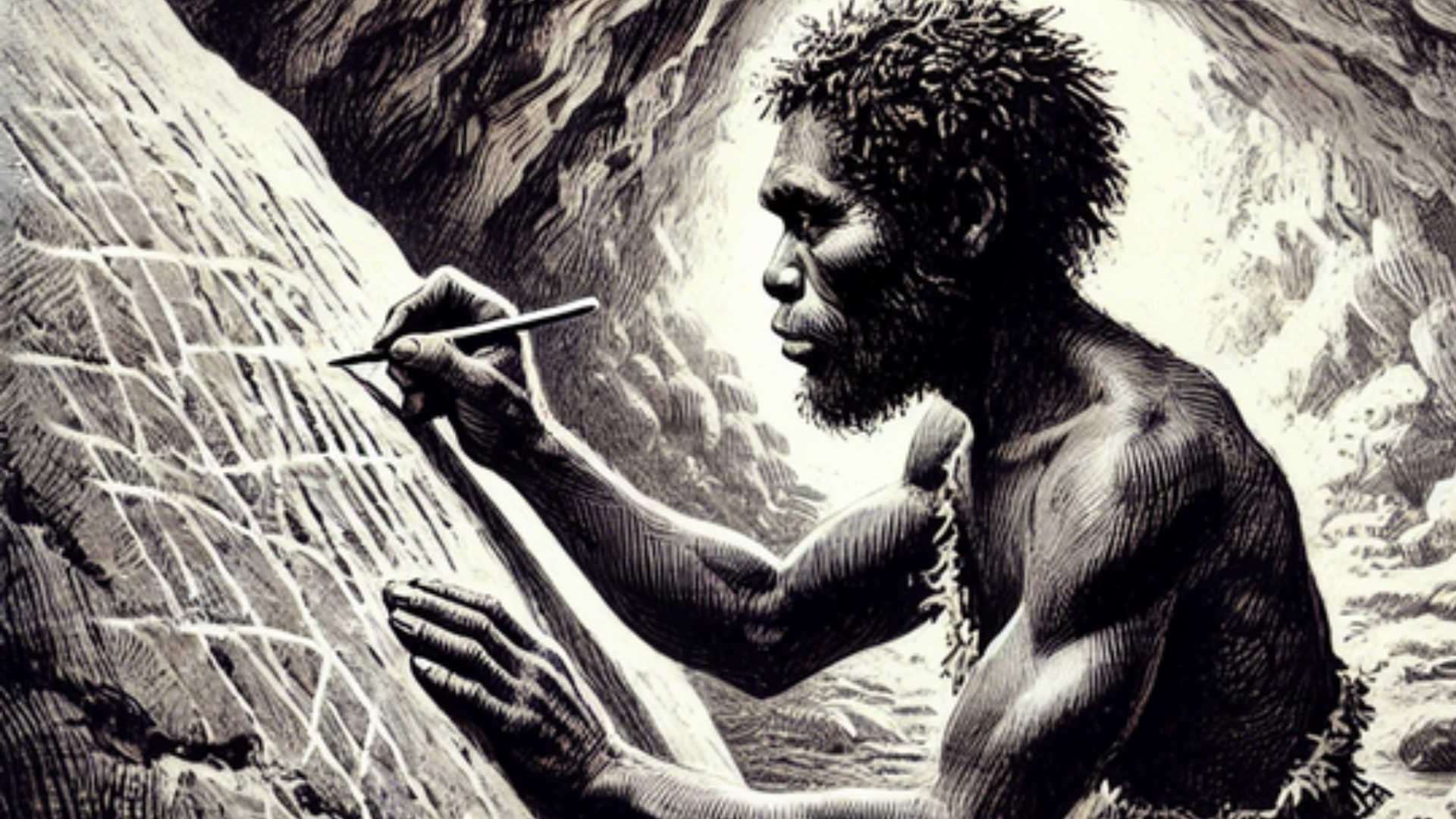
The AI illustration doesn’t make sense. Why would prehistoric human beings have written on a wall with what looks like a proper pen or pencil?