

Dailymaverick logo

Maverick News

This article is more than a year old

Maverick News

Why review power tariffs when councils, government and citizens fail to pay in the first place?

There are small signs that the cost of living crisis may slowly ease over the next few months, but a major battle might be about to begin. The promises of politicians on power prices can no longer defy the laws of physics and economics. And there is probably no point in reviewing power tariffs if many people, and councils, do not pay for the power they consume in the first place.
Why review power tariffs when councils, government and citizens fail to pay in the first place?

To listen to talk radio and read social media is to see a simple demand from many South Africans. They cannot afford to pay more for electricity. And considering how the price of electricity has risen since 2007, no one can blame them.

As Power Optimal’s Sean Moolman summarised it neatly, from 1988 to 2007 power prices increased by 223% while inflation during that period was 335%. From 2007 to 2022, power tariffs went up by 653% while inflation was 129%.

Any politician wanting to win votes will have to say in public, as Electricity and Energy Minister Kgosientso Ramakgopa has, that further increases are unsustainable.

Ramakgopa has gone further, promising a full-scale review of tariffs. But so far there has been very little public information on exactly how this review will be conducted.

It is also not certain if Ramakgopa and other decision-makers can make good on this promise.

While many problems vie for the position of “most important” here, perhaps one place to start is with the sheer number of tariffs. 

The current Eskom Tariff Booklet for 2024 runs to a full 60 pages. Each of these tariffs has been precisely worked out and submitted to the National Energy Regulator of South Africa (Nersa).

This is a reminder of the complexity involved in running an electrical system across a country of our size, with our inequality (and with our special interests).

Then there are the roleplayers involved, all of whom have a right to be a part of the process.

There is the regulator, Nersa, the body that adjudicates pricing. In the past, it has held what have become almost a ritual of public consultations before putting up power prices.

Officials would go around the country, holding public meetings. These would often follow a similar pattern; first, an Eskom official would stand up to explain what they needed the increase for. Then would come a long line of residents and organisations explaining why they could not pay any more money.

Finally, Nersa would have to make its decision. In several cases, Eskom has challenged these decisions in court, and won.

The net result of this is that the pricing system has become more opaque and complicated over time. Very few people fully understand it, which means that it has also lost legitimacy.

Read more: No immediate fix for municipal tariff hikes, says energy minister

Eskom’s cash crunch


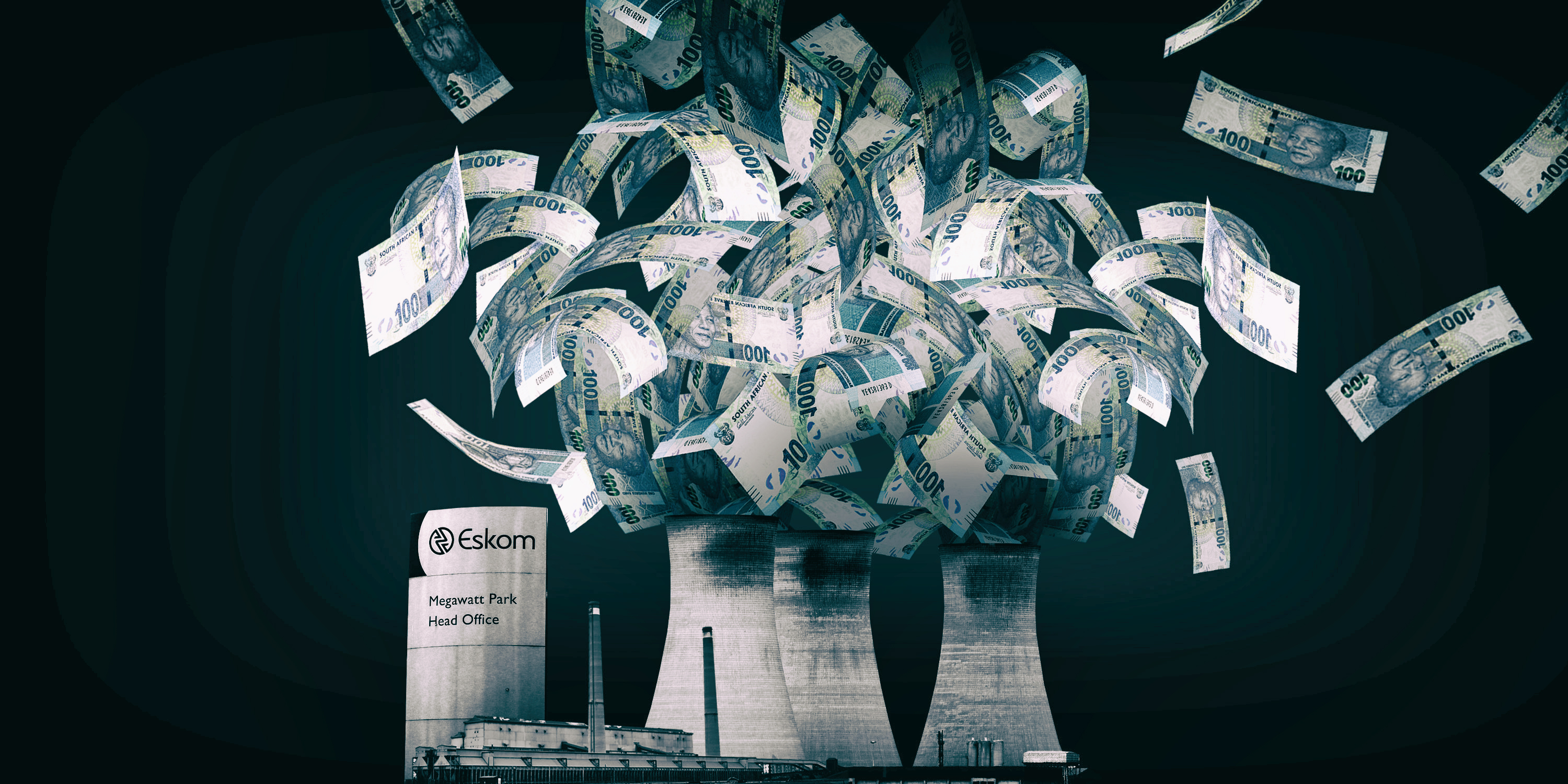
The real problems come at Eskom, which is well aware of how much money it is going to need over the next few years.

Its generation arm is still under intense pressure and needs a lot more cash to fix its power stations and build new ones. At the same time, it will need to ensure it can continue to pay independent power producers that are now producing electricity.

Then there are the problems with distribution. We need a huge amount of new power lines. As Professor Mark Swilling put it last year, “We need to ramp up from 400km per annum to 1,500km per annum. Never before in South African energy history have we achieved this build rate.”

The amount of money needed for this is huge.

At the same time, Eskom has two other major problems.

The first is the debt incurred during the State Capture years. As the recent return of Mike Lomas shows, corruption cost Eskom an extraordinary amount of money. That money is simply not going to be recouped.

Second, there is the fact that one of the reasons Eskom is in such huge debt is that it is at the end of a long chain of other governance failures.

Because so many people steal electricity and so few councils collect the revenue they are supposed to, councils simply do not pay Eskom. Even when these councils receive money for the electricity they sell to customers they still do not pay Eskom.

Thus, Eskom simply does not get the money owed to it.

This is unlikely to change. Efforts to stop people from bypassing electricity meters seem to have simply disappeared. And, many government departments don’t bother to pay what they owe. 

The ‘user pays’ principle


This is also a reminder that the pitiful state of most councils is directly responsible for Eskom’s position, and thus for the problems with the pricing of electricity. In other words, it shows how the poison contained in the failings of local government can pollute other parts of our state.

Underneath that is another fundamental point, which is that it is surely pointless to try to “review” a tariff system when so many people are simply not paying in the first place.

All of this means that any kind of review process may need to do much more than just look at the numbers and the systems. Rather, it may need to grapple with much more fundamental questions.

Perhaps the first principle that needs to be decided is whether South Africa will continue with the “user pays” principle. As the energy economist Lungile Mashele has suggested, power prices are now so high that continuing with this principle might mean that almost no one can pay for the power they use.

If we do not continue with this principle, then the money will have to come from the government, as difficult as that would be.

It would have to be a very brave review panel to recommend that either users no longer have to pay for what they use, or to say that they must pay the real cost of the electricity that they use.

This means the most likely outcome is some kind of middle ground. Or a fudge that pleases nobody.

Read more: ‘We’re not coping’ — Daily Maverick readers buckle under strain of sky-high electricity costs

In the end, the real problems are pretty simple.

Producing and then distributing electricity is hugely expensive. Most people cannot pay anything like the actual cost. And because the state is so dysfunctional, it cannot manage the system we have in place.

That means that some kind of solution needs to be found that will involve the rich subsidising the poor, while fixing the state at the same time.

This means that politicians need to be involved. Even if they make promises that are impossible to keep. DM

Comments

Arnold O Managra Sep 26, 2024, 01:06 AM

Welcome to "human rights". Or any other conferred right. There always has to be someone else conferring the right, if and when you are unable to yourself. Too many of the can'ts, and too few of the cans is the problem. Grow the economy.

laurantsystems Sep 26, 2024, 07:41 AM

South Africa's big problem is that there are far too many human rights, but no sense of human responsibilities. For example, if you are an adult living in poverty, but you still choose to procreate, you are expecting the taxpayer to fund your irresponsible behaviour.

superjase Sep 26, 2024, 12:31 PM

so poor people aren't allowed to have children?

laurantsystems Sep 26, 2024, 03:17 PM

So you are in favour of irresponsible parents bringing children into the world, and for those kids to suffer lives of misery and deprivation?

Gerrie Pretorius Sep 27, 2024, 11:16 AM

If they can’t afford food, clothes and education - NO!

B M Sep 27, 2024, 07:56 PM

Poor people have the right to have children. They also have the responsibility of having children. The two are different sides of the same coin. Many sacrifices must be made if you want children and are poor. Raising children is expensive. The cost must be borne by the people having children.

Kevin Venter Sep 26, 2024, 01:30 AM

Why should the citizens pay for incompetence and corruption on top of tax that is paid? The wasteful expenditure, tenderpreneuring and corruption over the past 30 years would more than cover the cost of needing to maintain Eskom amonog other topics. The voters need to wake up.

laurantsystems Sep 26, 2024, 07:42 AM

You put your finger on the issue. The column above talks glibly about the government funding Eskom. The government has no money of its own, however. We, the taxpayers, will be on the hook for the money that was stolen. We will pay for the primitive polygamist's and his Gupta mates' crimes.

schalk.marais Sep 26, 2024, 06:19 AM

There is another factor that needs to be looked at seriously. Compared to Private Sector jobs there are way too many in Eskom that are overpaid. There is a major staff count and bloated salary bill issue too…

in Sep 26, 2024, 07:47 AM

I've seen studies that allege that Eskom has about 2-3x more employees than comparable international utilities, and, as you correctly point out, they are grossly overpaid. If Eskom wants to improve its balance sheet, it should reduce its head count by 60% and the remaining salaries by at least 30%.

megapode Sep 26, 2024, 08:22 AM

For FY 2021 Eskom claimed 42 749 staff. Comparing that to international utilities is difficult because in many countries there is a grid operator and multiple, separate generators. In the USA generation and transmission may vary from state to state. Is 42 749 for the grid and generation too much?

in Sep 26, 2024, 08:45 AM

I can't remember the exact number but I do remember that by international standards Eskom should have around 20000 workers, so 42000 plus is far too many. Also, a cleaner being paid half a million per year is simply too much, especially compared to private sector salaries.

Johan Buys Sep 26, 2024, 11:29 AM

Headcount is less of an issue than cost. Eskom 1990 also had about 50k workers and output far less energy. Problem now is the AVERAGE cost is over R800k. With General Worker starting at R180k, imagine how many people must be paid well over R2.5m to get the average to R800k!

William Kelly Sep 26, 2024, 06:49 AM

When Eskom shows real intent to fix its ongoing corruption, drop it's massive over-paid head count, when it cuts off non payers, shows convictions of the likes of Koko and demonstrates real intent to be taken seriously then I will take them seriously. Until then it's more empty meaningless words.

megapode Sep 26, 2024, 08:24 AM

Cut offs are happening. A lot of them have to be done by municipalities who get a bulk supply from Eskom. Follow City Power on X to see how they are disconnecting. Parts of Lenasia owing 10s of millions were cut off earlier this week. Kya Sands was targeted last week.

jeff.pillay Sep 26, 2024, 07:07 AM

The unelected NGOs who use the courts to stop our gas & nuclear to energy projects are responsible for our high electricity cost. It was claimed recently that some of them are foreign funded. The people need to counter these foreign agents l.

D'Esprit Dan Sep 26, 2024, 07:28 AM

Is that tinfoil hat heavy duty or lightweight?

D'Esprit Dan Sep 26, 2024, 07:31 AM

3 times the number of staff needed, most at the top end of salary brackets, non-paying consumers, corruption and vandalism and those who can afford to are moving onto solar, compounding the reduction in revenue. Solution? Increase the problem. You couldn't make it up.

Barann Sep 26, 2024, 07:19 AM

Nothing is for free. Somebody somewhere is paying for the freebies and it's generally those who can be "found" with fixed addresses. The fish rots from the top. Get rid of the rotten fish, put experienced people who are fit firbthe job into positions they know and can handle.

Jennifer D Sep 26, 2024, 07:24 AM

So the citizens you refer to are the ones who pay? Or is it those who steal electricity? Maybe it is the municipalities who take the money from the ones that do pay and don’t pay it over? How about an accurate fact article, or would that blow our minds?

Johan Buys Sep 26, 2024, 07:41 AM

The sure way I see is increase VAT 2% (= R60b). That R60b goes direct to Eskom as offset, reducing the remainder that must be collected from tariffs. That would flatline 2025/26 increase and from there increases can be inflation-linked. People can steal power, they can’t avoid VAT.

Karl Sittlinger Sep 26, 2024, 08:09 AM

Shall we now also add the VAT increases for the NHI, maybe add basic income grant taxes, no problem. Not much extra milk left in that cash cow I am afraid. I understand where you are coming from, but with our tiny tax base, it won't help as many in SA cost the fiscus rather than give to fiscus.

B M Sep 27, 2024, 08:02 PM

VAT is paid by everyone, not just the income tax base. But agreed; throwing more money after bad money is not a long-term solution. And the long-term solution is to recoup the monies owed and reduce operational costs by reducing the headcount. Add some salary adjustments based on performance.

Johan Buys Sep 26, 2024, 07:44 AM

If one looks at the application, the top ‘expense’ line is return on assets. They want, in addition to depreciation expense, 10% on their R1.2 trillion assets. So by 2030, over R200b of R600b revenue would be operating cashflow…. Scrap that, taxpayers already paid for those assets!!

Rodshep Sep 26, 2024, 07:53 AM

I can't afford to live here anymore, I'm a pensioner on a fixed income. My only choice is to leave as have all my children. So I'm going, finally my mind has been made up for me. Thank you. No further

John P Sep 26, 2024, 07:56 AM

Eskom needs to become more efficient and then needs to enforce payment from municipalities, government buildings and organisations and from the consumers that they bill directly. No pay, no power. The catch is this needs political will which just isn't there.

molyone Sep 26, 2024, 08:23 AM

To me it is very simple - Muni's depend on the Municipal Infrastructure Grant, and the distribution of the so called "Distributable Equity Fund - both of which come from Treasury - So let Eskom submit to Treasury the accounts of the various Muni's, and deduct from these two grants

Sergei Rostov Sep 26, 2024, 08:02 AM

The rich (and the not so rich) are already subsidising the poor (and the not so poor). More accurately, the law-abiding users who pay their bills are subsidising the thieves and dysfunctional government entities. The "simple" solution offered by the author? Strangle the law-abiding even more.

Norman.nesbitt Sep 26, 2024, 08:15 AM

The mayor problem is that if the tariff high are going up by 30% (or whatever they propose), the average South African will not be able to afford it. SME and entrepreneurs might be force to close business and the economy will be down the drain. Stop selling your electricity to neighbor countries

B M Sep 27, 2024, 08:05 PM

Umm, our electricity neighbours actually pay. Financial suicide to stop selling to your paying customers.

megapode Sep 26, 2024, 08:27 AM

The subsidation of the have nots by the haves is already there. It doesn't need to be introduced. In Johannesburg, for EG, people who are regarded as indigent on the basis of a means test get concessions on rates, electricity and water. Why are we pondering mechanisms that are already in place?

Mike Barker Sep 26, 2024, 08:35 AM

"Producing and then distributing electricity is hugely expensive" Important to note the cost of production is decreasing, while the cost of distribution ( and transmission ) is increasing. So ... local self-generation for self-consumption ? We call it the #StokvelMicroGrid !

michele35 Sep 26, 2024, 08:54 AM

Forcing payment from those who can afford to pay and do not pay and are currently politically protected. is the issue Theft of electricity is theft, being classified as indigent whilst living in a top suburb and having debts written off is theft and fraud. Start there and the rest will follow.

B M Sep 27, 2024, 08:08 PM

I may be wrong, but I doubt the majority of debt written off is through fraudulent indigents. Even if it is, I further doubt the majority of debt is written off. It is still payable by the municipalities. It just isn't getting paid. No fraud, just negligence.

The Flying Scotsman Sep 26, 2024, 09:40 AM

What they don't seem to realise is that those who can afford to pay for electricity are moving away from Eskom and onto solar, so their only paying market is diminishing, leaving them with only those who don't pay anyway. So you can raise your tariff by 40% , but 40% of nothing is still nothing.

mork Sep 26, 2024, 09:48 AM

Namibia is a prime example of how it can be done. Namibia was divided into 5 regions, 5 Private companies was registered, and the electricity assets of all the municipalities in each region was transferred to a private entity. The private sector took over management, and Nampower paid on time.

Colin Braude Sep 26, 2024, 11:01 AM

"politicians … can no longer defy the laws of physics and economics" Best said by Ch Dickens' character, Mr Micawber (in Debtors Prison) [summarised as]: Money in more than money out → happiness; money in less than money out → misery. This applies to families, firms & countries.

Colin Braude Sep 26, 2024, 11:05 AM

When it came to the Looting Opportunity known as e-tolls, which affected those wealthy enough to afford cars, the ANC stood by the "user pays" principle. When it comes to their support base paying their fair share, "user pays" is strangely not applicable.

David Crossley Sep 26, 2024, 11:12 AM

I really wonder where this is going to end. I cannot afford to install solar and I have already downsized to cut costs. If this sort of increase continues, I really don't know what I will do. Sheer incompetence from 30 years of ANC rule - and now they want to unseat the Tshwane mayor - crazy!

johnbpatson Sep 26, 2024, 11:41 AM

Even the most expensive "home power" tarif is two thirds of the price per kWh paid in France, and in France you start paying when you flick a switch, no free amount. France had among the lowest price rises in Europe due to nukes and govt subsidies. SA has plenty of sun -- make your own.

Karl Sittlinger Sep 26, 2024, 03:22 PM

Only need about 200k to 300k or so to get off grid.

Gerrie Pretorius Sep 27, 2024, 12:25 PM

And what is the average wage and unemployment rate in France?

B M Sep 27, 2024, 08:13 PM

Yes. France has a higher tax base - and (probably) less corruption, wastage, and malfeasance of the tax income - to support the subsidies. And, as the article indicates, sort out the fundamental issues, and the cost of power provided by Eskom could actually be reduced.

Roke Wood Sep 29, 2024, 03:02 PM

I know there is an application to High Court in Buffalo City taking on these tariff hikes - for not following the procedures set out in certain legislation. It may result in the court finding the tariff hikes as legally untenable. Lets see what happens.

Mike Newton Sep 29, 2024, 05:01 PM

" some kind of solution needs to be found that will involve the rich subsidising the poor," Define Rich. The rich are already subsidising the poor. There are simply not enough rich people and too many poor. Has state capture stopped? There is no commitment to bring those responsible to justice.