

Dailymaverick logo

South Africa

This article is more than a year old

South Africa

City of Johannesburg changes tune over R200 prepaid electricity surcharge

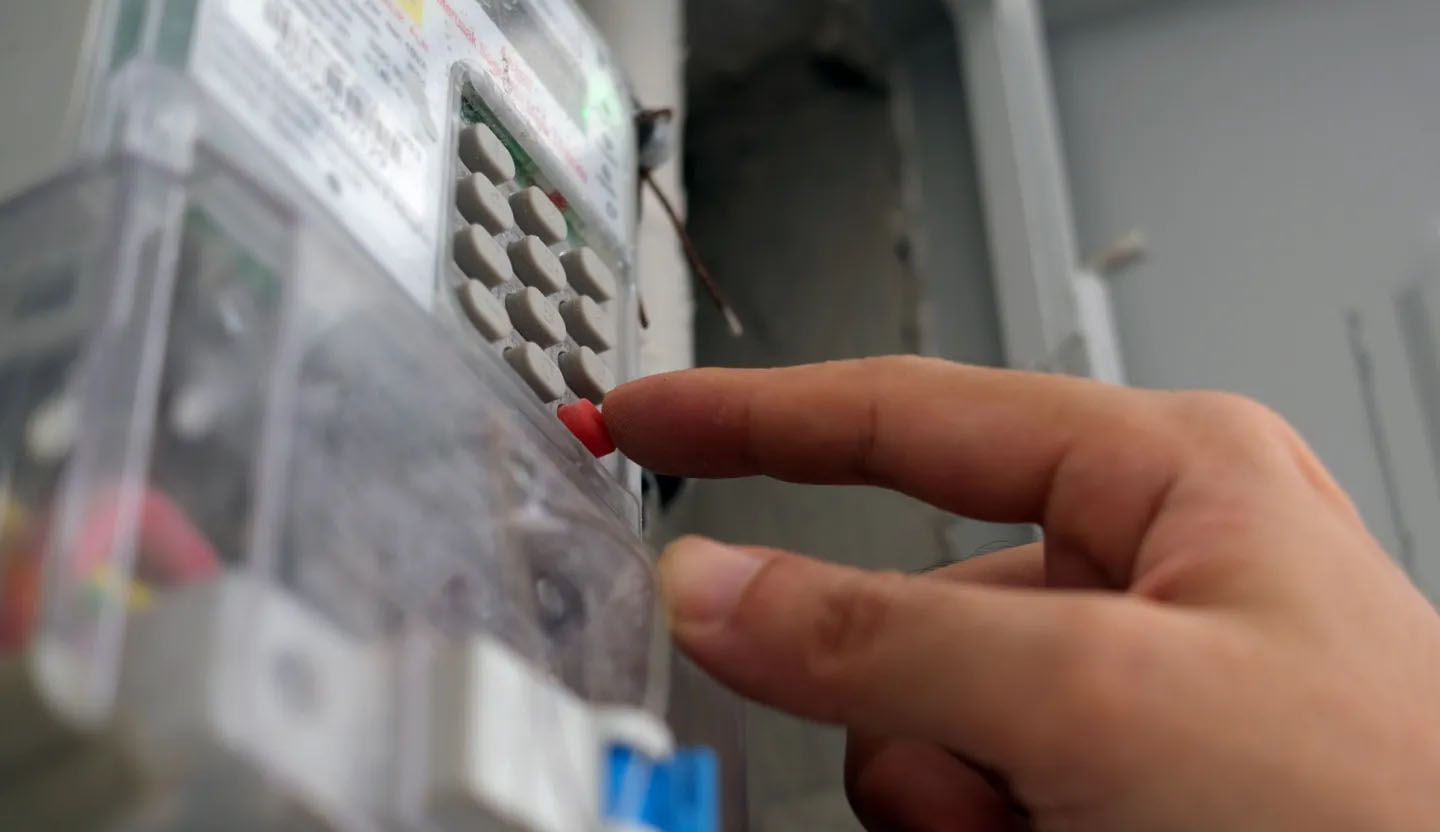
Exactly 10 days after the R200 surcharge fee came into effect in Johannesburg, the city’s MMC for finance, Dada Morero, has indicated it will be reviewed following pushback from residents and civil society. This buckling is in strong contrast to the executive mayor, Kabelo Gwamanda, who has been singing a different tune.
City of Johannesburg changes tune over R200 prepaid electricity surcharge

The City of Johannesburg executive changed its tune over the implementation of the new monthly R200 prepaid meter fixed electricity surcharge. Just last week Mayor Kabelo Gwamanda insisted it was here to stay while the MMC for finance, Dada Morero, now says it will be reviewed.     

Once again Johannesburg residents, particularly the poor, remain in limbo. 

The fixed rate came into effect on 1 July, along with the 12.7% electricity hike that has left many residents in a tight financial position. The R230 fee, including tax, was intended to provide revenue to fund Johannesburg’s investment in new electricity infrastructure and the maintenance of existing infrastructure. Before 1 July, prepaid residential customers did not contribute to these costs, only postpaid customers did.

Speaking during a special council meeting on Tuesday, Morero said: “We are willing to enter a process to look at this availability charge and its impact on residents, and undergo a process to review this amount.”

However, the process to review the amount remains unclear, with Morero saying the City would take into consideration the necessary and relevant legislative processes. 

“This executive brings to council a commitment to relook and review this availability charge amount,” he said. 

Last week, Gwamanda said the R200 surcharge would remain in place and had been implemented to ensure fairness with prepaid and postpaid customers. 

“The new electricity surcharge is a necessary intervention to create fairness and equality in the city’s tariffs regime. Post-paid customers have been paying the surcharge, and only prepaid customers were excluded. What the introduction of the surcharge now seeks to do is to end the unfair subsidisation of prepaid customers by post-paid customers,” Gwamanda said.  

Asked to comment on Wednesday, mayoral spokesperson, Mlimandlela Ndamase said at the time of Gwamanda’s remarks he was not “steadfast” in that nothing can change upon further engagements. “He was merely explaining the rationale, purpose and background of the decision.”

“Obviously when the MMC says there is a review then then that’s an executive decision as they speak in one voice,” he said.

Read more in Daily Maverick: Impoverished Joburgers buckle under new monthly R200 prepaid meter fixed electricity surcharge 

The new tariff and surcharge apply to all prepaid residents except the “indigent”, which is used to classify customers earning less than R6,000 a month or who have financial challenges and are registered as such in the City’s database.

However, it remains unclear how many residents are registered.  

The Organisation Undoing Tax Abuse (Outa) has long called for the scrapping of the fee, which it said would have significant financial repercussions on vulnerable communities. Outa’s manager for local government, Julius Kleynhans, said the City should implement reasonable tariffs while ensuring that it ran cost effectively. 

“It cannot pass costs on to consumers due to its own inefficiencies that it consistently fails to address, such as inadequate debt collection of conventional electricity tariffs and high electricity losses,” he said.

Opposition parties have since welcomed Morero’s pronouncement with skepticism. 

The DA’s caucus leader in the city, Belinda Kayser-Echeozonjoku, said the contradiction between what Gwamanda and Morero were saying was concerning. 

“While we understand that it might be difficult for an executive to always be on the same page, we urge the City of Johannesburg’s executive to speak from the same mouth on contentious issues that have very real implications for the residents of the City,” she said.   

Despite the concern, Kayser-Echeozonjoku said the DA would hold Morero to account, and ensure that he followed through on this commitment. 

“The DA will always be on the side of good governance, and effective management of the City’s funds – which, had it been managed correctly, would not have necessitated the executive to introduce the additional surcharge,” she said.  

Meanwhile, ActionSA’s caucus leader, Nobuhle Mthembu, said Morero's response was a step in the right direction. 

Step in the right direction


“We have noted the commitment made by the MMC for Finance, Dada Morero, to review the R200 fixed monthly service charge and believe that this is a step in the right direction towards addressing our concerns. Johannesburg residents have spoken and we urge MMC Morero and the executive to do the right thing and rescind their decision,” Mthembu said.  

 Prior to Morero’s commitment, ActionSA had requested an urgent debate on the R200 electricity service charge. The request, however, was rejected by council speaker Margaret Arnold on the basis the matter was not urgent.  

“This is despite the fact that ongoing public pressure suggests otherwise. ActionSA rejects these unjust service charges and will use all available means to oppose this unjust move by the governing chaos coalition,” Mthembu said.  

Following the surcharge coming into effect, the DA initiated a petition  to scrap the newly introduced electricity surcharge.  By 12am on Wednesday, the DA’s petition had garnered  more than 16,000 signatures in less than five days. 

“It is evident that the ratepayers in the city were not consulted effectively in the consideration of this surcharge,” the DA said.  

Outa previously warned that the hike would lead to increased financial strain, higher risk of electricity disconnections, deepening inequality, and civil unrest. DM

Daily Maverick’s journalism is funded by the contributions of our Maverick Insider members. If you appreciate our work, then join our membership community. Defending Democracy is an everyday effort. Be part of it. Become a Maverick Insider.

Comments

Johan Buys Jul 10, 2024, 03:12 PM

Councils have to recover their costs. If it is unpopular to charge for availability (as ERA and various papers dictate using cost of supply), then they will have to get it in the energy fee per kWh. If that also is politically unpopular, then they will hike rates & taxes. The end game is going to be that national revenue is allocated to councils to increase the scale of subsidized / free services. So free water & electricity for households under R10,000 per month. They won’t get that revenue from a 17.5% VAT rate, so it will have to come from income taxes.

Miss Jellybean Jul 11, 2024, 08:39 AM

Before 1 July, prepaid residential customers did not contribute to these costs, only postpaid customers did. is not true prepaid COJ customers pay more per kW. This charge is theft & everyone that qualifies needs to apply for the pensioners rebate on Rates - Over 70's get 100% rebate on property value up to R2,000,000-00 rates above this value will still apply but it will save a lot more than the R230-00 (incl. VAT) being charged.

Miss Jellybean Jul 11, 2024, 08:39 AM

Before 1 July, prepaid residential customers did not contribute to these costs, only postpaid customers did. is not true prepaid COJ customers pay more per kW. This charge is theft & everyone that qualifies needs to apply for the pensioners rebate on Rates - Over 70's get 100% rebate on property value up to R2,000,000-00 rates above this value will still apply but it will save a lot more than the R230-00 (incl. VAT) being charged.

J vN Jul 11, 2024, 10:28 AM

Apparently, the City of Johannesburg receives funding for free electricity to 900,000 indigent households, but very few indigent households bother to register. This tells you that the vast majority are, and their is no polite way of putting this, stealing electricity already. Only a small minority are affected by the R200 surcharge. The relatively few honest ratepayers in Johannesburg and elsewhere are already funding those who steal.

megapode Jul 10, 2024, 04:17 PM

Well he said that the matter will be reviewed. That doesn't mean anything other than that they'll look at it. "We have reviewed the matter, and taking into account aspects like changes to the City's computer systems, we have, with sorrow in our hearts and tears in our eyes, in full cogniscance of the plight of the City's poorest, decided that the fee will have to stay in place for at least this budget cycle. We would like to remind the opposition parties that have made the most noise that they tried to introduce the exact same fee when they or their leaders were running the City in 2019, and ask them to not play politics but to look at the realities of the situation."

megapode Jul 10, 2024, 04:17 PM

Well he said that the matter will be reviewed. That doesn't mean anything other than that they'll look at it. "We have reviewed the matter, and taking into account aspects like changes to the City's computer systems, we have, with sorrow in our hearts and tears in our eyes, in full cogniscance of the plight of the City's poorest, decided that the fee will have to stay in place for at least this budget cycle. We would like to remind the opposition parties that have made the most noise that they tried to introduce the exact same fee when they or their leaders were running the City in 2019, and ask them to not play politics but to look at the realities of the situation."

roelf.pretorius Jul 10, 2024, 07:12 PM

Sounds to me rather that what is needed in Johannesburg is that the municipality should get control over the occurance of non-payment among customers. That seems to me the root cause for all this. Part of getting control over this is to change the budget to ensure that what people are supposed to pay is affordable to them. And then, after that, proper enforcement of the tariffs should happen. But to increase the costs of those who pay, such as putting the extra burden of R200 onto them, will be a disaster - many of those who are paying will only be forced into also becoming non-payers, making the problem worse.

Ian Gwilt Jul 10, 2024, 07:57 PM

Or they will become illegal connectors If you only Have R400 to spend on electricity and now R200 disappears, you will look at your options. Not that levelling out the charges is wrong. Other Municipalities already do this.

Miss Jellybean Jul 11, 2024, 08:42 AM

Pre-paid customers pay in advance for their electricity so why should we be penalised for the COJ's inaction against post paid defaulters? Why do they allow accounts to go so far in arrears before doing anything & then taking no action when people just reconnect themselves?

Miss Jellybean Jul 11, 2024, 08:47 AM

Now we know why everyone with a faulty meter was FORCED by COJ to go to prepaid when they were refusing to repair post paid meters & the technicians just arrived & said we are installing prepaid whether you like it or not

Kel Varnsen Jul 10, 2024, 07:25 PM

Of course the populists will change their tune. That’s how they operate.

Margs7789 Smith Jul 10, 2024, 07:47 PM

It is my experience in KZN that the prepaid electricity tariff per kwh is 50% higher than postpaid tariffs in order to cover the availability costs etc. If this is also the case in JHB, then there should be no reason to add an additional availability fee to prepaid electricity

Pierre-Andre van Leeuwen Jul 10, 2024, 09:22 PM

Several people commented on the previous article stating that this is indeed the case in JHB too. Seems it is convenient to overlook this.

Frans Flippo Jul 11, 2024, 07:05 AM

DM are not even overlooking this, they are repeating the same blatant misinformation from their last article on the subject: “Before 1 July, prepaid residential customers did not contribute to these costs, only postpaid customers did.” Prepaid customers were already contributing to the network costs through a higher per-kWh cost. The real truth, of course, is that the city is unhappy with so many of its residents having seen the shabby state of City Power and gone the self-sufficiency route and installed solar panels. These residents would have moved from postpaid to prepaid because the higher per-kWh rate is not a big problem for them considering their low grid-usage now that the sun is filling most of their electricity needs, and it saves them hundreds of rands in fixed monthly costs. Now the City wants to make these residents pay for still using the grid on cloudy days by introducing fixed monthly costs on prepaid electricity. It’s a big middle finger from the City to everyone who invested in renewables with their own hard-earned money, reducing the load on the grid and saving us all several stages of load shedding.

Walter Spatula Jul 11, 2024, 08:34 AM

There has to be an infrastructure maintenance cost for occasional use of the grid on rainy days. A fixed "line rental" is perfectly reasonable, else you're being subsidised.

Margs7789 Smith Jul 11, 2024, 09:43 AM

Prepaid users are not being subsidised on prepaid as you are paying 50% mire per kwh than post paid users

Frans Flippo Jul 11, 2024, 07:05 AM

DM are not even overlooking this, they are repeating the same blatant misinformation from their last article on the subject: “Before 1 July, prepaid residential customers did not contribute to these costs, only postpaid customers did.” Prepaid customers were already contributing to the network costs through a higher per-kWh cost. The real truth, of course, is that the city is unhappy with so many of its residents having seen the shabby state of City Power and gone the self-sufficiency route and installed solar panels. These residents would have moved from postpaid to prepaid because the higher per-kWh rate is not a big problem for them considering their low grid-usage now that the sun is filling most of their electricity needs, and it saves them hundreds of rands in fixed monthly costs. Now the City wants to make these residents pay for still using the grid on cloudy days by introducing fixed monthly costs on prepaid electricity. It’s a big middle finger from the City to everyone who invested in renewables with their own hard-earned money, reducing the load on the grid and saving us all several stages of load shedding.

megapode Jul 11, 2024, 07:24 AM

Prepaid users pay a higher per unit rate, yes. Not 50% higher. But until this month there were not flat fees, compared to the R800 (excl) on the default tariff. So there was a big saving to be had by switching to prepaid, as I did 7 or 8 years ago. And we still save. A household consuming 800 kWh a month will save about R500. Of course there should be some saving because the prepaid user is good for the City's cash flow. There is a relief package for indigent persons, but you have to apply for it. On that tariff the surcharge falls away (another thing not mentioned) and the cost of the first 350 kWh in a month is reduced.

Lebese Ramohlale Jul 10, 2024, 10:18 PM

Why can't use the same model as the fuel levy, a fraction of the cost per Kw of electricity goes towards the fund prepaid or else. Unless the model was skewed for the cost to be borne by postpaid customers

once.off.address Jul 11, 2024, 12:20 AM

I find is very strange that taxpayers are forced to invest in a business like Eskom, then when it is privatized it flows into private hands and the taxpayers are not themselves shareholders. Even as a kid this puzzled me as in Zimbabwe, there was a "levy" included in every monthly electricity bill, then when the version of Eskom there had parts of it privatized the investors got diddly. Same will happen here.

Gerrie Pretorius Jul 11, 2024, 05:32 AM

Why treat pre paid and post paid customers differently? All users should be treated and charged equally. Should the R200 pre paid levy be discarded, post paying customers’ levy must be discarded as well.

Bick Nee Jul 11, 2024, 07:01 AM

Well here’s the thing…I’ve invested R178k in a solar system and up until now have only needed about R100 pm to to up my battery from time to time. Now I have to pay R350 pm for the same thing (a 250% increase).

Gerrie Pretorius Jul 11, 2024, 08:35 AM

Still doesn’t explain why pre paid and post paid customers should be treated differently. Either everyone or no-one should pay the ridiculous fixed fees.

glen.erringt Jul 11, 2024, 10:26 AM

Post paid the council has to carry the risk of non payment for electricity you have already used and they have to manage the accounts?

bigbad jon Jul 12, 2024, 06:41 PM

Because pre-paid clients pay 1. up front 2. more per kWh

David Lesedi Jul 11, 2024, 09:02 AM

I keep hearing about the impact on the poor who seem to be getting lots of airtime. The tax paying middle class are broke. We have reduced or valued household helper to every 2 weeks from every week. Keeping passing on the ills of bad government onto the middle class will have devastating effects. Middle class is the lifeblood of SA.

A Rosebank Ratepayer Jul 11, 2024, 09:12 AM

1. Until CoJ starts managing all functions in the city properly, as well as corruption, they will not have the credibility to assure ratepayers and residents that they are acting in good faith and not trying to paper over their poor management practices and/or even worse, fill up the emptying pot for more theft when they propose tariffs like this. 2. They should start with the tough stuff that ANC administrations have been notorious for ducking for years; collecting arrears, fixing potholes and water and sewer leaks, rubbish removal and cleaning Stormwater networks and, together with SAPS and CPFs, dealing with neighbourhood crime. 3. The last point will help deal with one of 3 excuses used by municipal and SOE officials not to fix things, namely that it is too dangerous for them in the townships and suburbs to go out without security escorts. It is getting too expensive to get sufficient security so staff increasingly just sit in their depots; 4. One of the other excuses is lack of funds. This is partly the result of many years of SALGA and SAMWU achieving above average pay increases to the extent their remuneration is generally 2 X that if the private sector. This suggests there can only be half the amount of staff to do the same work as the private sector. In fact some municipal departments are outsourcing 70% of the work to tenders. 5. And this leads to the 3rd excuse, the tendering process. Municipalities resort to private/community based contractors to do the work they can no longer do. Because these tenders are vulnerable to corruption they have increasingly more onerous conditions that result in them taking longer and longer to award, sometimes if at all. In the words of Tim Cohen, a clusterf&@k! - with apologies to Richard Poplak. To finish off with Clem Sunter, let the fox be with all of us!

A Rosebank Ratepayer Jul 11, 2024, 09:12 AM

1. Until CoJ starts managing all functions in the city properly, as well as corruption, they will not have the credibility to assure ratepayers and residents that they are acting in good faith and not trying to paper over their poor management practices and/or even worse, fill up the emptying pot for more theft when they propose tariffs like this. 2. They should start with the tough stuff that ANC administrations have been notorious for ducking for years; collecting arrears, fixing potholes and water and sewer leaks, rubbish removal and cleaning Stormwater networks and, together with SAPS and CPFs, dealing with neighbourhood crime. 3. The last point will help deal with one of 3 excuses used by municipal and SOE officials not to fix things, namely that it is too dangerous for them in the townships and suburbs to go out without security escorts. It is getting too expensive to get sufficient security so staff increasingly just sit in their depots; 4. One of the other excuses is lack of funds. This is partly the result of many years of SALGA and SAMWU achieving above average pay increases to the extent their remuneration is generally 2 X that if the private sector. This suggests there can only be half the amount of staff to do the same work as the private sector. In fact some municipal departments are outsourcing 70% of the work to tenders. 5. And this leads to the 3rd excuse, the tendering process. Municipalities resort to private/community based contractors to do the work they can no longer do. Because these tenders are vulnerable to corruption they have increasingly more onerous conditions that result in them taking longer and longer to award, sometimes if at all. In the words of Tim Cohen, a clusterf&@k! - with apologies to Richard Poplak. To finish off with Clem Sunter, let the fox be with all of us!

District Six Jul 11, 2024, 10:29 AM

All that remains is to vote Gwamanda out at the earliest opportunity.

Con Tester Jul 11, 2024, 10:53 AM

That might not be quite as simple as it sounds, considering that Kabelo Gwamanda is little more than the ANC’s and EFF’s marionette, and those two narcissistic cabals have banded together in Joburg with an unwritten agenda of self-enrichment. That's the most likely reason why Panyaza Lesufi used every dirty trick he could think of to keep the DA away from any meaningful levers of power in Gauteng.

Con Tester Jul 11, 2024, 10:35 AM

While several commenters do, it would be good if everyone paid attention and respected the correct terminology, specifically the standard unit of electrical energy consumption. The correct unit is “kWh” (1 kWh = 3,600,000 J = 3.6 MJ). It isn’t “kW,” “kwh,” “Kw,” or any other funny concoction of letters and cases. There’s a very good reason why the units are written in a specific way, and why writing them differently is flatly wrong. Ask a physicist or an engineer to explain why.

bigbad jon Jul 12, 2024, 06:33 PM

Makes sense. So the "units" ticking by on our meters, and the "units" we pay for with pre-paid electricity are kWh too. Paid R3.322/unit last month and am terrified to buy this month.. BCM seems to be the highest in the country already, now 12% more PLUS the monthly fee of R465. Now they've backed off a little with the protests to R438/mo apparently.

louw.nic Jul 11, 2024, 03:45 PM

Eskom is owed R78 billion by municipalities; and there is "no possibility under the sun" that the power utility will recover it - as per Energy and Electricity Minister, Kgosientsho Ramokgopa.

Theo Butler Jul 11, 2024, 04:05 PM

In Cape Town prepaid clients now pay R281,78 for electricity and R155,87 for water availability as a "home user charge". There has been no reduction in the rates that, I assumed, previously incorporated these charges.

Just Another Day Jul 13, 2024, 08:23 AM

The MMC for Finance for the Johannesburg Metropolitan Municipality, Dada Morero, admitted that these surcharges of R200 per month per customer have been part of the current post-paid customer's accounts for a few years now. When will these surcharge amounts be refunded to the post-paid customers???