



Despite all of the noise at the beginning of the year about the expected demise of the ANC, new polling data point to a party that has made significant progress on the campaign trail.
The Social Research Foundation suggests the ANC’s share of the vote is now 45%. While the findings of polls are heavily contested, previous polls by this organisation reflected the ANC as low as 40%, so there has clearly been an improvement.
Second, researchers at the University of Johannesburg’s Centre for Social Development in Africa have found that trust in President Cyril Ramaphosa has increased. It rose from 54% in 2019 to 77% by the end of last year. The researchers say, “It does suggest that support for Ramaphosa is greater than that for the ANC.”
It is not clear why this is so and whether — despite the Phala Phala scandal — Ramaphosa’s leadership during the pandemic and the fact that the Zondo Commission has tarnished everyone else increased the levels of trust in him.
Several developments have helped the ANC with voters.
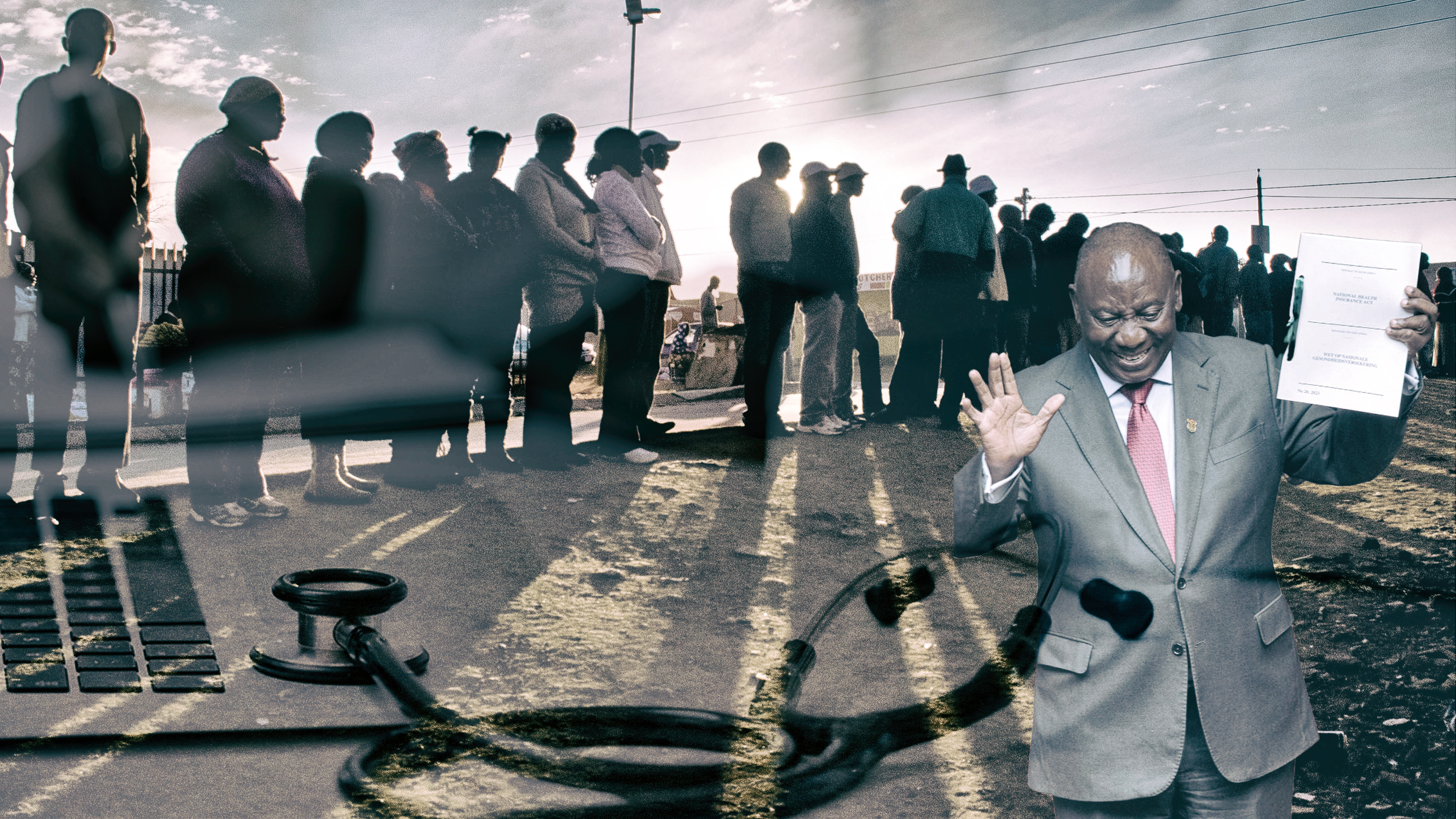
First, Ramaphosa signed the NHI Bill into law on Wednesday. As Daily Maverick’s Ferial Haffajee pointed out, what appears to be a naked political gambit is not really in Ramaphosa’s style. The fact that he gave a long recitation of the role of historical ANC leaders during his address at this event surely proves it was all about campaigning for his party.
While it is not clear what impact this will have, the behaviour of ANC leaders shows they believe it will gain them votes. Gauteng Premier Panyaza Lesufi’s promise to ANC supporters that the day after the election they could get free private medical treatment shows the power of this issue.
Then there is Eskom, which has not implemented load shedding for more than 50 days. It is a huge change from winter last year when Stage 6 load shedding was a regular occurrence.
On Monday, Electricity Minister Kgosientsho Ramokgopa announced that Eskom had achieved an Energy Availability Factor of above 70% for the first time since 2021.
Given the fact the ANC itself said that intense load shedding before the 2021 local elections had a huge impact on its share of the vote, this has led to widespread cynicism around the fact there is no load shedding now.
Eskom says the reason is simple: more generating units have returned to service and unplanned breakdowns have declined dramatically.
But the energy analyst Matthew Cruise said in an interview on Newzroom Afrika that load shedding would return in June. He suggested that power stations had made only interim arrangements to remain online and would have to go offline later in winter.
However, another expert, Chris Yelland, said Eskom does deserve applause for the improvements it made and that the private sector was also generating a significant amount of power.
Endorsement by Muslims
On Monday, a group of organisations representing Muslim scholars gave the ANC an enthusiastic endorsement, because of the government’s actions at the International Court of Justice (ICJ) on behalf of Palestinians in Gaza.
The International Union of Muslim Scholars said all South Africans of the Muslim faith should vote for the ANC.
However, this does not mean that the ANC is simply using the situation in Gaza to campaign for Muslim votes.
First, less than 2% of our population is Muslim. So on the maths alone this cynical argument does not work.
Second, many people in this group who feel their faith strongly might well vote for Al Jama-ah, a party which is explicitly for Muslim people.
Religious identity does not automatically mean that people will vote in a particular way based on the fate of the people of Gaza. Almost all the countries with majority Muslim populations have not joined our government’s application at the ICJ.
That doesn’t mean the application at the ICJ has no political impact. It probably reminds some voters how the ANC was once known for the power of its morality.
And of course, the resonance between how black people were treated by the apartheid government and how Palestinians are treated by the Israeli government is strong, which may well have an impact at the polling booth.
Either way, it is a reminder for many voters that the ANC’s stance on this issue has made us a major player in international affairs.
On the ground, the campaigning of Thabo Mbeki and other “veteran” leaders has had an impact. It reminds people of what the ANC was and what it was formed to fight against.
However, BusinessLIVE reported that Mbeki had “suspended” his campaigning for the moment, as he felt he was being used by people he did not trust.
The ANC said Mbeki would resume campaigning but had to pause his party work because he was needed to help with diplomatic work elsewhere.
The other astonishing dynamic around the ANC at the moment is how many of the scandals associated with it have disappeared from the national narrative.
Issues like Zweli Mkhize’s Digital Vibes scandal, the money stolen from Tembisa Hospital (the person at the centre of that, Dr Ashley Mthunzi, died three weeks ago) and even Phala Phala itself, have all fallen off the news agenda.
At the same time, there are questions about whether the opposition parties have been able to have an impact.
Certainly, the DA’s flag-burning advert was an attempt to direct the national discussion. While it may have worked for a few days (and could resurface due to arguments at the communications regulator Icasa over whether the SABC was wrong to not screen it), it may not have been that effective.
The EFF leader, Julius Malema, has also been campaigning energetically, telling voters in the Eastern Cape to tell their elderly relatives that “Nelson Mandela is no longer in the ANC”.
But it appears that despite expending a huge amount of energy, none of the bigger parties has been able to create an issue that has gained much traction on the campaign trail.
All of this suggests that the ANC’s share of the vote after the election is likely to be above 45%. And that Ramaphosa will be seen as having played an important role in what some in the ANC will still claim to be a “victory”.
This means that the more radical scenarios, wherein the ANC implodes and Ramaphosa is removed as President, are becoming less and less likely.
At least, for the moment. DM
Read more in Daily Maverick: Elections 2024