In my
LLD thesis, I argued that a person’s image needs clear legal protection, taking into account the realities of digital media and the fact that many individuals such as influencers, athletes and celebrities generate an income from commodifying their image online. Promulgating legislation will create legal certainty in South Africa as it pertains to an individual’s image.
International examples
Various states in the US have already taken action to deal with deepfakes, mostly in the context of elections. For example, Texas become one of the first states to
criminalise the use of deepfakes, especially if the content of the deepfake relates to political elections. It also recently passed
a second bill which targets sexually explicit deepfakes. So it’s a criminal offence to create a deepfake video with the intention of injuring a political candidate or influencing an election result, or to distribute sexually explicit deepfakes without the consent of the individual, with the intention to embarrass them.
Maryland and Massachusetts, meanwhile, have proposed legislation that specifically prohibits the use of deepfakes. Maryland plans to target deepfakes that may influence politics; Massachusetts wants to criminalise the use of deepfakes for already “criminal or tortious (wrongful) conduct”.
In 2020 California became the first US state to criminalise the use of deepfakes in political campaign promotion and advertising. The
AB 730 bill makes it a crime to publish audio, imagery or a video that gives a false and damaging impression of a politician’s words or actions. Though the bill doesn’t explicitly mention deepfakes it is clear that AI-manufactured fakes are its primary concern.
In 2023, the governor of New York signed the Senate Bill 1042A. This aims to prohibit the dissemination of deepfakes in general, not just in relation to elections.
At least four federal deepfakes bills have been considered.
These include the Identifying Outputs of Generative Adversarial Networks Act and the Deepfakes Accountability Act.
Protecting image rights
There is currently no recognition of image rights in South Africa’s case law or legislation. Image rights are distinct from copyright in law. The scope of protection provided by copyright alone would not be enough to tackle the problem of deepfakes in a court setting.
I
argue for legal intervention which recognises individual image rights. By recognising an image right the image will be protected against unauthorised use. This will not only include the misappropriation of an individual image for commercial use, it will also combat deepfakes, whether those relate to elections and politicians or any manipulation of a person’s image with malicious intent.
Image rights legislation is key. It can:
- clearly define an individual’s image
- specify when an infringement of the image has occurred
- provide the image right holder with legal remedies for unauthorised use.
This can all help regulate deepfake situations. The malicious and deceptive nature of deepfakes may cause the image right holder to suffer significant harm. It is time that South Africa’s legislature addressed these situations by providing the necessary protection to individuals.
DM
This story was first published in The Conversation. Layckan Van Gensen is a Junior Lecturer in Mercantile Law, Stellenbosch University



 Leanne Manas is a familiar face on South African televisions. Towards the end of 2023 the morning news presenter’s face showed up somewhere else: in
 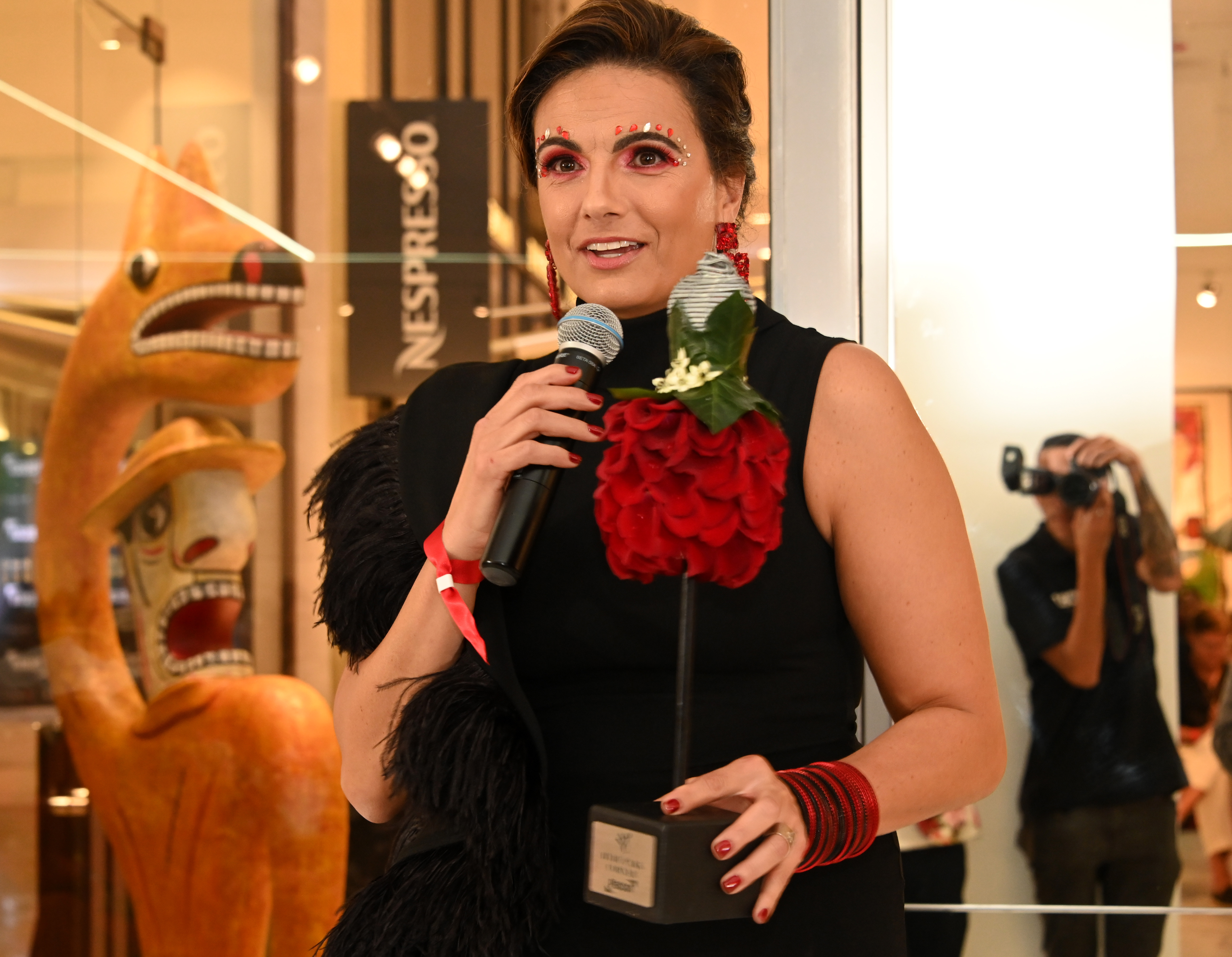 Leanne Manas at the 25th annual South African Style Awards at Hyde Park Corner on February 12, 2023 in Johannesburg, South Africa. (Photo by Gallo Images/Oupa Bopape)[/caption]
Deepfakes were initially used in the
Leanne Manas at the 25th annual South African Style Awards at Hyde Park Corner on February 12, 2023 in Johannesburg, South Africa. (Photo by Gallo Images/Oupa Bopape)[/caption]
Deepfakes were initially used in the