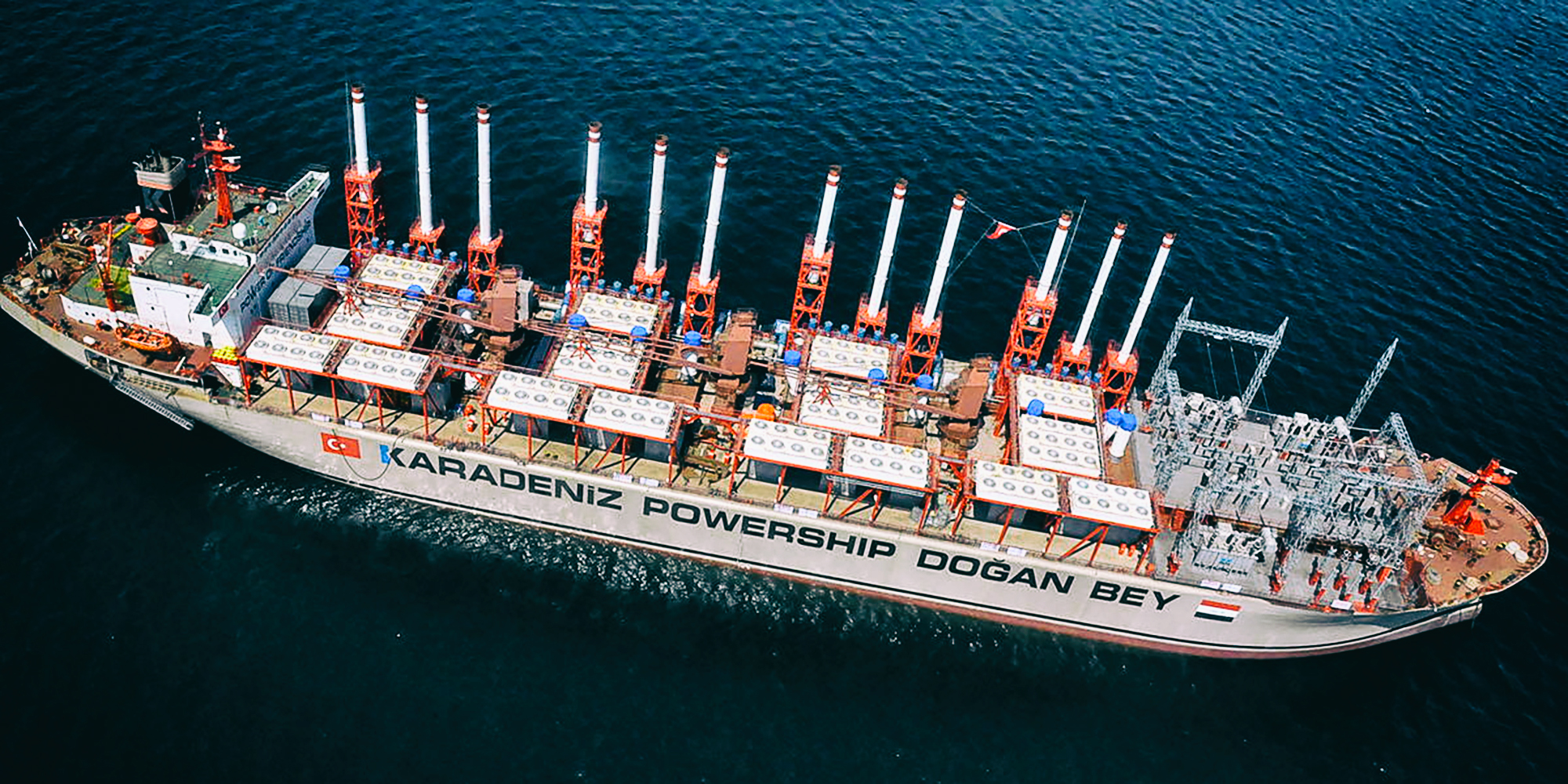




Seemingly desperate to clinch a multibillion-rand “emergency” electricity supply deal with South Africa, the Turkish Karpowership group has offered to cut the original 20-year contract down to five years. But there is a catch: the price tag for a shorter contract would shoot up.
In a television interview with eNCA journalist Annika Larsen on 9 August, Karpowership chief commercial officer Zeynep Harezi asserted that her company was ready to dispatch five floating powerships to South Africa and to start generating electricity within “90 days” or less.
“We are ready to come for only five years [instead of 20 years as specified in the current government proposal],” she said — though she was careful to add that her Istanbul-based company did not rule out an extension to the proposed contract after five years.
Harezi’s public gambit follows a lengthy and heated controversy about the merits of entering into a protracted and costly energy deal with the Turkish majority-owned floating powerships company.
The exact cost of the deal remains secret, though the CSIR has estimated that it could be around R228-billion.
Read more in Daily Maverick: Karpowership SA is heading for choppy financial waters
Since then, the price of gas has rocketed following Russia’s invasion of Ukraine — a factor acknowledged by Harezi, who suggested that natural gas prices could account for 60-70% of the costs of a new deal.
Responding to suggestions from Larsen that the price tag of a 20-year deal could exceed R300-billion, Harezi asserted that South Africa was paying in the region of R35-billion a year for diesel-based peaking power supplies, whereas Karpowership was offering a five-year deal that would cost “less than R15-billion” annually to provide about 1,200MW of electricity from five floating power ships plugged in at the ports of Richards Bay, Coega and Saldanha Bay.
Though Harezi presented this offer as a bargain, the jury is still out on whether this is really a fair “apples with apples” cost comparison.
Chris Yelland, energy analyst and managing director of EE Business Intelligence, cautioned that gas prices were subject to significant fluctuations based on the US dollar price for liquid natural gas and the dollar/rand exchange rate.
Yelland told Daily Maverick that if the Karpowership tariff for a revised five-year contract were to rise, a fresh government procurement process was needed to allow other power bidders the opportunity to revise their initial offers and contract terms.
“Clearly, Karpowership has not offered anything because they have not been [officially] approached by anyone in government or the IPP [Independent Power Procurement division of the Department of Mineral and Energy Affairs].”
Interestingly, however, Harezi suggested that her company held a meeting with Public Enterprises Minister Pravin Gordhan (“that lovely gentleman” in her words) about three to four weeks ago, along with representatives of Eskom and the Transnet National Ports Authority for an “open discussion”.
On the role of Minerals and Energy Minister Gwede Mantashe in the Karpowership deal, Harezi insisted she had never met Mantashe, nor been approached by South African government representatives to reduce the contract term to five years.
Read more in Daily Maverick: Gwede Mantashe doubles down on state support for Karpowership
There had never been any “political aspects”, she said in response to Larsen’s questions about the black economic empowerment stipulations of the emergency power procurement process.
South Africa is an “important project”, but not the “only” commercial opportunity for Karpowership, she said.
Significantly, however, she said that Karpowership had met a prospective South African BEE “gentleman” partner as far back as 2016. DM
https://www.youtube.com/watch?v=REeWvTRUpMk
This article is more than a year old
Our Burning Planet
Karpowership offers to chop 20-year energy deal to five years — but there’s a new price
Following the extended controversy over the merits of procuring power from Karpowership, the Turkish company says it’s willing to enter into a five-year deal.