



Announcements made in the President’s State of the Nation speech suggest government intends to announce ways to assist the South African public and businesses to establish and utilise renewable energy in the budget next week. The move is intended to help SA develop better energy security and to lighten the load on Eskom. What we don’t know is how the system will work, or indeed what system the government has selected.
Hence, it might be worth doing a quick review of the methods other countries have employed to get a sense of what works - and does not work - internationally. As readers of this column might know, I am completely biased in this argument because long ago I installed a PV solar system and I have rather relentlessly bragged about it ever since (sorry, not sorry).
My solar system installation has been one the best investments I have ever made, and it would have been so much better if it had been a conscious investment decision. Sadly, it was not; it was dictated by the remoteness of my house and the high cost of getting "Eskom power", as it's known in my area in the Karoo, from the road to my house some four kilometres into the Swartburg mountain range. Some genius investment decisions, as everyone knows, are made fortuitously.
Anyway, just putting my cards on the table. I’m proud to say I'm pro-solar, but more concretely, I’m pro-solar by experience, and not simply by theory. So obviously, I’m delighted to hear that the government is finally going to step up to the plate and help South Africas do this. But how?
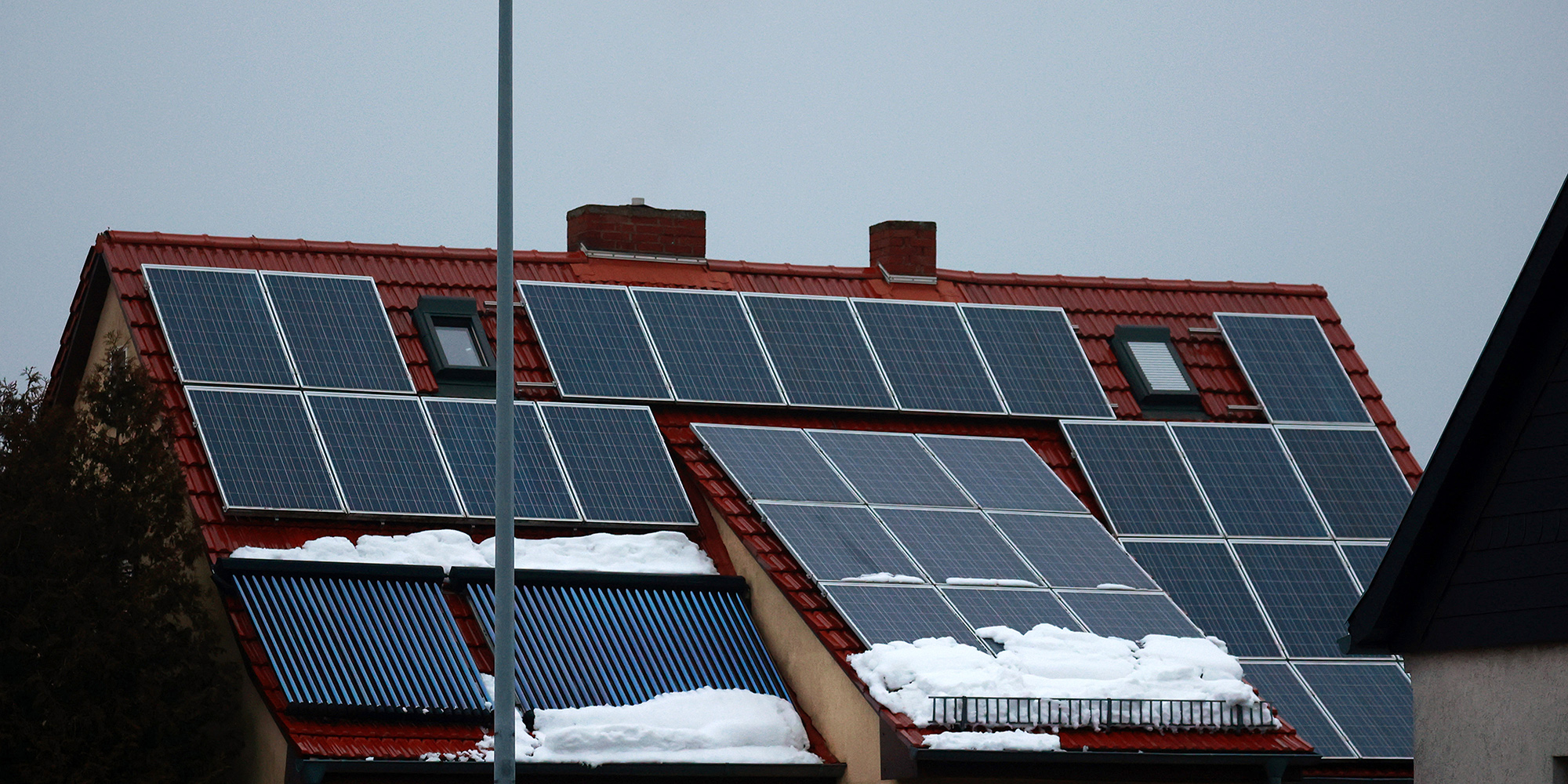
Well, the way it has worked almost everywhere is through a system utilising “feed-in-tariffs”. What these do is pay you, once you have established a PV system on your roof, for example, for the electricity that you feed into the grid, which helps you pay for the system. This is the excess electricity that you don’t use yourself, hence you gain twice; you get a reduction on your bill for the electricity you put into the grid, and you don’t have to pay for the electricity you create yourself. But you do pay for any electricity you take out of the grid.
Now, this system is enormously unpopular with utility companies because they are on the other side of this deal; they are the ones paying for electricity supplied and not getting paid for the power created. This is why it's incredibly important to turn a deaf ear to electricity “experts” who claim that it won’t work, it can’t work, it shouldn’t work and it won’t solve the energy crisis. I have been listening to this rubbish spouted by Eskom officials and their stooges in government for literally a decade. And as the decade has progressed, the same people who claimed that the problem with renewable energy is that it is “variable” have created a coal-based baseload system which is wildly variable, as evidenced by electricity blackouts almost every day now. Those are the things they call "load shedding" to suggest that you are carrying a load, and they are helping you shed it. It's an electricity cut out. We should call it that.
But they do have one point: it's complicated. And it's complicated because to pay out correctly, you have to monitor usage very accurately. Furthermore, there is a grid-balancing issue because - and this you won’t believe - solar power does not work at night. Neither of these problems is unsolvable, and we know they are not unsolvable because almost the entirety of Europe solved them more than a decade ago.
The leader in this effort was Germany, and the German effort was led by a parliamentarian called Hans-Josef Fell, who was elected to the Bundestag for the Green Party in 1998. In the year 2000, he and a colleague devised the “feed-in-tariff” system, called FIT, because left-leaning politicians are very good with three-letter acronyms. He said later, essentially everybody was opposed to it, but they voted for it because they were convinced it would never get off the ground.
Instead, it created a revolution. Part of the reason was that the FIT determined by the parliament at the time was incredibly generous and if there is one thing that tends to motivate a populace, it's easy money.
Now, there is something about Germany that you need to know. The average sun hours per day in Stuttgart, which is about a third of the way up from the southern border is 3.33 hrs/day (due to latitude and weather). In German terms, this is good. In Bremen, about two-thirds of the way up the country, the usable time for PV systems is on average about two hours per day. Compare and contrast South Africa which has about six hours of PV usable solar per day, on average. So just bear that in mind; SA is about three times as effective, for geographical reasons, as Germany.
Nevertheless, Germany now has about 1.6-million solar installations, which produce about 10% of Germany’s power. Together, the home systems and the more formal solar plants have an installed capacity of about 38.3GWp (the p stands for peak power). Since Germany produces about 3.33hours per day, on average, this amount of solar power produces about 128GWh per day or the power equivalent (dividing by 24 hours in a day) of 5.3GW average over a whole day. That’s 9% of the total German installed generation capacity of 58GW and more than SA needs to eliminate 5 stages of load shedding.
The FIT in Germany started at about €50c/kwh, and that has come down as the cost of installing a solar system has declined, so the proportion of cost-to-expense has remained about the same. How much, did it cost? Well, quite a lot. At its high point, Germany coughed up about €14-billion a year; conservatives went nuts. But don’t forget, the electricity providers effectively increase the cost of electricity to take this into account, so people who are using environmentally-unfriendly power are effectively subsidising those who don’t.
Following Germany’s lead, almost every other European country has introduced a similar system. The UK, for example, has about 800 000 PV installations, but interestingly has just scrapped the scheme because it now calculates that it's cost-effective for people to install their own systems, and consequently they don’t need a taxpayer subsidy. (I disagree.) Nevertheless, about 5GWp has been installed in the UK, about an eighth of what Germany has installed. Other European countries are in that bracket.
So, time for some quick maths. Let's assume we can convince 200 000 South Africans to install PV systems with a FIT (If load-shedding hasn't been enough to convince them without the FIT). These should produce around a third as much as Germany, which is approximately 15GWp. What would the daily average power output be for this amount of installed solar PV? Well in South Africa we produce approximately 5GWh per day for every GWp installed i.e. 75GWh per day or 75GWh/24hrs = just over 3GW average power. That’s enough to eliminate 3 stages of load shedding. This could pretty nearly solve South Africa's electricity crisis if you can get the grid balance right. But of course, there are problems here. It will take time because it's taken Germany 10 years to get to this point. But it's easier and cheaper now by huge margins.
Before I take a stab at calculating what the FIT would need to be to incentivise the public to make solar investments I should point out the difference between grid tie PV systems and Hybrid PV systems. Hybrid systems come with battery back up and continue producing power from sunlight during load shedding. Grid tie PV systems cost half or less of the hybrid system of the equivalent kWp size, don’t provide battery back up and don’t produce power from sunlight during load shedding (let’s just say they are super simple and need the grid reference to be able to produce AC power from DC input supplied from the PV panels).
In South Africa the approximate cost of a residentially sized grid tie PV system is about R13,000/kWp. So, using the same figures above each kWp is going to produce 5kWh of energy a day or 1825kWh per year or, allowing 25% loss for bad weather, system inefficiencies, load shedding interruption, etc, about 1369kWh per year. Assuming that a 6 year payback would incentivise people to make this investment then each kWp would need to generate R13,000/6 = R2170 per year. The FIT required to do that would be R2170/1369kWh = R1.56/kWh. Ironically if load shedding were to abate the grid tie PV systems would produce more energy and the required FIT would be less.
There are alternatives too. The FIT system requires the user or beneficiary to fork out the upfront payment, so poor people without a credit line are not going to be able to afford this. But it would help Eskom of course, which would not have to add to its hefty debt. Italy apparently has a tax rebate system, and SA could do the same. So does the US. But that of course would only help taxpayers, and generally, South Africa's government doesn't really go in for that stuff.
But the crucial thing would be to introduce a FIT at a level which would make it worthwhile for South Africans to install the system. My guess is that if the FIT is less than R1.50/KW, it will fail. We will see. DM/BM
- This article has been extensively rewritten with the assistance of Graeme Smith, a mechanical engineer, former Eskom employee, and now consultant in the solar space. Graeme kindly explained the necessity to consider kWp (kilowatt peak) and introduced a more formal calculation about what might be an appropriate FIT for SA. Many thanks Graeme, and apologies for the errors.