



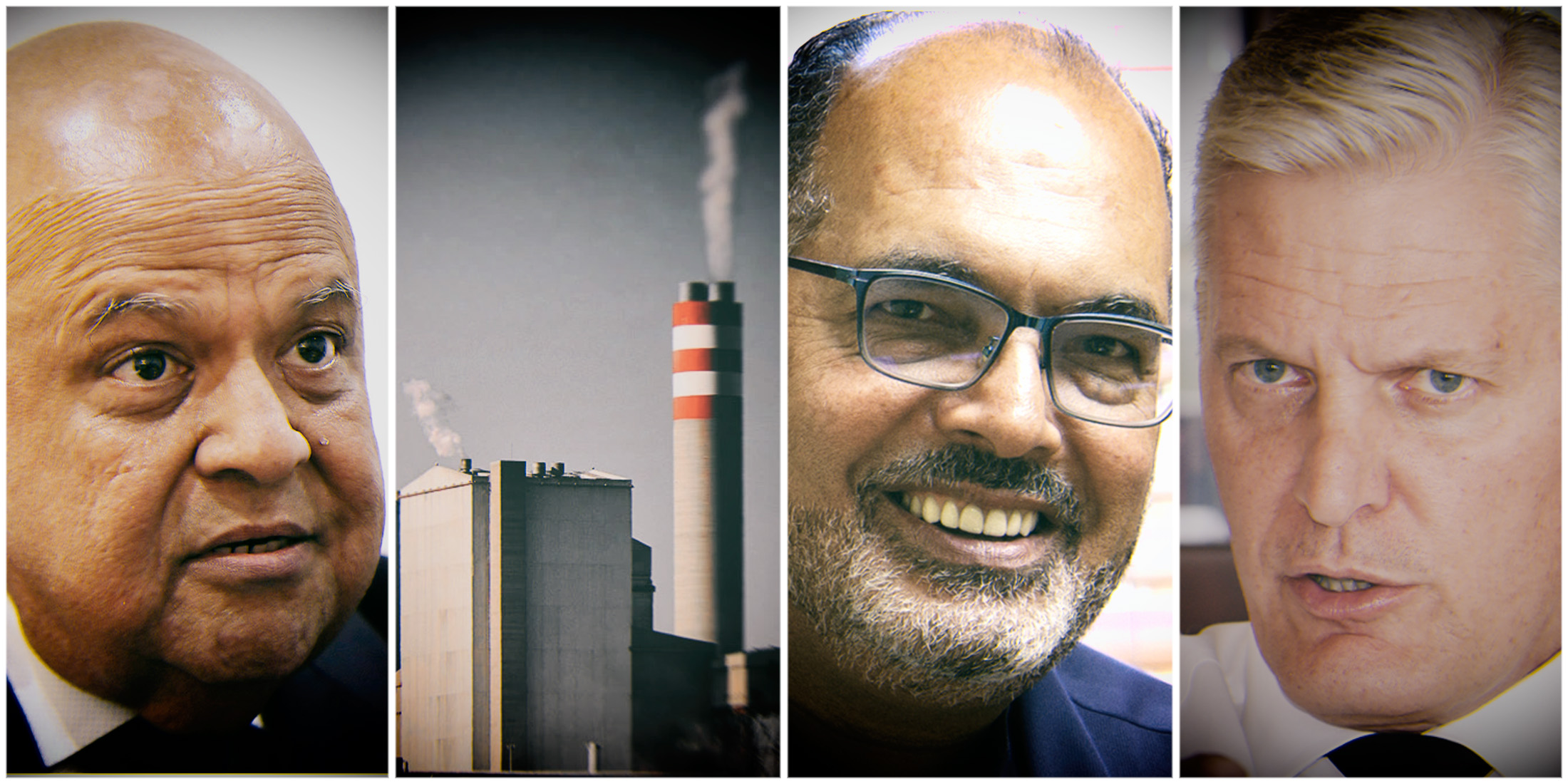

Eskom management has previously suggested bringing back former employees to address the power utility’s lack of skills capacity to run and maintain its energy plants.
But the suggestion, endorsed by Eskom CEO André de Ruyter after he was appointed in 2019, led to pushback from the power utility’s employees and their trade unions. They viewed it as a dressing-down of the current skills base at Eskom; that workers were not skilled or experienced enough to limit unscheduled plant breakdowns, which cause rolling blackouts. The suggestion also didn’t receive support from the government or, in this case, the Department of Public Enterprises, which is Eskom’s shareholder representative.
But the intensified rolling blackouts in recent days have forced the department to have a change of heart. The department has green-lighted a plan that involves 18 former Eskom employees, with technical skills spanning engineering and artisanship, to be recruited back into the power utility.
The former employees have been approached by Eskom to return in a mentoring and training role — lending support to Eskom’s lower level and senior staff at power stations. The former employees were instrumental in maintaining Eskom’s power stations decades ago and can help stem the downward trend in the performance of generating units.
Veterans return
In response to nearly two weeks of rolling blackouts, Public Enterprises Minister Pravin Gordhan announced that 18 former Eskom employees with experience had been recruited. In the past week alone, “18 seasoned energy specialists in power plant operations — some with over 20 years of experience — have re-entered the Eskom system to assist with operations”, Gordhan said in a press release.
Gordhan didn’t name the 18 Eskom veterans but mentioned in a Newzroom Afrika interview on Tuesday that the former employees include Edward Kieswetter, who is the South African Revenue Service commissioner. Acting in his personal capacity, Kieswetter is set to lead the team of recruited former Eskom employees with a collective experience of 100 years.
[embed]https://www.dailymaverick.co.za/article/2022-09-21-the-cold-hard-facts-theres-no-quick-fix-and-the-power-crisis-is-likely-to-get-worse/[/embed]
Kieswetter worked as a senior manager in charge of the utility’s power stations and generation capacity from January 1992 to March 2000. He and his executive team at the time were lauded for turning around Eskom’s operations by improving worker safety at power stations and rebuilding a 600MW generation unit from scratch — a huge engineering feat. And for such efforts, Eskom’s power stations were voted the best in the world for their engineering excellence and efficiency.
In the late 1990s (specifically 1998), Eskom’s power station efficiency improved as its energy availability factor (EAF), which is the proportion of its plant available to dispatch energy, reached 92.7%. A high EAF indicates that plants are well operated and maintained, helping the utility to produce electricity cheaper. Eskom’s EAF has been on a downward trend for a decade, reaching 84.5% in 2011, falling further to 66.6% by 2020, and now languishing at 56.6%.
Loss of skills
The decline in the EAF coincides with the exodus of skills at Eskom over the past two decades. The loss of skills at Eskom was initially sparked when old and experienced employees were encouraged to take voluntary severance packages and make way for the hiring of new black graduate engineers and artisans. This happened a few years after the government introduced policies and laws such as affirmative action and Broad-Based Black Economic Empowerment that are well-intentioned and crucial for promoting diversity in workplaces. State-owned enterprises such as Eskom and others have a higher requirement and duty to racially transform their staff profile.
While Eskom managed to attract capable black graduate engineers and artisans with excellent qualifications, they lacked the technical experience of the power utility’s workers who accepted voluntary severance packages. But Eskom’s racial transformation focus was successful, with black individuals appointed to senior positions. As more older and experienced workers were on their way out, Eskom also neglected its programmes to mentor and train newly employed workers.
Visit Daily Maverick’s home page for more news, analysis and investigations
Then another phenomenon of highly experienced Eskom workers getting lucrative employment opportunities overseas prompted many to leave the power utility, especially during its accelerated decline over the past 15 years, marked by rolling blackouts, lack of new energy generation, woeful maintenance of existing plants and State Capture-related corruption.
A retired engineer who worked for Eskom told Business Maverick: “Eskom was a respected and admired power utility around the world. If you had Eskom on your CV as part of work experience, you’d easily be headhunted overseas.”
Reversing knowledge loss
There is now a deliberate focus on reversing the loss of institutional knowledge, mentorship and learning.
Gordhan said the 18 former Eskom employees had visited the power utility’s plant to evaluate its poor performance in the face of unplanned breakdowns.
“Their wisdom will be incorporated in improving their performance,” he said. Gordhan added that there was no longer pushback from power station managers and other staff as they were now willing to accept mentoring and training from the former employees.
The search for more former employees, who are highly experienced and retired, is ongoing and a list of candidates will soon be compiled, Eskom told Business Maverick. So, Eskom is going beyond the 18 veterans.
The former employees will be recruited and offered fixed-term contracts, which usually run for 12 months, with a renewal option.
“The required skills include but are not limited to, mechanical, nuclear, electrical, system and maintenance skills, as well as senior artisans and plant operators for coal and nuclear power stations. Initially, the need is more for the generating plants of Eskom,” said Eskom.
The search for skills externally started before the appointment of De Ruyter in 2019 as Eskom’s CEO. Years before De Ruyter’s appointment, Eskom’s board approved more than 300 vacancies for its operations, including individuals who had superior qualifications, but lacked rigorous technical experience in the field of power.
But under De Ruyter, there is a plan to recruit ex-Eskom employees, many of whom had worked their entire lives at Eskom, either permanently on fixed contracts or as third-party service providers. DM/BM