



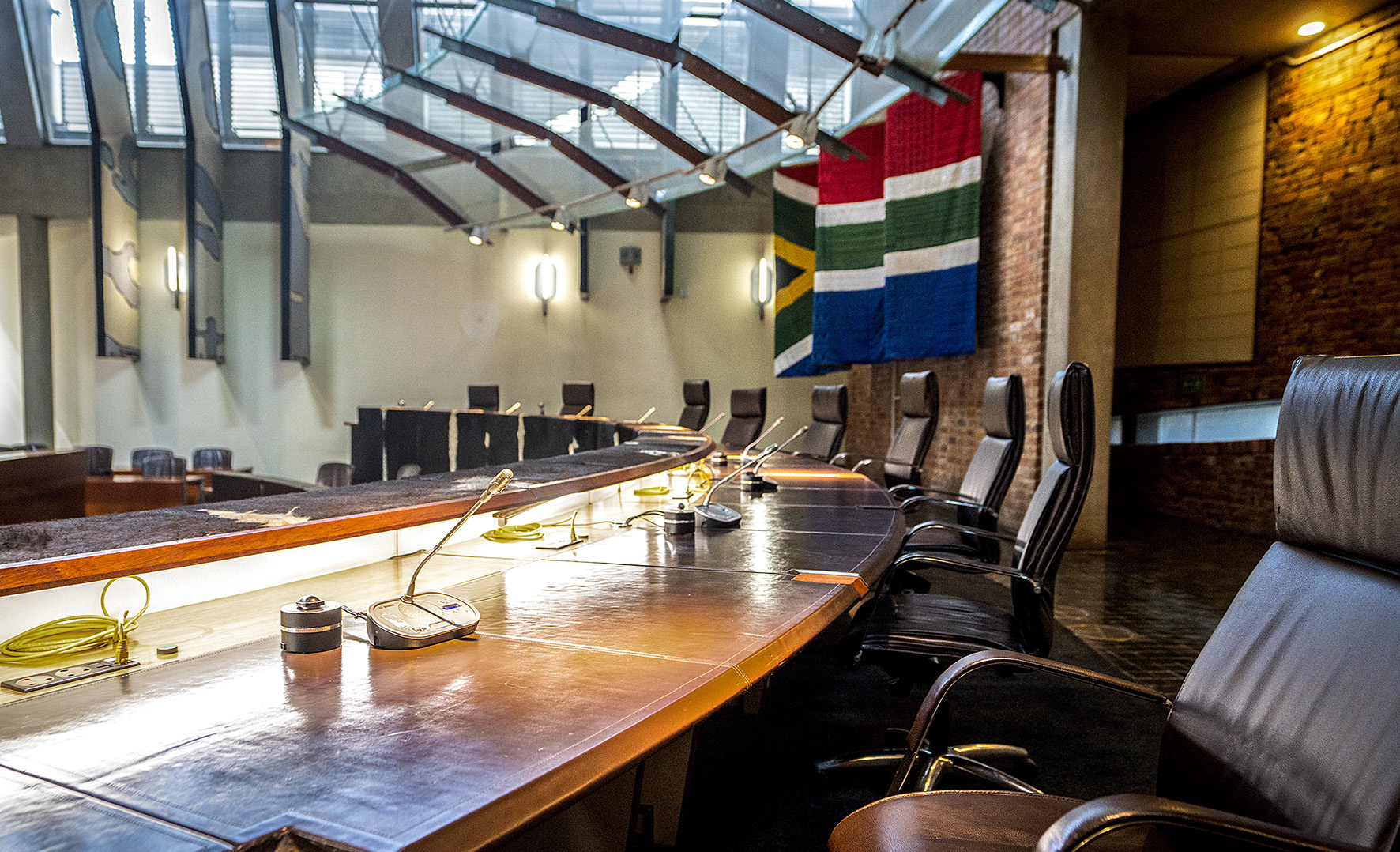

The Constitution Hill precinct was built in 1893 and started off as a prison for white people, commissioned by Paul Kruger. It then became a fort designed to keep the English from overthrowing the Afrikaner government, but went back to being a prison after the Afrikaners surrendered. Famous prisoners who have walked its halls include Nelson Mandela, Winnie Madikizela-Mandela and Mahatma Gandhi. The complex was repurposed in 2004 and now houses our country’s highest court, is a centre for creative expression, art, dialogue and inclusion, as well as a museum and events space, and has hosted cultural events such as Basha Uhuru and Afropunk.
Old Fort
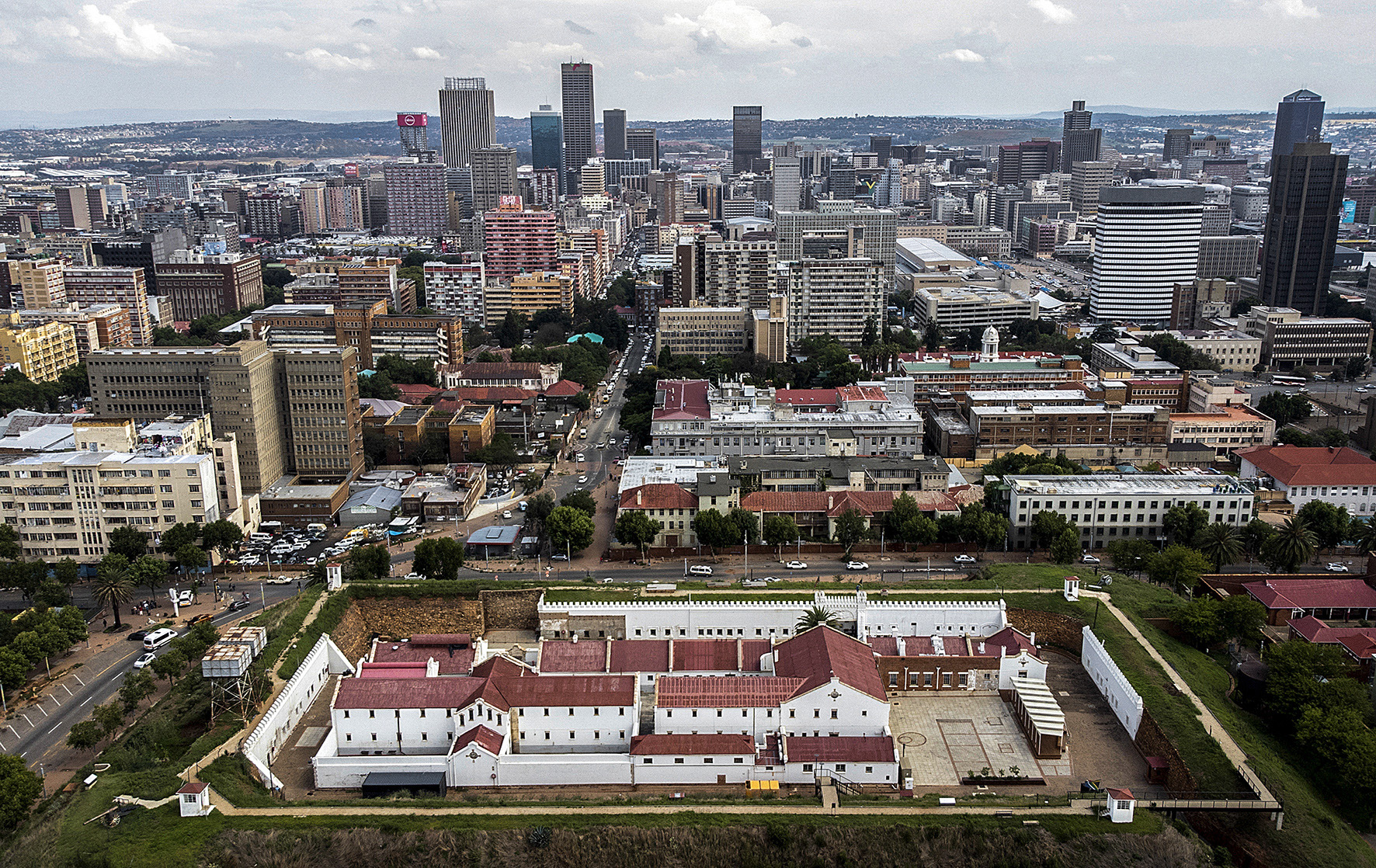 A drone image showing the Old Fort with the Johannesburg skyline as the backdrop. (Photo: Shiraaz Mohamed)
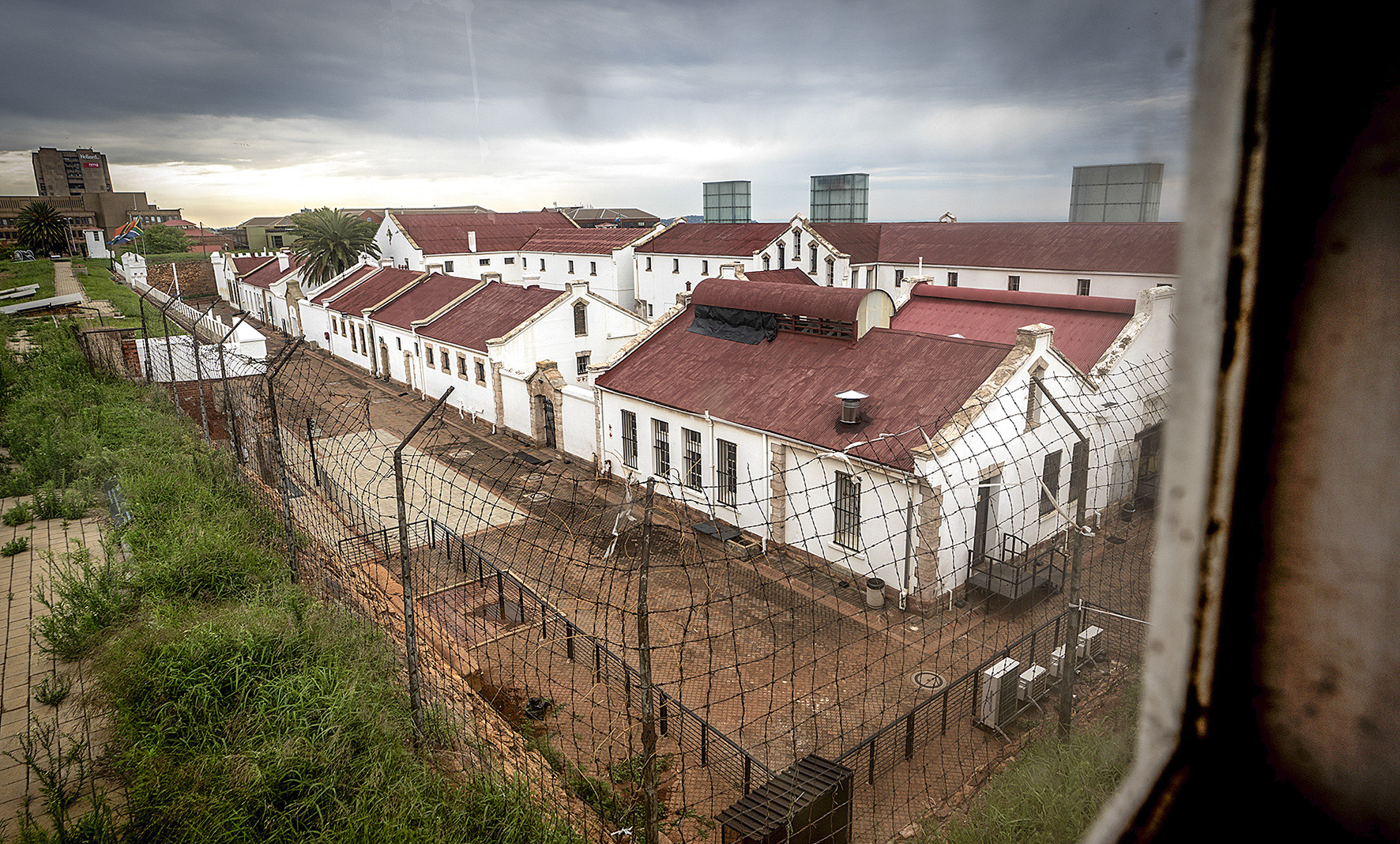 The Old Fort was built in 1893 as Johannesburg’s first prison. (Photo: Shiraaz Mohamed)
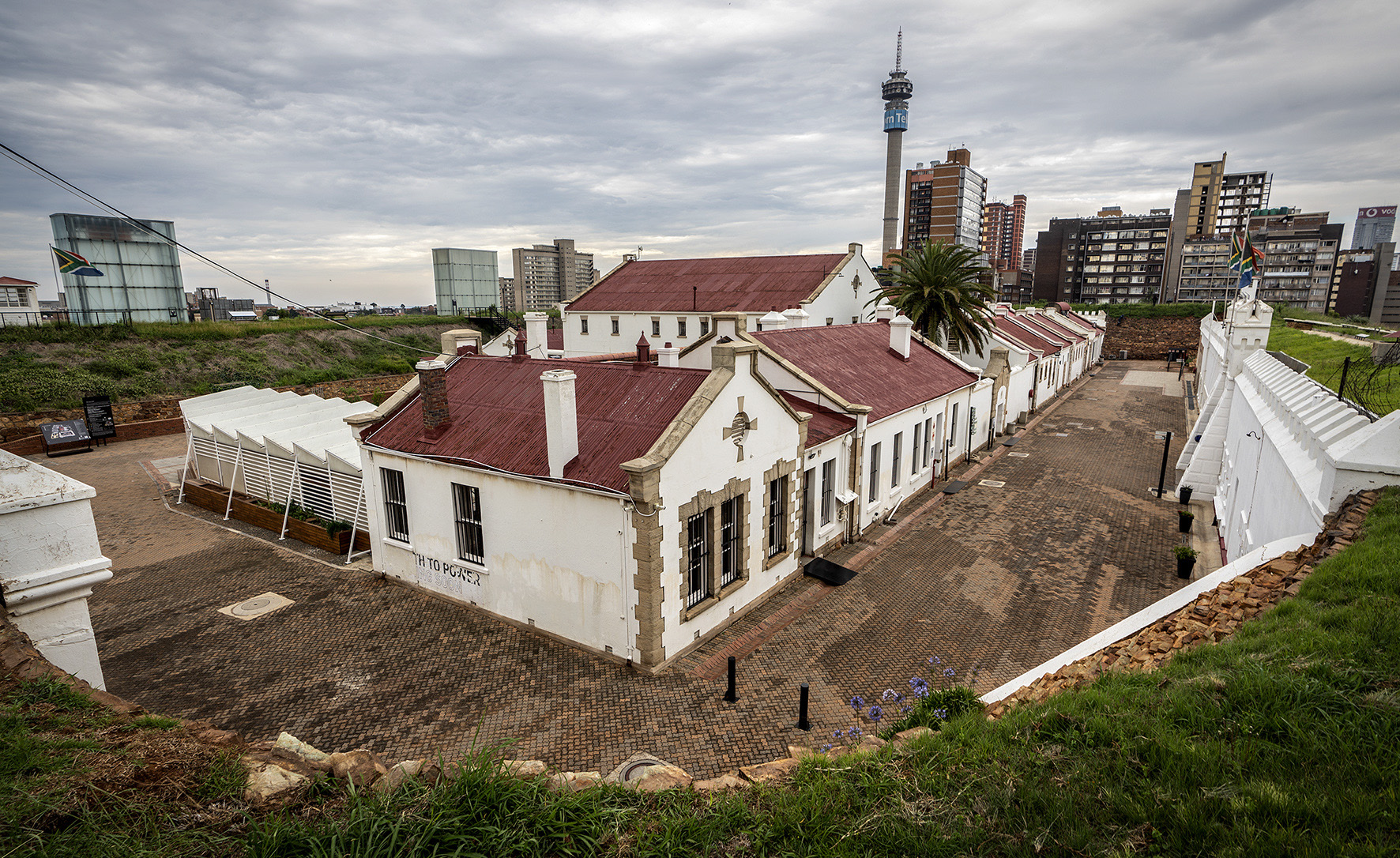 The Old Fort served briefly as a military fort after the 29 December 1895-2 January 1896 Jameson Raid. (Photo: Shiraaz Mohamed)
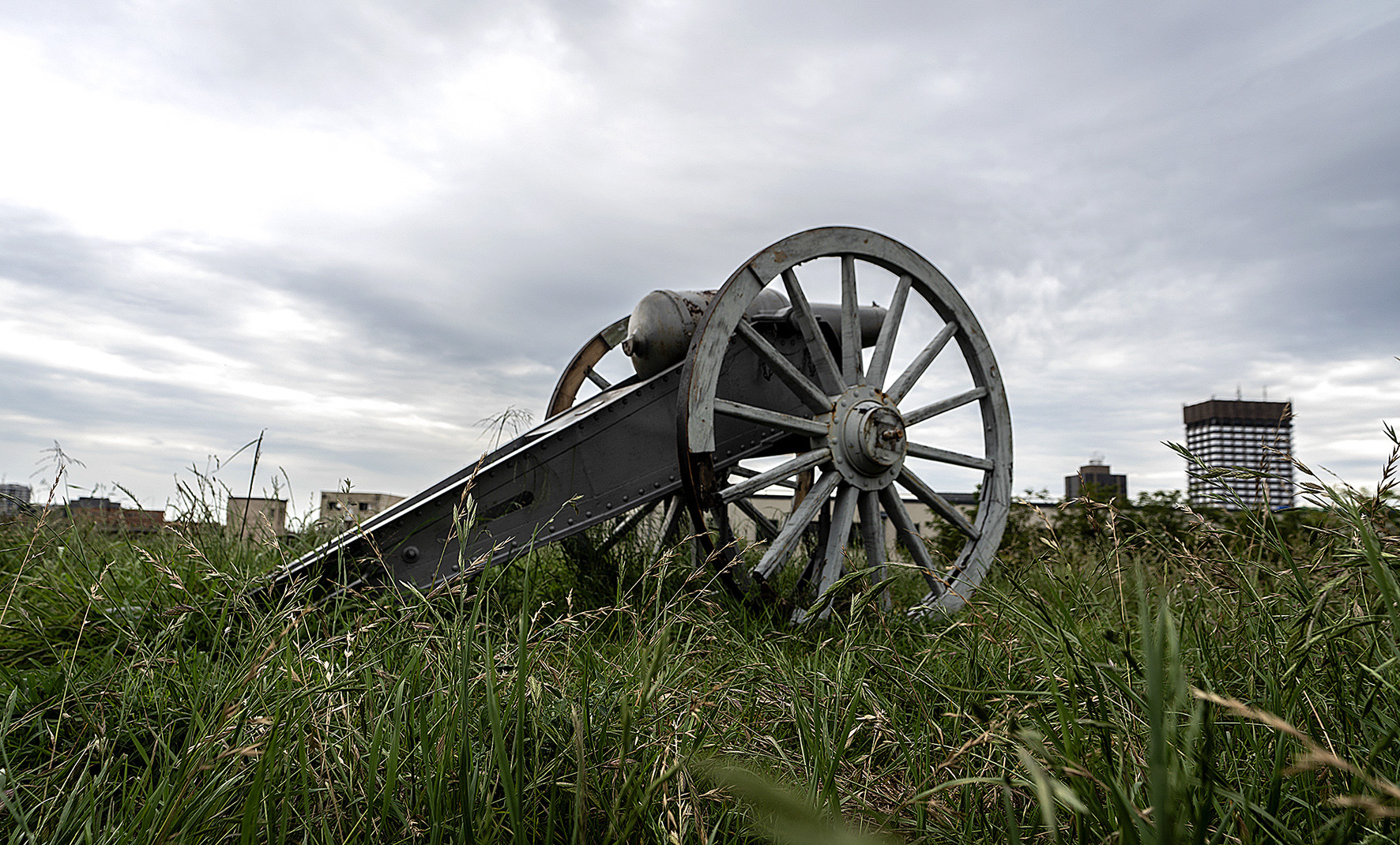 An exhibit of the 6.3inch CWT Rifled Muzzle Loading Howitzer that was fired daily at 1pm until the British left the fort in 1906. (Photo: Shiraaz Mohamed)
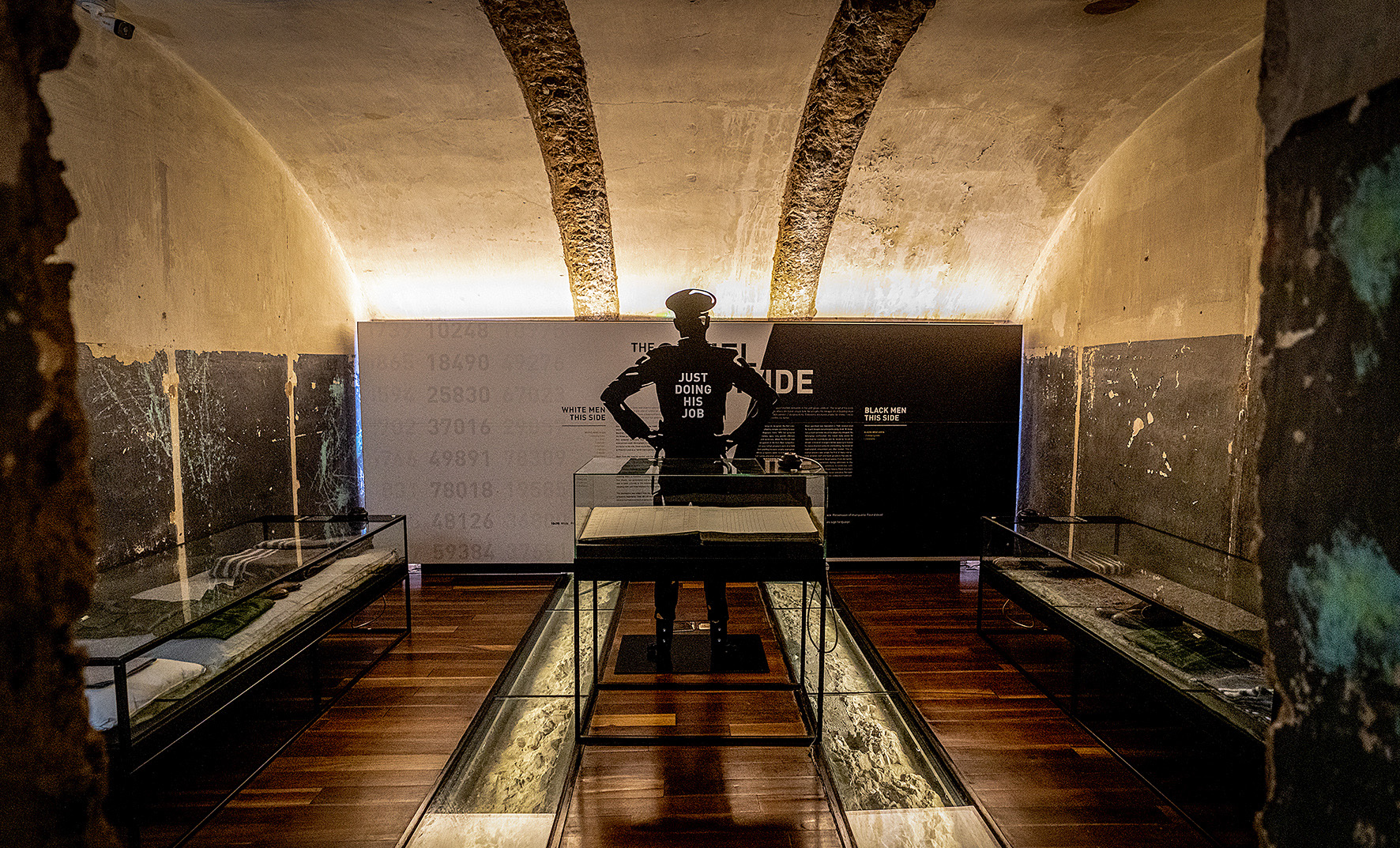 An exhibition showing a prison register with items received by black and white prisoners. (Photo: Shiraaz Mohamed)
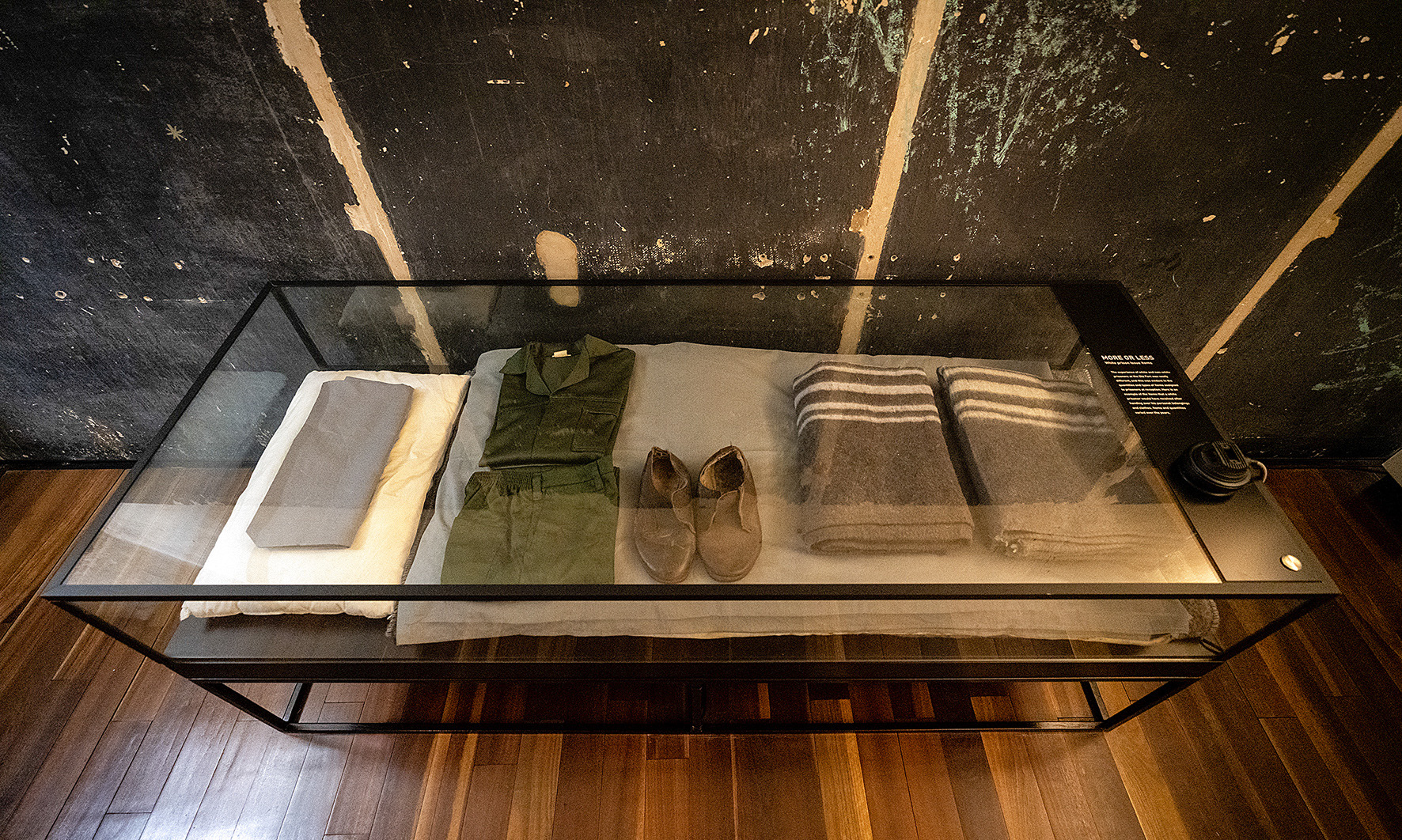 An exhibition in the Old Fort shows items issued to white prisoners. (Photo: Shiraaz Mohamed)
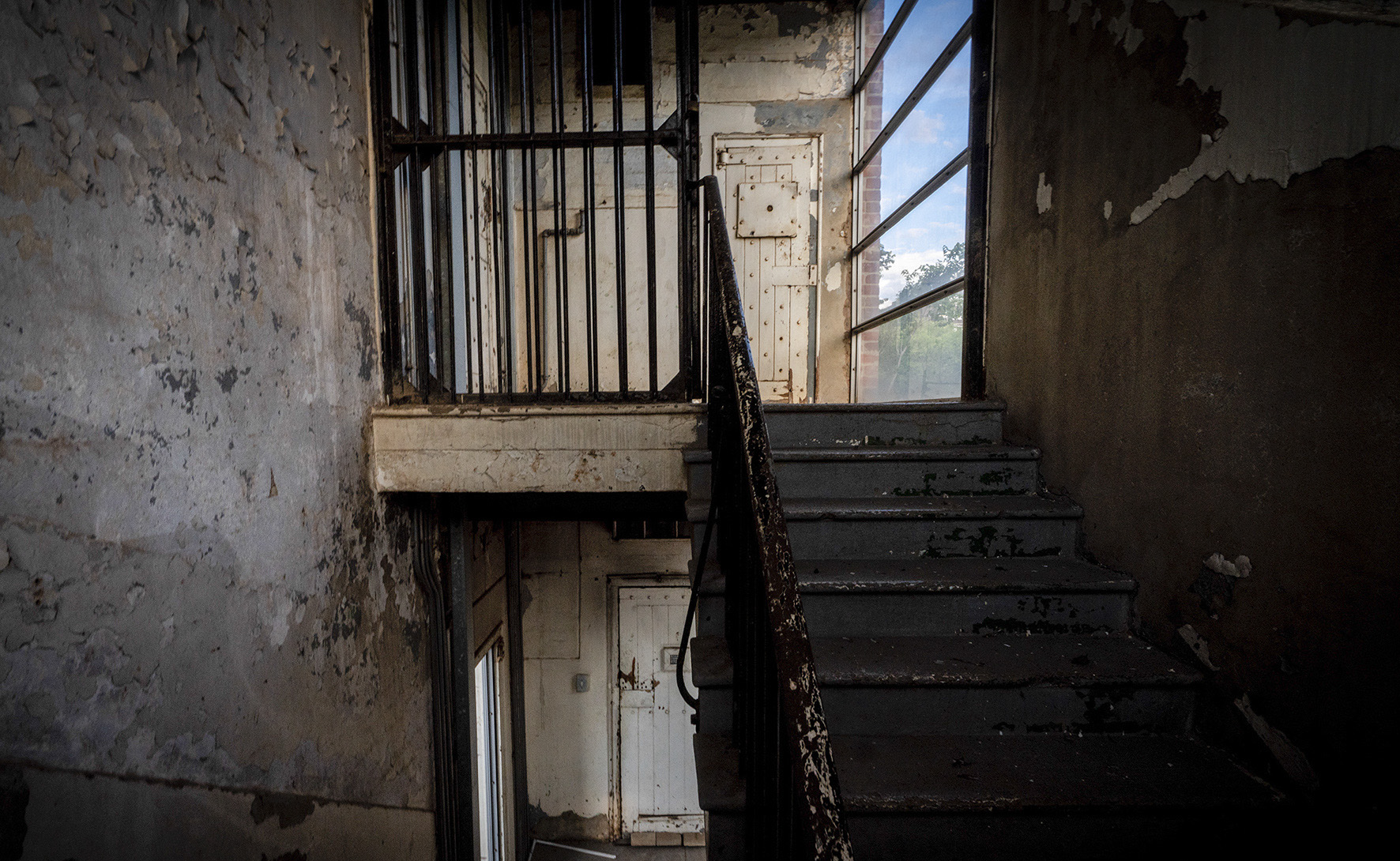 Cell doors at the awaiting trial block (ATB) stood at the heart of Number Four section, where it operated as a jail for nearly 100 years. (Photo: Shiraaz Mohamed)
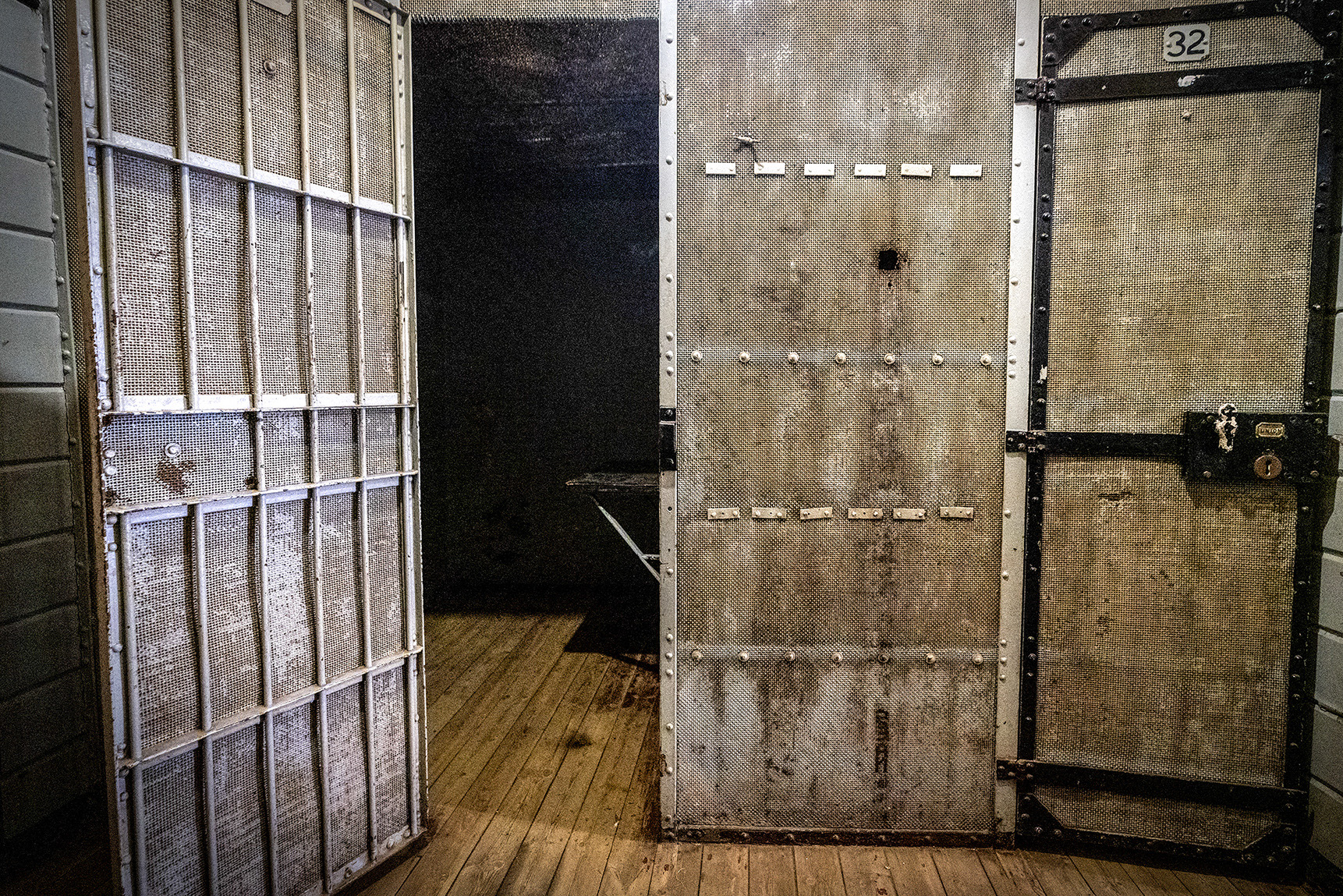 The isolation cells at the Old Fort are the oldest at the site, where incarcerated awaiting-trial white prisoners were kept. The lights were always on to disorientate prisoners and to disrupt their sleeping patterns. (Photo: Shiraaz Mohamed)
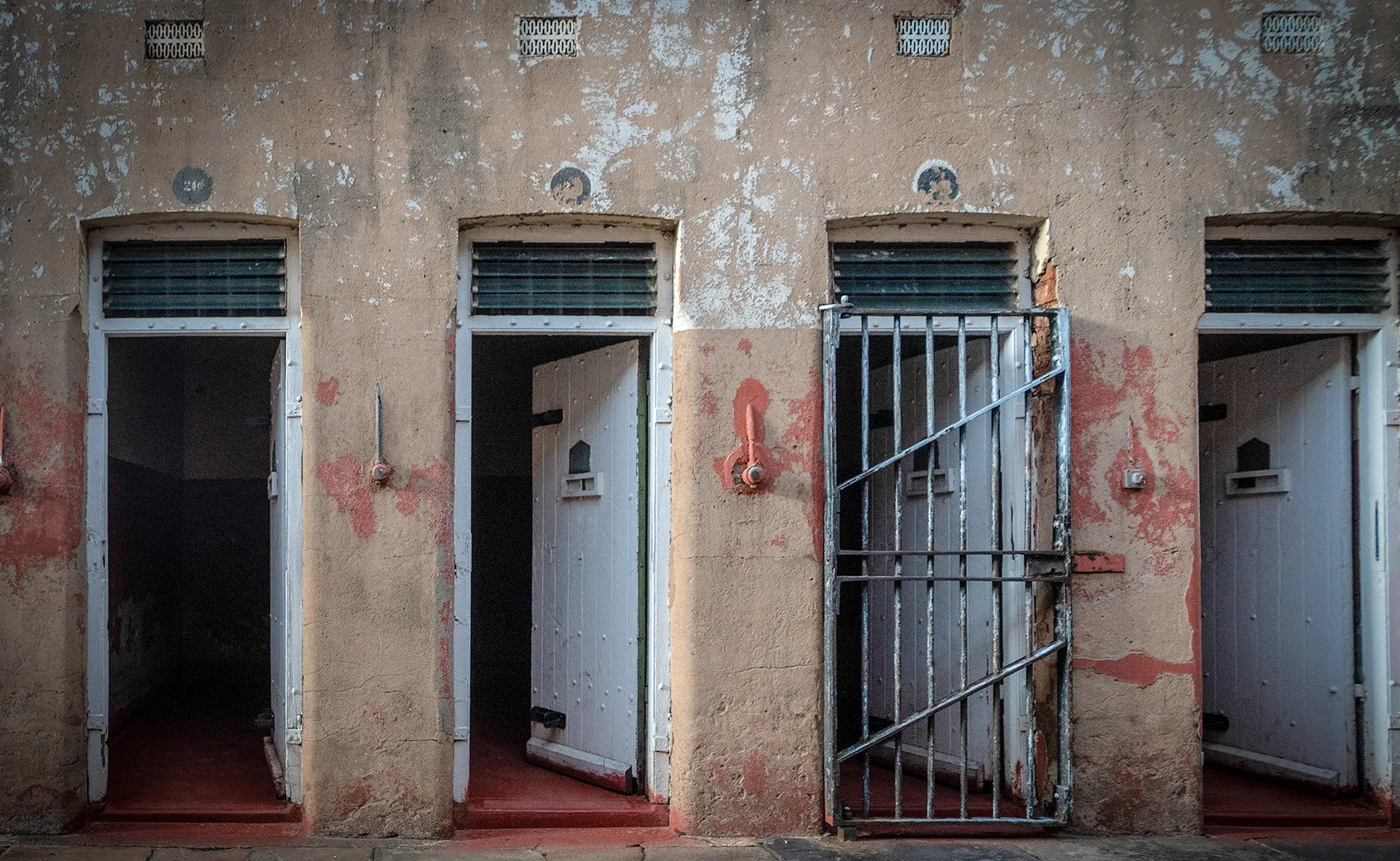 Isolation cells that housed black inmates. (Photo: Shiraaz Mohamed)
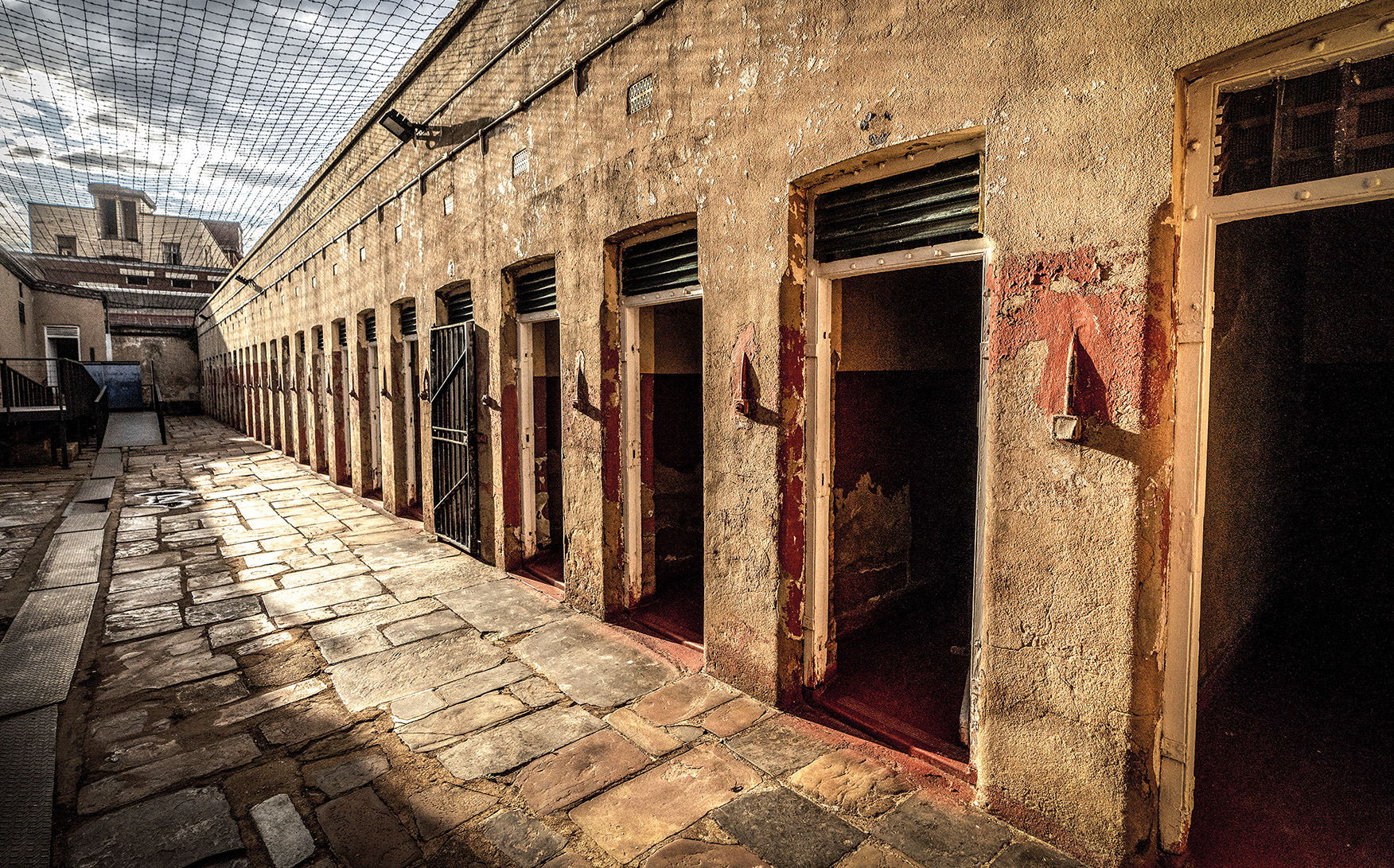 Isolation cells that housed black inmates. (Photo: Shiraaz Mohamed)
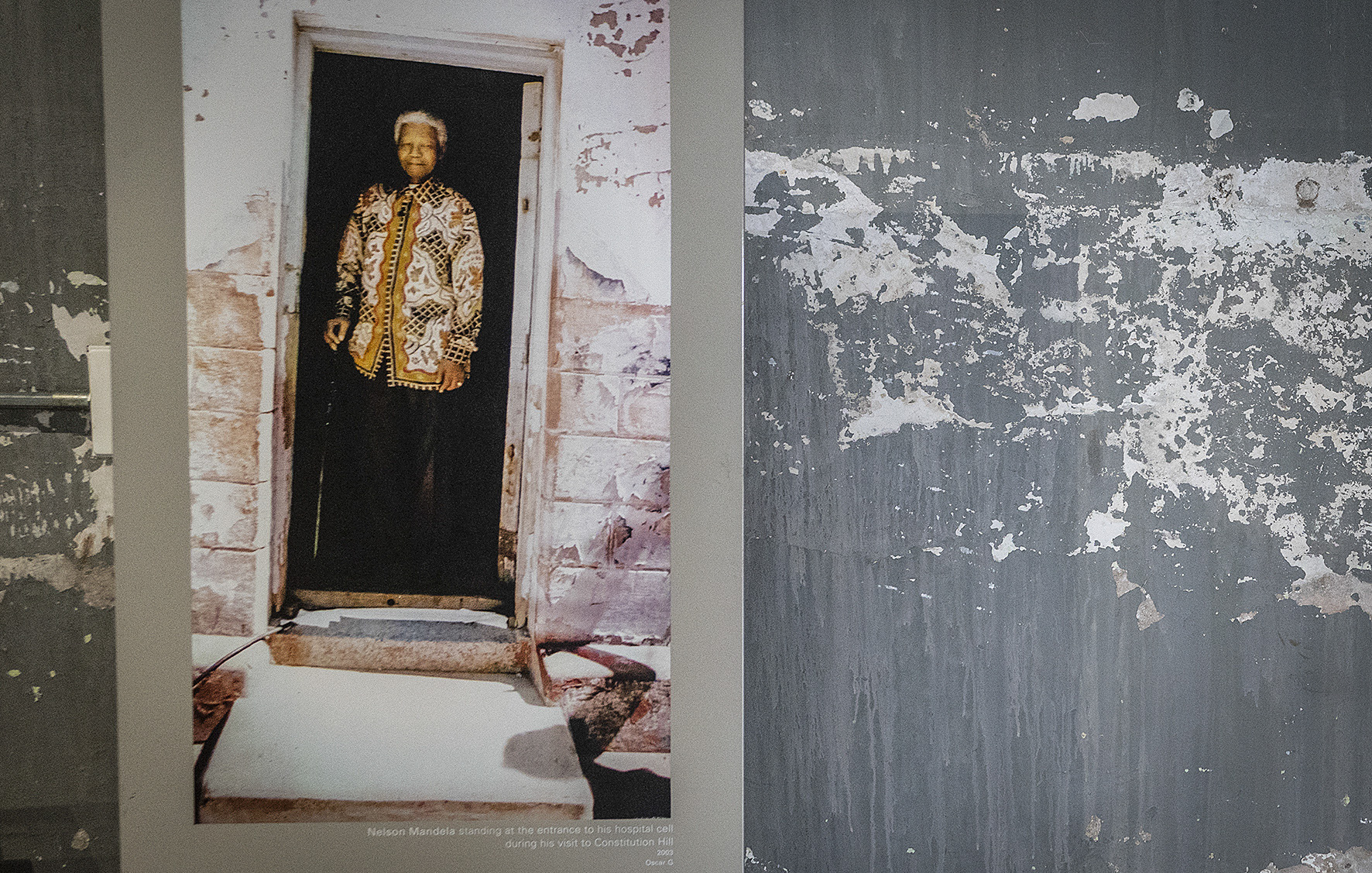 A permanent exhibition photo of Nelson Mandela standing at the entrance to his hospital cell during a visit to Constitution Hill. (Photo: Shiraaz Mohamed)
The Constitutional Court
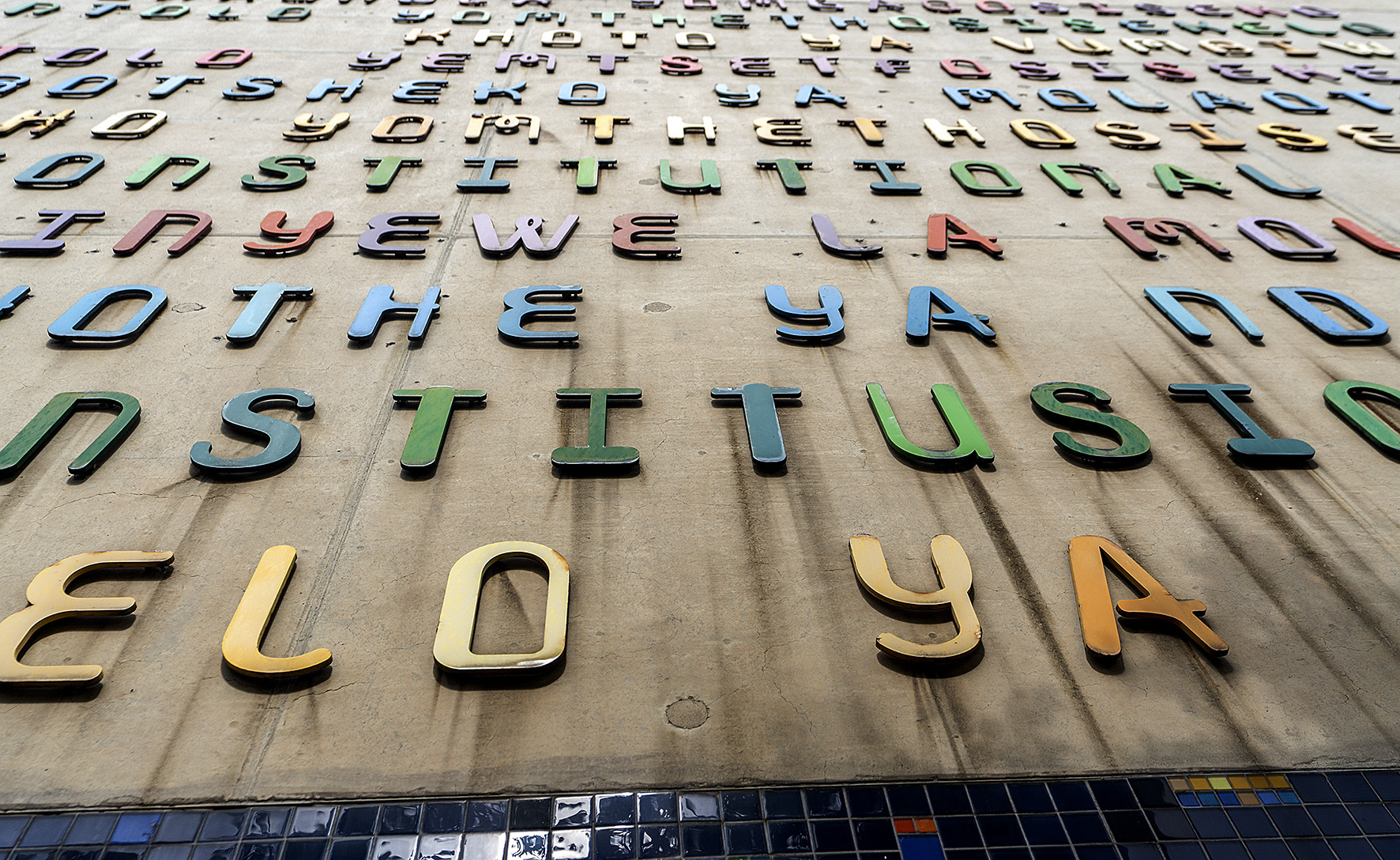 The words ‘Constitutional Court’ are written in all 11 official languages on the outside of the court. (Photo: Shiraaz Mohamed)
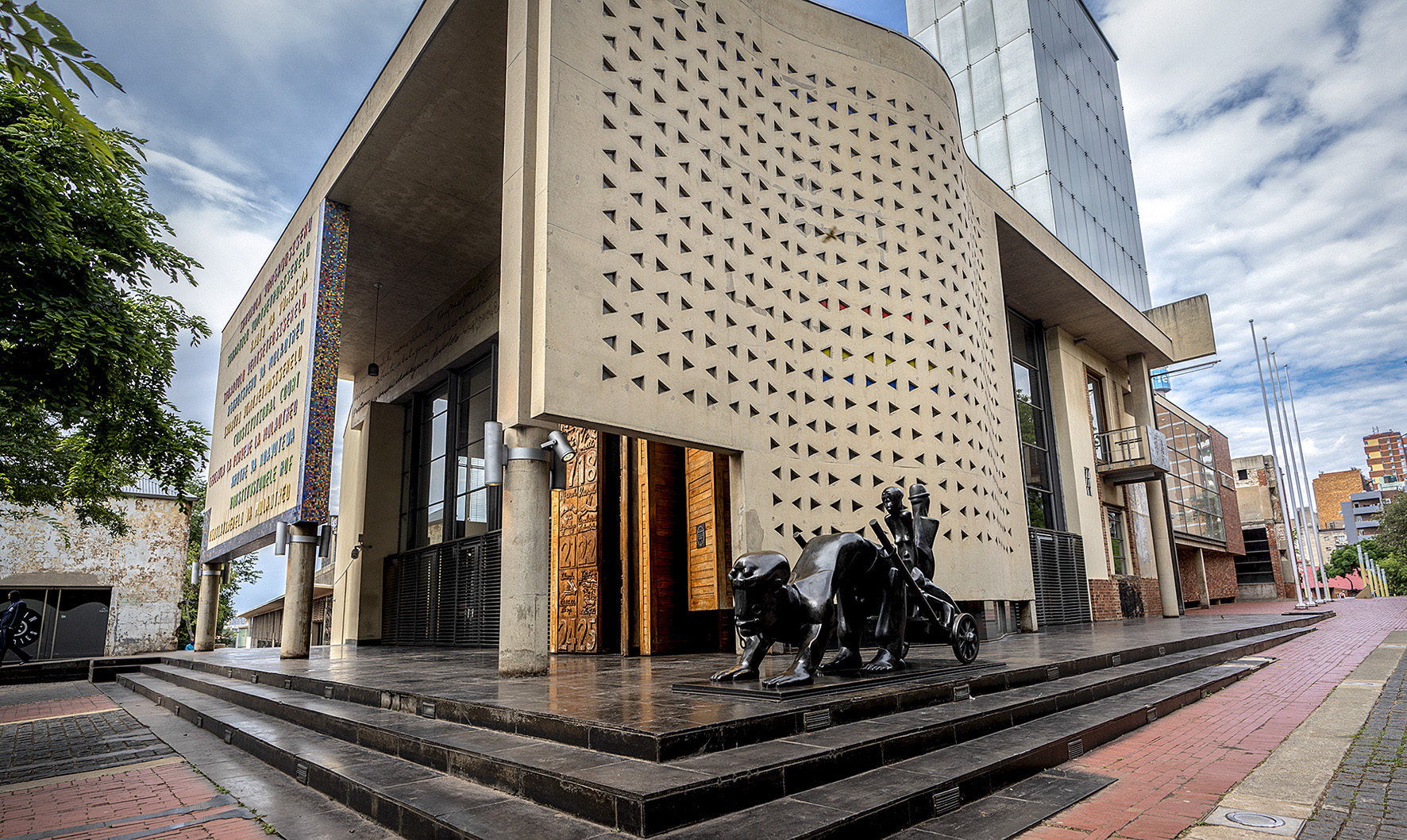 The exterior of the Constitutional Court, the highest court in South Africa. The doors of the Constitutional Court were first opened by President Nelson Mandela on 14 February 1995, but it occupied temporary accommodation elsewhere for a decade, until the new court was inaugurated at Constitution Hill on 21 March 2004 — Human Rights Day and 10 years after South Africa became a democracy. (Photo: Shiraaz Mohamed)
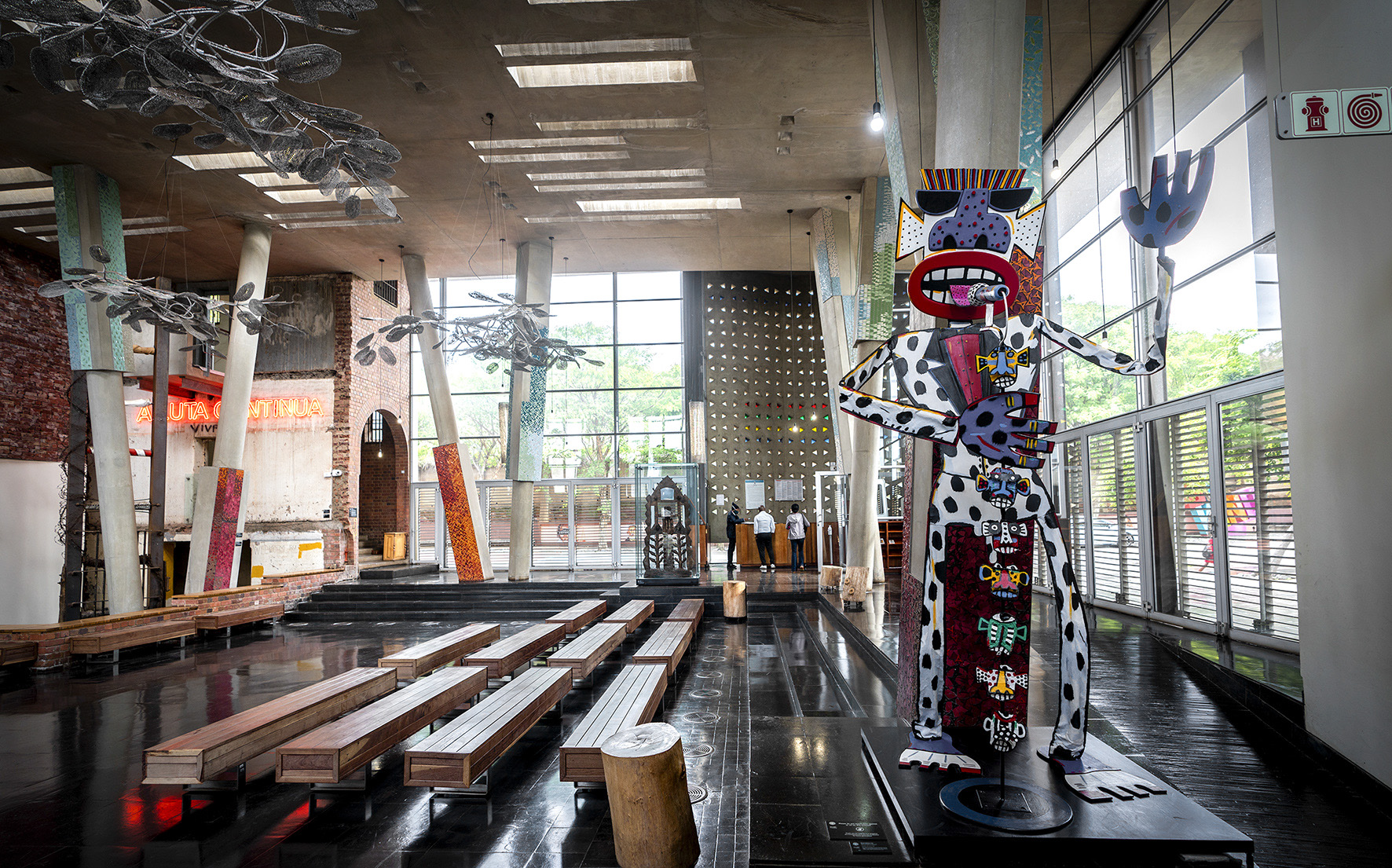 The foyer of the Constitutional Court consists of concrete, timber, steel, stone and glass. The foyer’s mosaicked slanting columns represent trees, introducing the notion of ‘lekgotla’, which refers to the traditional African approach of conducting justice beneath a tree. (Photo: Shiraaz Mohamed)
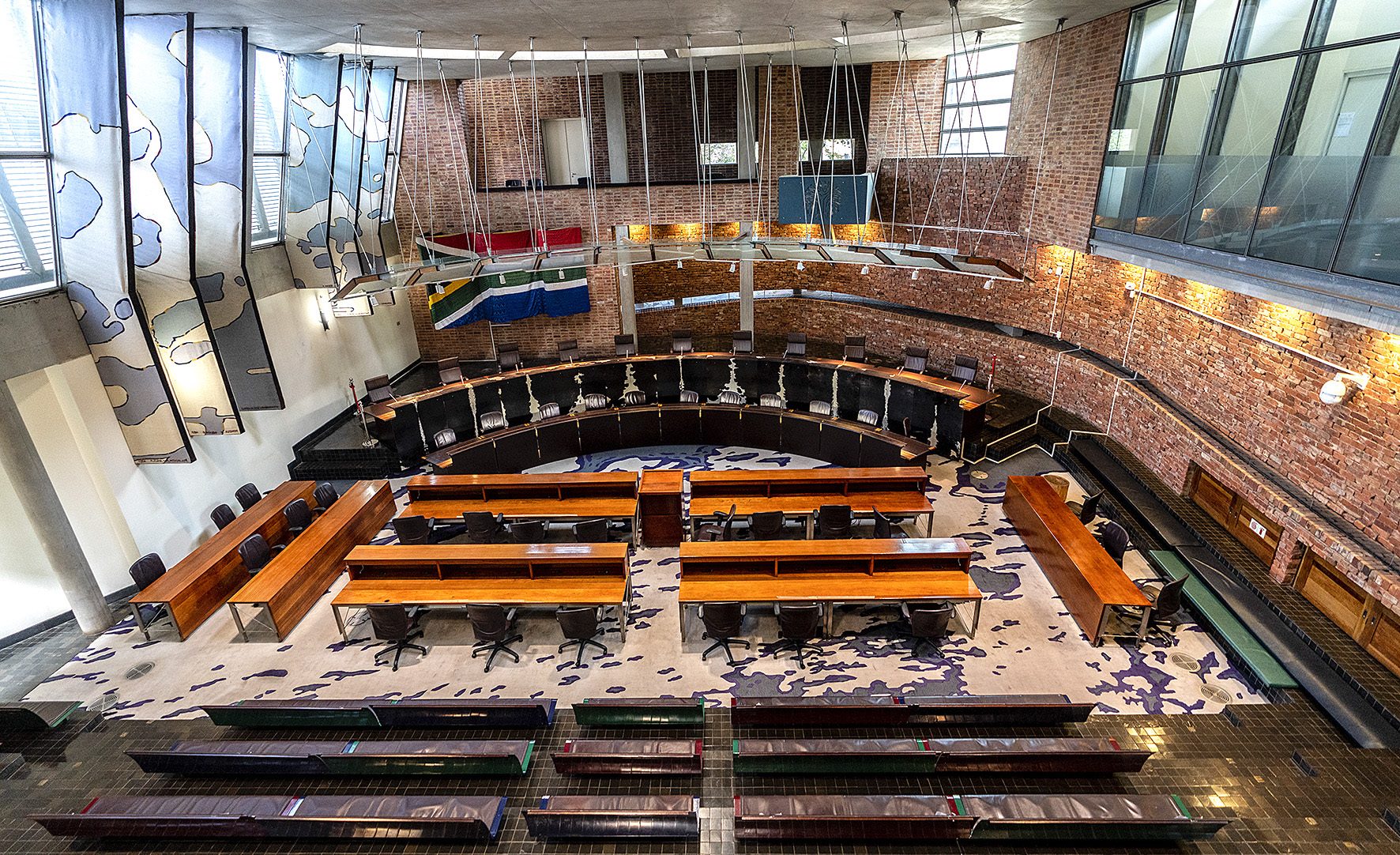 The interior of the Constitutional Court. (Photo: Shiraaz Mohamed)
Women’s Jail
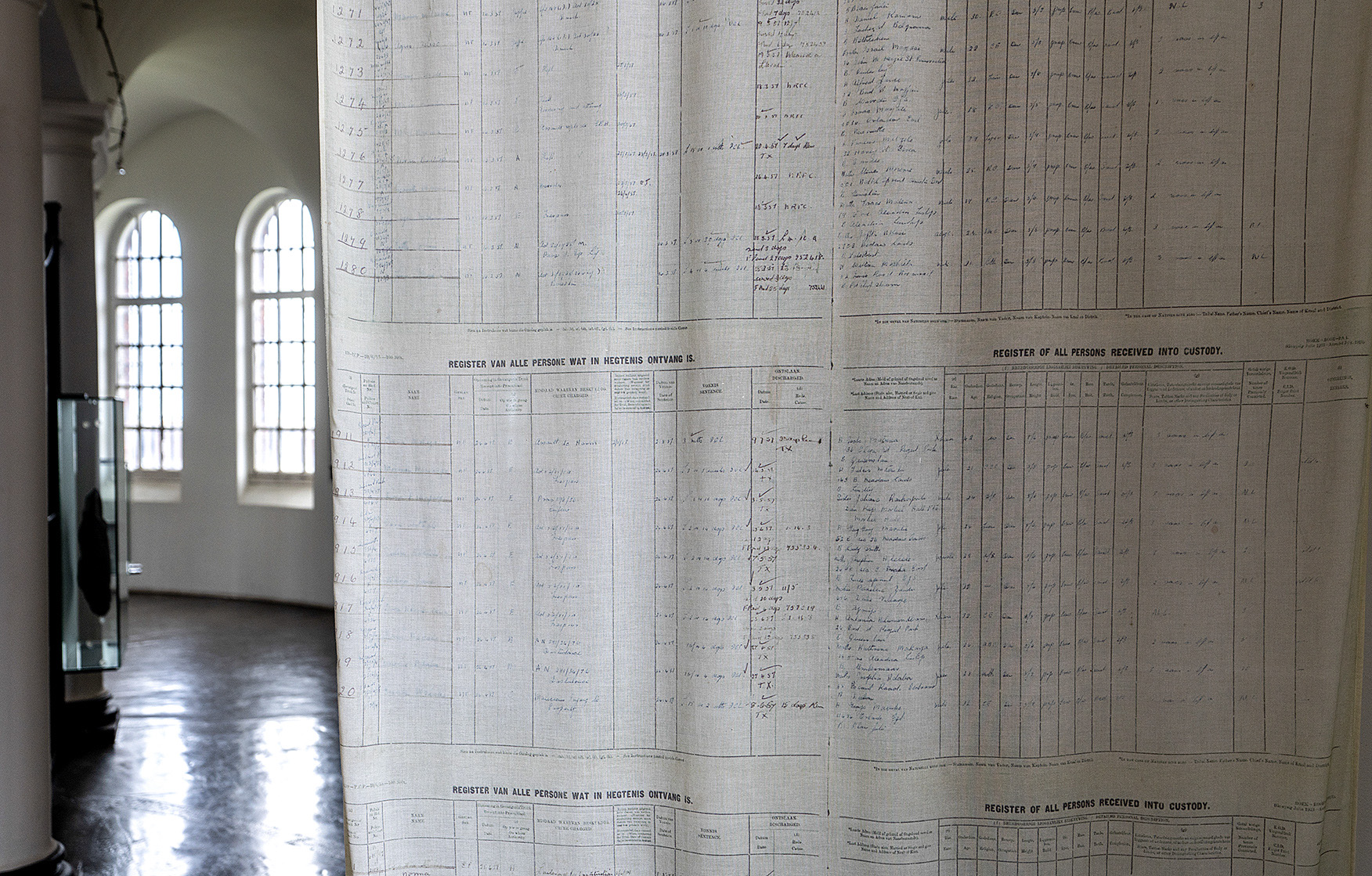 An exhibit of the prison register on permanent display at the women’s jail. (Photo: Shiraaz Mohamed)
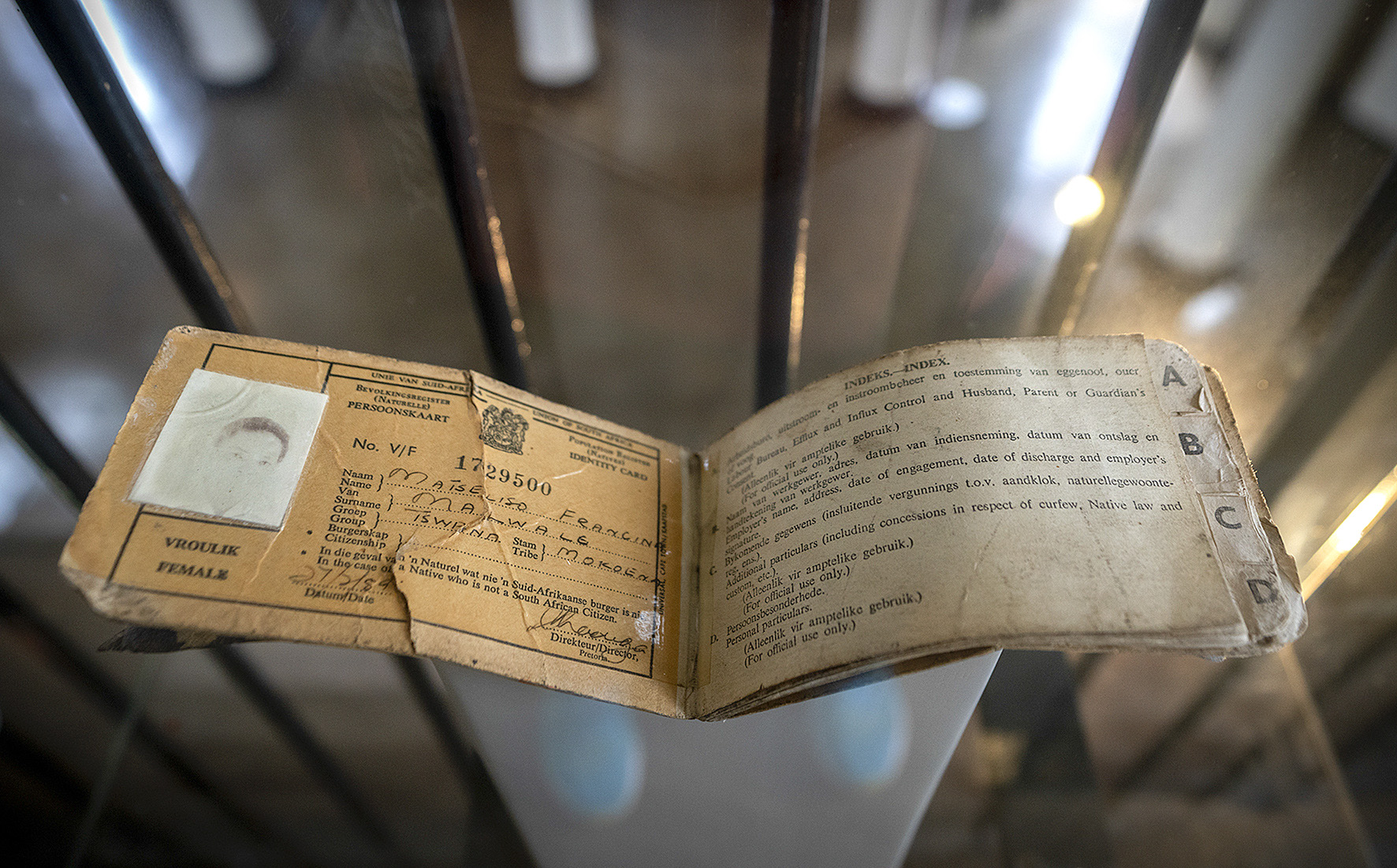 An exhibit of a pass book on permanent display at the women’s jail. Pass laws helped government to control where black people could live and work in South Africa. (Photo: Shiraaz Mohamed)
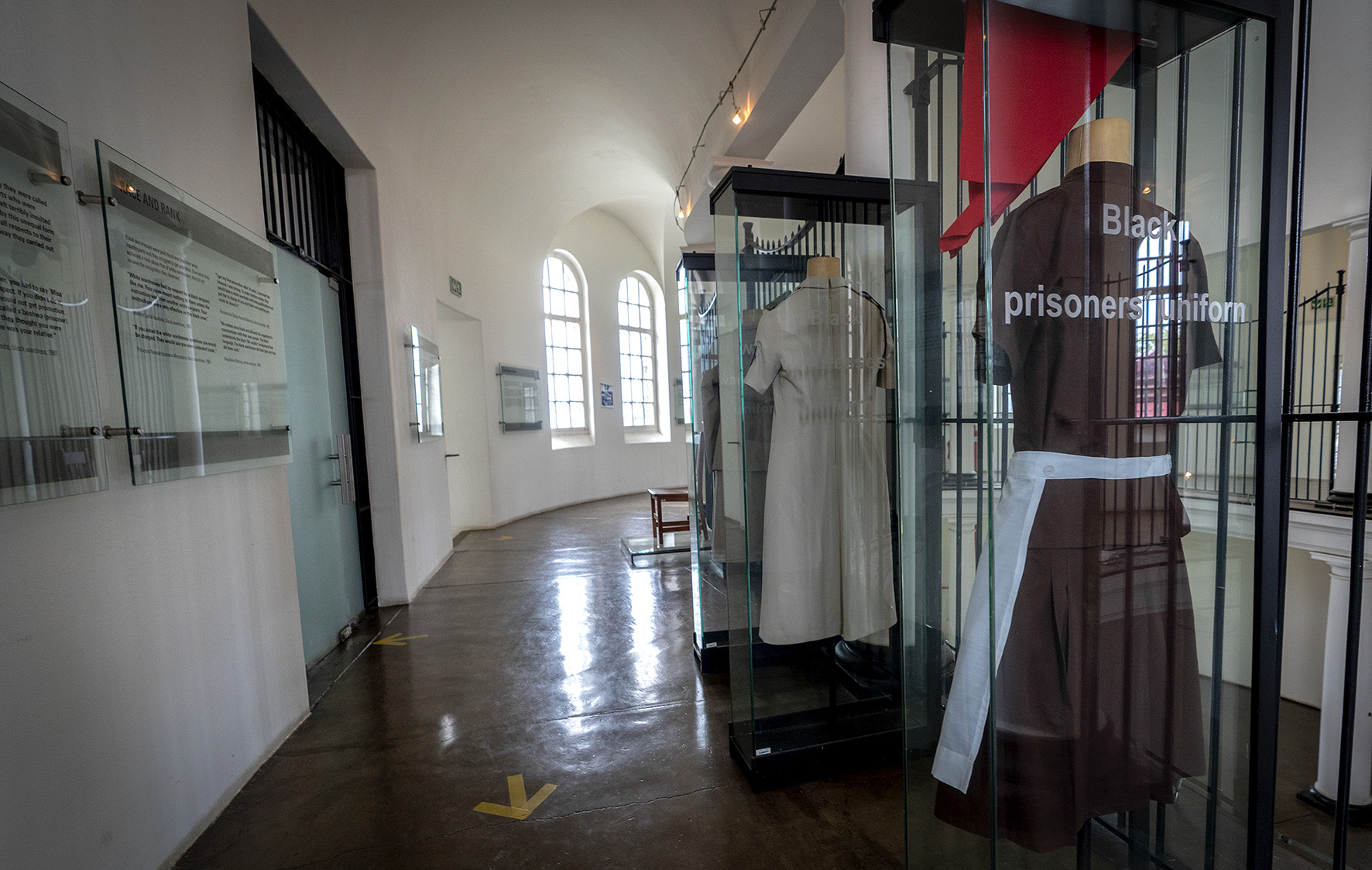 A permanent exhibit at the women’s jail of a black prisoner’s uniform, among other uniforms. (Photo: Shiraaz Mohamed)
 An art exhibition in Section One, Cell One of the women’s jail. Cell One held as many as 70 prisoners. (Photo: Shiraaz Mohamed)
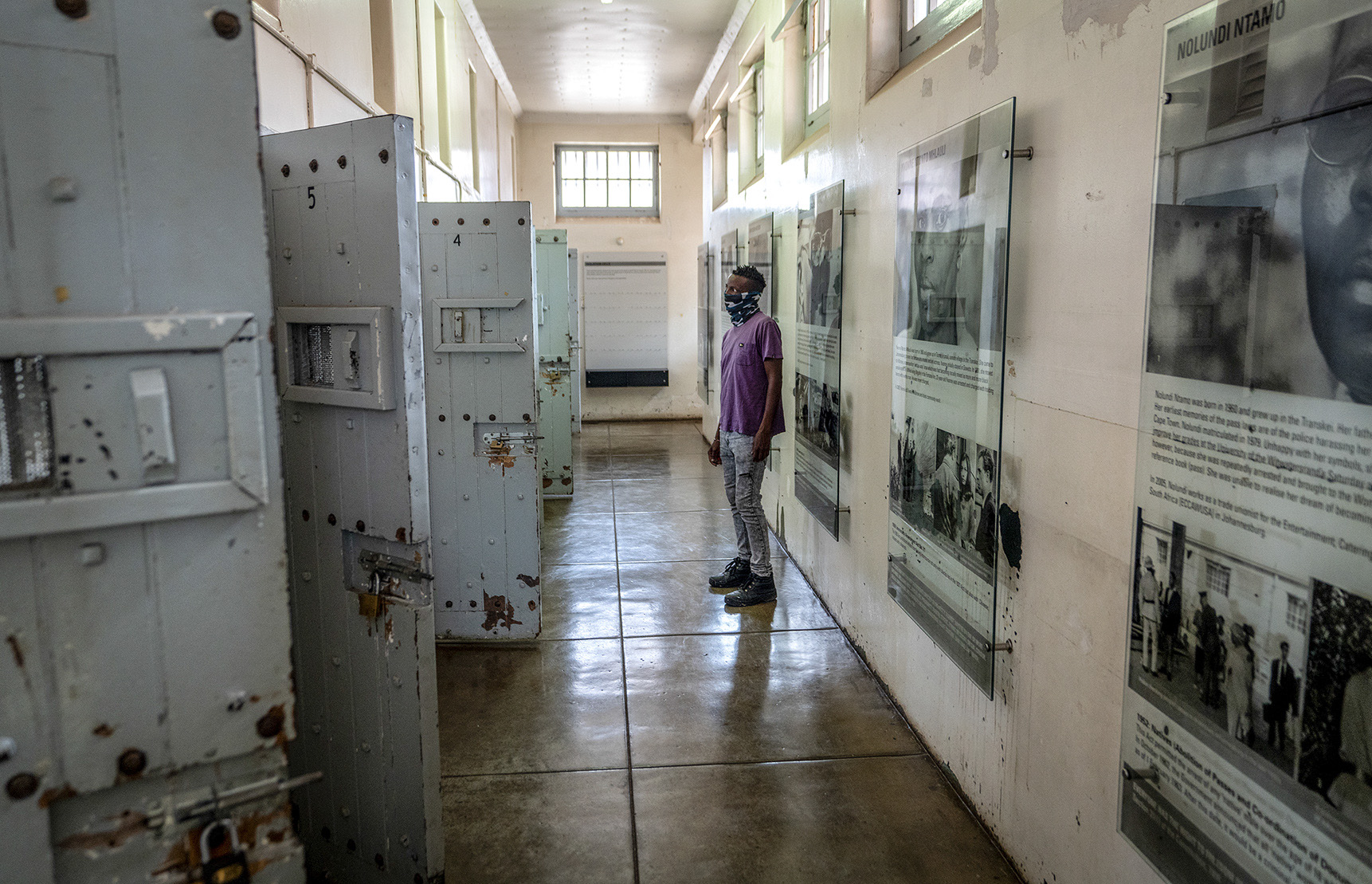 A man looks into the isolation cells where prisoners were placed in solitary confinement at the women’s jail. (Photo: Shiraaz Mohamed)
DM/MC
[hearken id="daily-maverick/8881"]